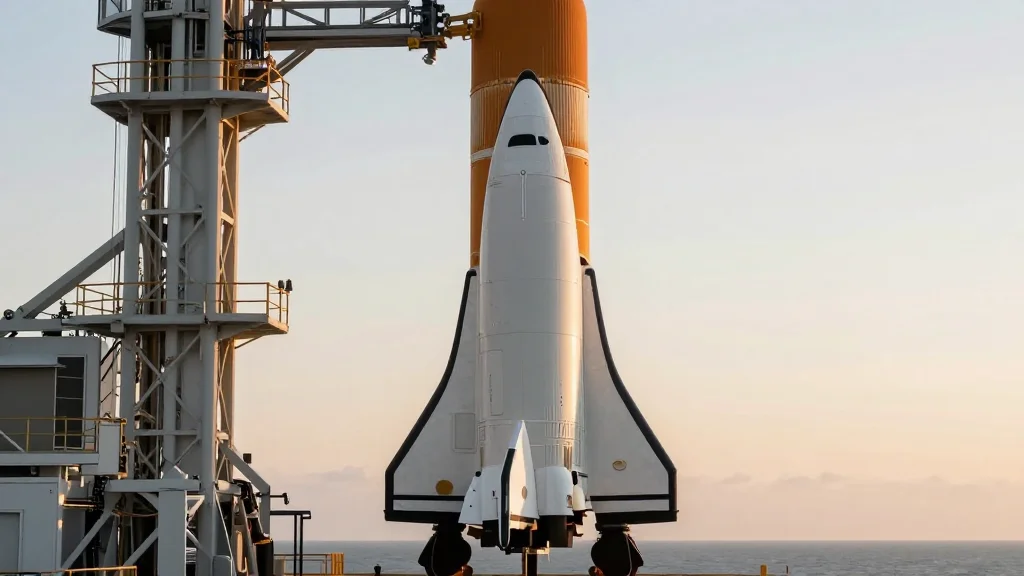
Firefly Aerospace and Intuitive Machines Drive Space Stock Rally as SpaceX IPO Looms

Companies Mentioned

Why It Matters
The rally around Firefly Aerospace and Intuitive Machines signals a pivotal shift in how capital markets assess the commercial space ecosystem. By rewarding companies with differentiated business models—launch services versus space‑infrastructure—investors are effectively betting on a diversified supply chain that can sustain long‑term growth beyond a single dominant launch provider. This diversification reduces systemic risk and may accelerate private‑sector participation in lunar and deep‑space missions, aligning with NASA’s Artemis objectives and broader governmental space agendas. Moreover, the heightened attention could unlock new financing avenues for mid‑stage aerospace firms, lowering the cost of capital for R&D, manufacturing, and mission execution. As the sector matures, the influx of public money may drive consolidation, technology standardization, and faster iteration cycles, ultimately shaping the competitive dynamics that will define the next decade of space exploration and commercialization.
Key Takeaways
- •Firefly Aerospace shares up ~36% and Intuitive Machines up ~46% since SpaceX IPO news on March 25
- •SpaceX IPO slated for July 2026, targeting a $40‑$80 billion raise
- •Firefly’s Alpha rocket offers 1‑ton payload; Eclipse reusable rocket in development with Northrop Grumman
- •Intuitive Machines provides lunar lander Nova‑D, navigation via KinetX, and 300 spacecraft launches
- •Rocket Lab gains 57%; York Space Systems up 40% in the same rally
Pulse Analysis
The current surge in niche space equities reflects a classic market phenomenon: investors flock to the nearest publicly traded proxies when a marquee private player hints at an IPO. SpaceX’s looming float has effectively created a ‘halo effect,’ inflating valuations for companies that, while smaller, occupy strategic niches in the orbital and lunar supply chain. This dynamic mirrors the early 2000s biotech boom, where the prospect of a blockbuster drug spurred a wave of investment in ancillary firms.
Firefly’s aggressive push into reusable launch technology is a high‑risk, high‑reward play. Its negative EBITDA margin underscores the capital intensity of competing with SpaceX’s proven Falcon 9, yet its one‑ton Alpha platform fills a market gap for dedicated small‑sat launches on short notice—a service that larger rockets cannot economically provide. If the Eclipse achieves reliable reusability, Firefly could carve out a sustainable niche, but the path is fraught with technical and financial hurdles.
Intuitive Machines, by contrast, leverages a lower‑cost, infrastructure‑centric model that aligns with NASA’s Artemis roadmap and the growing demand for lunar logistics. Its diversified portfolio—ranging from satellite buses to deep‑space navigation—offers investors exposure to multiple revenue streams, mitigating the volatility inherent in launch‑only businesses. The company’s recent NASA contract for the Nova‑D heavy lander could serve as a catalyst for further contracts, especially as the U.S. government prioritizes lunar surface operations.
Looking forward, the sustainability of the rally will hinge on two variables: the execution of key milestones (Eclipse test flight, Artemis cargo deliveries) and the ultimate pricing of SpaceX’s IPO. A higher‑than‑expected valuation could dampen enthusiasm for smaller peers, while a modest pricing may keep the sector’s momentum alive. In any case, the current market enthusiasm is likely to translate into deeper liquidity, more M&A activity, and a faster pace of innovation across the commercial space value chain.
Firefly Aerospace and Intuitive Machines Drive Space Stock Rally as SpaceX IPO Looms
Comments
Want to join the conversation?
Loading comments...