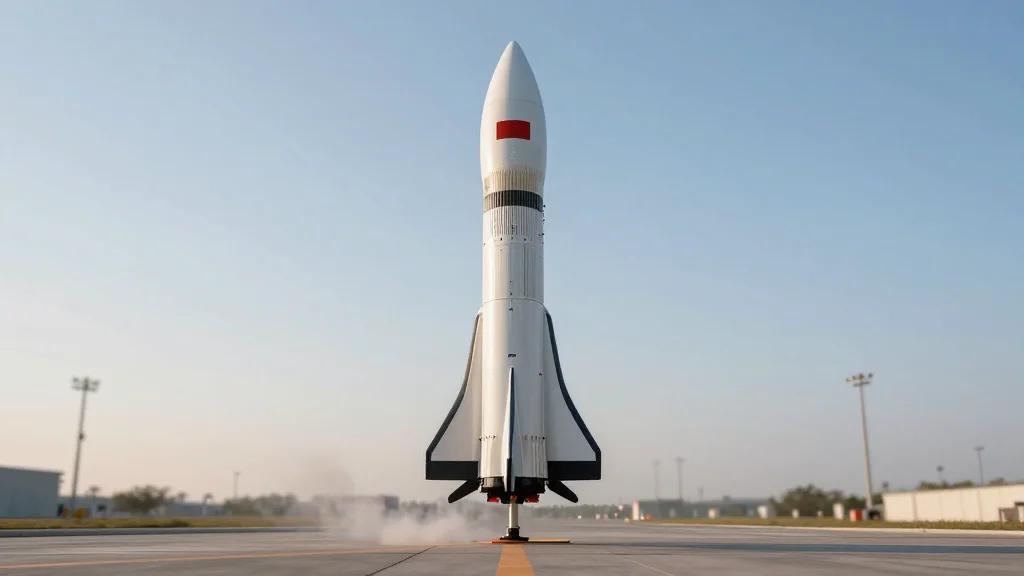
Firefly Aerospace Targets Late‑Summer Launch of Alpha Block 2 Rocket

Companies Mentioned
Why It Matters
The Alpha Block 2 launch represents a pivotal moment for the emerging class of small‑sat launchers that promise rapid, low‑cost access to orbit. By addressing reliability concerns and adding flexibility in launch locations, Firefly could diversify the U.S. launch ecosystem, reducing reliance on a few dominant providers. The emphasis on national‑security applications aligns with Pentagon priorities for responsive space, potentially unlocking new defense contracts and shaping future procurement strategies. If successful, the Block 2 could also position Firefly to compete for NASA’s lunar‑lander contracts, where the agency plans to spend $20 billion over the next seven years on dozens of lander flights. The ability to launch from multiple sites—including offshore platforms—offers a resilience advantage that could become a standard requirement for both government and commercial missions.
Key Takeaways
- •Firefly Aerospace targets late‑summer 2026 for the debut of Alpha Block 2 on Flight 8.
- •CEO Jason Kim cited “tens of millions” from the Swedish military for launch capability development.
- •Block 2 upgrades include stretched stages, new avionics, higher‑capacity batteries, and improved thermal protection.
- •Firefly is exploring offshore launch platforms with Seagate Space and a potential Esrange launch site in Sweden.
- •The launch aims to capture demand from U.S. national‑security programs and the growing small‑sat commercial market.
Pulse Analysis
Firefly’s aggressive timeline for Alpha Block 2 reflects a broader shift in the launch industry toward modular, responsive systems that can serve both defense and commercial customers. Historically, small‑sat launchers have struggled with reliability and cadence, but Firefly’s recent flawless Alpha flight and the announced upgrades suggest a maturing platform. The company’s focus on multi‑site capability—especially the offshore concept—addresses a strategic vulnerability: launch‑site dependency. If the Block 2 demonstrates the promised reliability, Firefly could become a go‑to provider for rapid‑response missions, a niche that larger launchers cannot economically fill.
The partnership signals an emerging ecosystem where launch providers collaborate with non‑traditional aerospace players. Seagate’s involvement in offshore launch platforms could lower the cost barrier for remote or contested launch sites, a capability increasingly valuable for hypersonic testing and resilient space architectures. Moreover, the Swedish military’s financial commitment hints at a growing European appetite for U.S. small‑sat launch services, potentially opening a trans‑Atlantic market.
Looking ahead, the Block 2’s performance will likely influence Firefly’s eligibility for upcoming NASA lunar‑lander contracts and Department of Defense launch tickets. Success could accelerate the company’s revenue pipeline, while any setback may reinforce the market’s skepticism about small‑sat launch reliability. Investors and policymakers will be watching the August‑September window closely, as the outcome may reshape the competitive dynamics among emerging launch firms and the established giants.
Firefly Aerospace Targets Late‑Summer Launch of Alpha Block 2 Rocket
Comments
Want to join the conversation?
Loading comments...