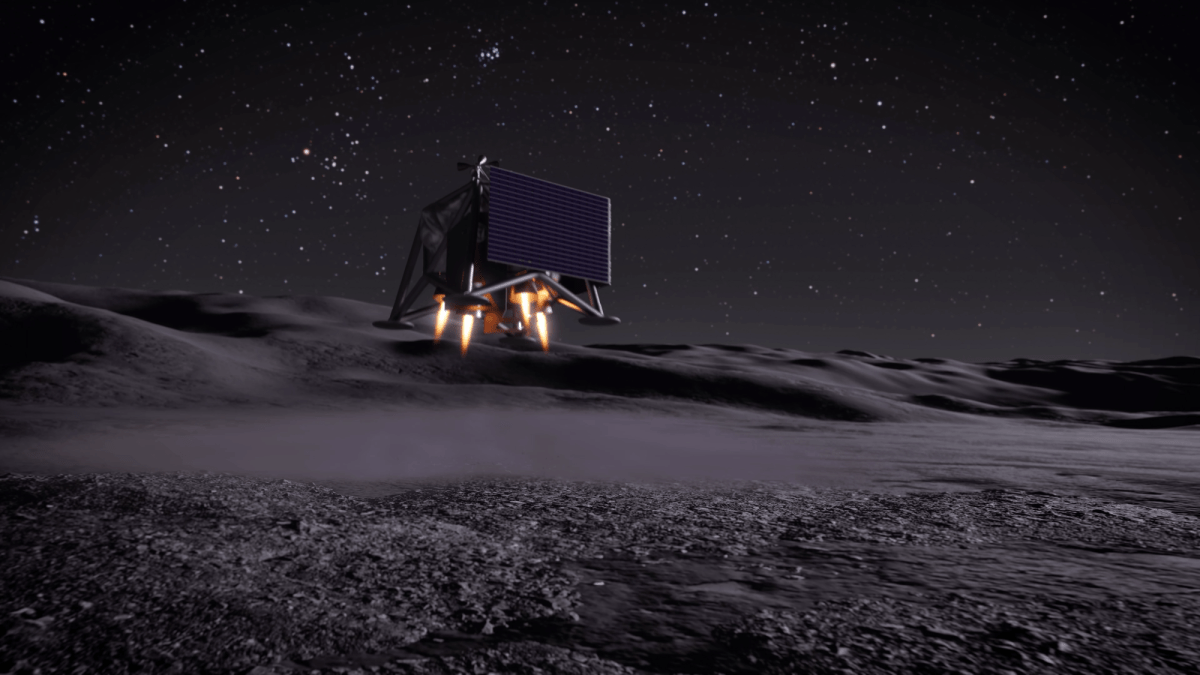
Four Drones Will Go Where No Astronaut Have Landed—Yet
Companies Mentioned
Why It Matters
MoonFall delivers essential reconnaissance that de‑risks crewed Artemis landings and reinforces U.S. strategic advantage in the contested lunar resource arena.
Key Takeaways
- •MoonFall will launch four 550‑lb drones to lunar South Pole
- •Each drone flies up to 14 Earth days, then survives lunar night
- •Firefly’s Elytra spacecraft will deliver drones after 45‑day Earth‑Moon transit
- •Payloads include dashcam, laser retroreflector, neutron and radiation spectrometers
- •MoonFall supports Artemis site selection amid US‑China lunar competition
Pulse Analysis
The Artemis program’s next milestone hinges on precise knowledge of the Moon’s most promising terrain. MoonFall’s quartet of autonomous drones represents a leap beyond traditional rovers, leveraging vertical take‑off and landing to reach the shadowed craters of the South Pole. By mapping surface roughness, locating potential water ice deposits, and measuring radiation levels, the mission fills critical data gaps that have long hampered crewed landing‑site certification.
Technically, each 550‑pound drone is equipped with a Lunar Dashcam, a laser retro‑reflector array for pinpoint tracking, a neutron spectrometer to gauge subsurface hydrogen, and a radiation spectrometer. Designed to endure the Moon’s extreme thermal swing, the drones operate for a full lunar day and then transition to a “survive‑the‑night” mode that can last several months despite temperatures plunging to –208 °F. Firefly Aerospace’s Elytra spacecraft, proven by the 2025 Blue Ghost lander, will ferry the fleet on a 45‑day transit, releasing them from a 31‑mile orbit to begin their survey.
Strategically, MoonFall’s data will shape the Artemis III landing corridor, directly influencing the placement of the first permanent lunar outpost. The mission also underscores the geopolitical race with China’s parallel South‑Pole ambitions, where resource extraction and scientific stewardship are increasingly intertwined. While the Artemis Accords provide a soft‑law framework for responsible exploration, the influx of commercial players like Firefly amplifies the need for clear policies that balance scientific inquiry, indigenous cultural concerns, and emerging lunar economies.
Four drones will go where no astronaut have landed—yet
Comments
Want to join the conversation?
Loading comments...