Aerospace News and Headlines
  • All Technology
  • AI
  • Autonomy
  • B2B Growth
  • Big Data
  • BioTech
  • ClimateTech
  • Consumer Tech
  • Crypto
  • Cybersecurity
  • DevOps
  • Digital Marketing
  • Ecommerce
  • EdTech
  • Enterprise
  • FinTech
  • GovTech
  • Hardware
  • HealthTech
  • HRTech
  • LegalTech
  • Nanotech
  • PropTech
  • Quantum
  • Robotics
  • SaaS
  • SpaceTech
AllNewsDealsSocialBlogsVideosPodcastsDigests

Aerospace Pulse

EMAIL DIGESTS

Daily

Every morning

Weekly

Sunday recap

NewsDealsSocialBlogsVideosPodcasts
AerospaceNewsFrom Soyuz to the Stars: A Roscosmos Trivia Quiz
From Soyuz to the Stars: A Roscosmos Trivia Quiz
AerospaceSpaceTech

From Soyuz to the Stars: A Roscosmos Trivia Quiz

•February 15, 2026
0
Space.com
Space.com•Feb 15, 2026

Why It Matters

Roscosmos remains a pivotal player in low‑Earth‑orbit operations, influencing global launch markets, satellite navigation, and future space‑station competition. Understanding its capabilities and strategic shifts is essential for stakeholders in the commercial space sector.

Key Takeaways

  • •Roscosmos modern agency formed in 1992
  • •Vostochny reduces dependence on Baikonur launches
  • •Zarya was first Russian‑built ISS component
  • •Progress provides routine ISS cargo resupply
  • •New Russian station aims for 2037 debut

Pulse Analysis

Roscosmos, the successor to the Soviet space program, officially reorganized in 1992 after the USSR’s dissolution. Its legacy includes historic firsts—Sputnik, Yuri Gagarin, and the pioneering Salyut stations—yet the agency has had to navigate a post‑Cold‑War landscape marked by budget constraints and shifting geopolitical priorities. By maintaining a robust launch capability and leveraging decades of engineering expertise, Roscosmos continues to shape international space policy and collaboration, especially through its participation in the International Space Station (ISS).

Today, Russia’s space infrastructure is anchored by both legacy sites and new investments. The Vostochny Cosmodrome, inaugurated to curtail dependence on the Baikonur complex in Kazakhstan, reflects a strategic push for greater launch autonomy. Russian hardware remains integral to the ISS: the Zarya module, the first component launched, and the Rassvet module, used for cargo storage and docking, underscore Roscosmos’s enduring operational relevance. Meanwhile, the Soyuz crew vehicle and Progress cargo ships provide reliable crew transport and resupply services, while the GLONASS satellite constellation offers a GPS‑compatible navigation alternative, reinforcing Russia’s presence in both orbital and terrestrial markets.

Looking ahead, Roscosmos is betting on a new national space station, often dubbed ROSS, with an initial module projected for 2037. This ambition places Russia in direct competition with commercial stations such as Axiom’s and the emerging lunar gateway concepts. Success will depend on securing funding, modernizing technology, and forging partnerships with private launch providers. Simultaneously, GLONASS expansion aims to capture a larger share of the global navigation market, challenging the dominance of GPS, Galileo, and BeiDou. For investors and industry analysts, Roscosmos’s trajectory offers insight into how a legacy agency can adapt, compete, and potentially reshape the future of low‑Earth‑orbit commerce.

From Soyuz to the stars: A Roscosmos trivia quiz

By Kenna Hughes‑Castleberry · published 20 hours ago

Test your knowledge of Russia's storied space agency — from its Soviet‑era roots to its modern‑day missions — with a quiz that's equal parts history, hardware, and high‑stakes exploration.

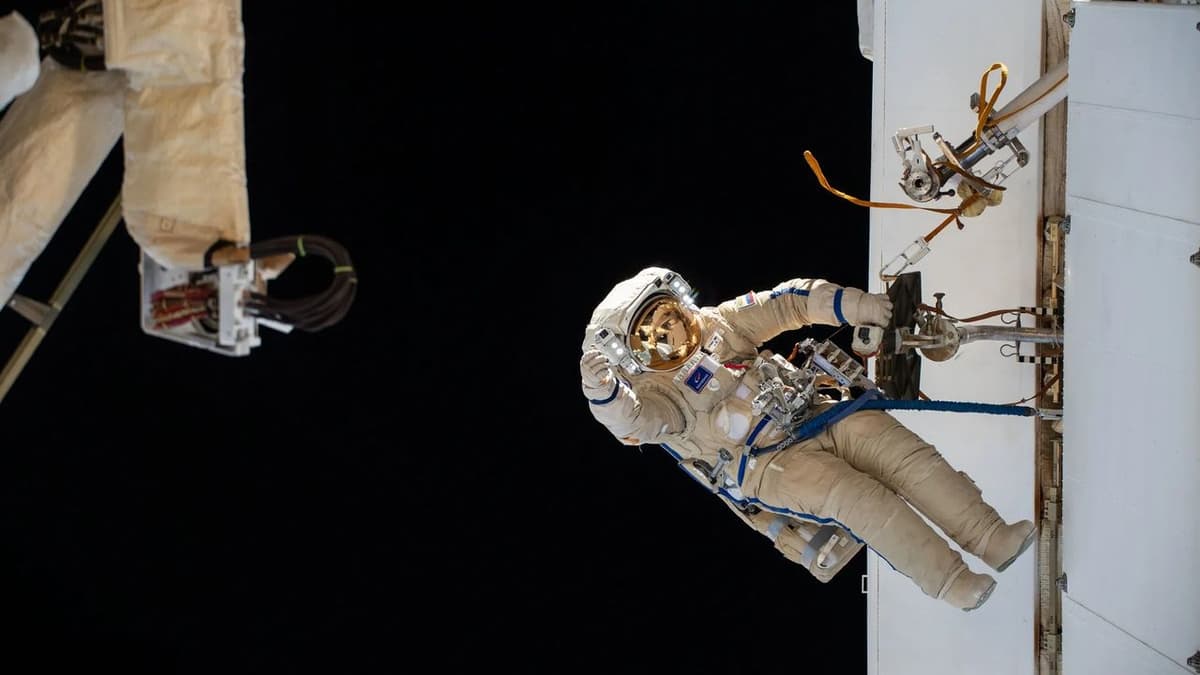
Image: A Russian cosmonaut performs a spacewalk outside the ISS (Image credit: NASA)


Roscosmos has always occupied a fascinating corner of the space world. Born from the legacy of the Soviet space program, it carries the weight of firsts that reshaped human history: the first satellite, the first human in orbit, the first long‑duration space stations. Even today, its influence stretches from the steppes of Kazakhstan to the far reaches of low Earth orbit.

But Roscosmos is more than a relic of the past. Its launch facilities, engineering culture, and scientific missions continue to shape global spaceflight in ways both visible and behind the scenes.

Of course, the agency's story is also one of dramatic shifts — political, technological, and cultural. From the fall of the USSR to the rise of commercial spaceflight, Roscosmos has had to reinvent itself more than once. That evolution makes it a rich subject for trivia: full of surprising facts, iconic milestones, and a few oddities that even space fans sometimes miss.

This quiz dives into all of it. Whether you're a casual space enthusiast or someone who can recite Soyuz design specs from memory, you'll find questions that challenge what you know — and maybe teach you something new about one of the world's most influential space agencies.


Quiz

Question 1 – Roscosmos traces its modern roots to Russia's post‑Soviet space agency formed in…

  • 1957

  • 1961

  • 1975

  • 1992

Question 2 – One major reason Russia developed its Vostochny Cosmodrome was to…

  • Replace the need for any crewed spacecraft

  • Reduce reliance on Baikonur in Kazakhstan

  • Move all launches to equatorial sites

  • End the use of rockets entirely

Question 3 – The ISS module Zarya is important to both Roscosmos and the ISS because it…

  • Was the first ISS component launched and was Russian‑built

  • Was the first Russian‑US joint project

  • Is the ESA's main habitat

  • Was the first Russian lab to carry animals into space

Question 4 – Which of the following are names of two Russian spacecraft?

  • Dragon and Cygnus

  • HTV and ATV

  • Progress and Soyuz

  • Ariane and Orion

Question 5 – Which spacecraft delivered Roscosmos's ISS module Rassvet?

  • Soyuz

  • Space Shuttle Atlantis

  • Progress 12

  • Space Shuttle Endeavour

Question 6 – On the ISS, the Rassvet module is primarily used for…

  • Main propulsion and station reboost

  • Cargo storage, some payload operations and an added docking station

  • Power generation to the entire ISS

  • Crew quarters for Russian astronauts

Question 7 – Which Russian spacecraft is used as a cargo ship to resupply the ISS?

  • Soyuz

  • Venera

  • Progress

  • Ariane

Question 8 – Roscosmos's Soyuz spacecraft is designed to…

  • Carry only cargo

  • Carry only satellites

  • Land only on ocean splashdowns

  • Carry crew (and some supplies) to and from the ISS and ferry people to Earth

Question 9 – Roscosmos has announced plans for a future Russian space station (often referred to as ROSS) with an initial module targeted for…

  • 2027

  • 2037

  • 2040

  • 2045

Question 10 – Which satellite navigation system is operated under Russia's space program and is often described as an alternative to GPS?

  • Galileo

  • BeiDou

  • GLONASS

  • NavIC


Your score: 0 / 10 (play again to improve!)


Read Original Article
0

Comments

Want to join the conversation?

Loading comments...