Aerospace News and Headlines
  • All Technology
  • AI
  • Autonomy
  • B2B Growth
  • Big Data
  • BioTech
  • ClimateTech
  • Consumer Tech
  • Crypto
  • Cybersecurity
  • DevOps
  • Digital Marketing
  • Ecommerce
  • EdTech
  • Enterprise
  • FinTech
  • GovTech
  • Hardware
  • HealthTech
  • HRTech
  • LegalTech
  • Nanotech
  • PropTech
  • Quantum
  • Robotics
  • SaaS
  • SpaceTech
AllNewsDealsSocialBlogsVideosPodcastsDigests

Aerospace Pulse

EMAIL DIGESTS

Daily

Every morning

Weekly

Sunday recap

NewsDealsSocialBlogsVideosPodcasts
AerospaceNewsFrom the Plus Ultra to the Airbus A400M: A Century of Transatlantic Pioneers
From the Plus Ultra to the Airbus A400M: A Century of Transatlantic Pioneers
Aerospace

From the Plus Ultra to the Airbus A400M: A Century of Transatlantic Pioneers

•February 10, 2026
0
Airbus – Newsroom
Airbus – Newsroom•Feb 10, 2026

Companies Mentioned

Airbus

Airbus

Why It Matters

The commemorative tour reinforces Airbus’s brand heritage while highlighting its strategic presence in the South American defense market, linking past innovation with future aerospace opportunities.

Key Takeaways

  • •Plus Ultra crossed Atlantic in 1926, covering 10,270 km
  • •Airbus A400M will retrace route in 2026
  • •Tour includes H120 helicopters and shows in Brazil, Uruguay, Argentina
  • •Celebrates Spanish aviation heritage and CASA's legacy
  • •Highlights Airbus's market presence in South America

Pulse Analysis

The 1926 Plus Ultra flight remains a milestone in aviation history, demonstrating how early pilots combined dead‑reckoning, celestial navigation and nascent radio direction‑finding to bridge Europe and Latin America. Covering more than 10,000 km in just 60 flight hours, the Dornier J Wal proved that long‑range, all‑metal seaplanes could overcome the Atlantic’s unforgiving weather. This achievement not only opened commercial routes but also laid the groundwork for Spain’s later involvement in advanced aircraft manufacturing through firms like CASA.

A century later, Airbus leverages that legacy with a high‑visibility A400M tour that mirrors the original path. Departing from the historic Palos de la Frontera base, the twin‑engine transports, supported by H120 Colibrí aerobatic helicopters, will perform air shows in Rio de Janeiro, Montevideo and Buenos Aires. The event serves a dual purpose: honoring pioneering aviators and showcasing the A400M’s payload, range and versatility to South American defense ministries. By aligning the modern platform with a celebrated national narrative, Airbus strengthens its brand equity and positions itself for future contracts in a region eager for capable, multi‑role military aircraft.

Beyond the spectacle, the commemoration underscores a broader industry trend of heritage‑driven marketing. Linking historic feats to contemporary technology helps manufacturers differentiate in a crowded market, while reinforcing ties with legacy partners such as the Spanish Air and Space Force. The tour also signals Airbus’s commitment to expanding its footprint in South America, where emerging defense budgets and infrastructure projects create demand for advanced transport solutions. As aerospace firms balance innovation with storytelling, events like the Plus Ultra anniversary illustrate how past achievements can fuel future growth and strategic partnerships.

From the Plus Ultra to the Airbus A400M: a century of transatlantic pioneers

Airbus joins the Spanish Air and Space Force to commemorate the centenary of the first South Atlantic crossing

Airbus is joining the Spanish Air and Space Force to commemorate the centenary of the first South Atlantic crossing between Spain and South America. It was a feat of endurance that continues to inspire modern aerospace innovation.

On 22 January 1926, a Dornier J Wal seaplane, christened Plus Ultra (Latin for “further”), departed from Palos de la Frontera, Spain. Manned by Commander Ramón Franco, Captain Julio Ruiz de Alda, Lieutenant Juan Manuel Durán and Sergeant Pablo Rada, the mission was clear: to reach Buenos Aires, Argentina.

The journey was a masterclass in early long‑range navigation. Over 19 days and several technical stops, the crew covered 10,270 km in approximately 60 hours of flight time, using a combination of dead reckoning, astronomical observations and radio direction finding: cutting‑edge technology at the time. When they landed in the Argentine capital on 10 February, they had not only completed a flight but established a permanent bridge between Europe and Latin America.

From the 1926 milestone to the tribute in South American skies

A century after that historic flight redefined the limits of aviation, Airbus aircraft are joining the Spanish Air and Space Force on a commemorative tour of South America.

On 24 January 2026, two Airbus A400M military transport aircraft will depart from Palos de la Frontera in Huelva, Spain. They will form the backbone of the mission. They carry six Airbus H120 Colibrí helicopters belonging to the Patrulla Aspa, Spain's world‑renowned aerobatic team.

The Patrulla Aspa air shows will begin on 28 January over Ipanema Beach in Rio de Janeiro, Brazil, and will then continue on 1 February at Punta Brava Cove (Rambla Golf Club) in Montevideo, Uruguay, and on 4 February at Aeroparque Airport in Buenos Aires, Argentina, with the tour concluding on 7 February.

The A400M of the Spanish Air and Space Force

H120s of the Aspa Patrol of the Spanish Air and Space Force

Centenary of the great flights of Spanish aviation

While paying tribute to the Plus Ultra, the tour also kicks off a year of celebrations commemorating the centenary of great military aviation flights in Spain, including the legendary 17,500 km flight between Madrid and Manila by the Escuadrilla Elcano in April 1926.

The connection with Airbus: from CASA to the future

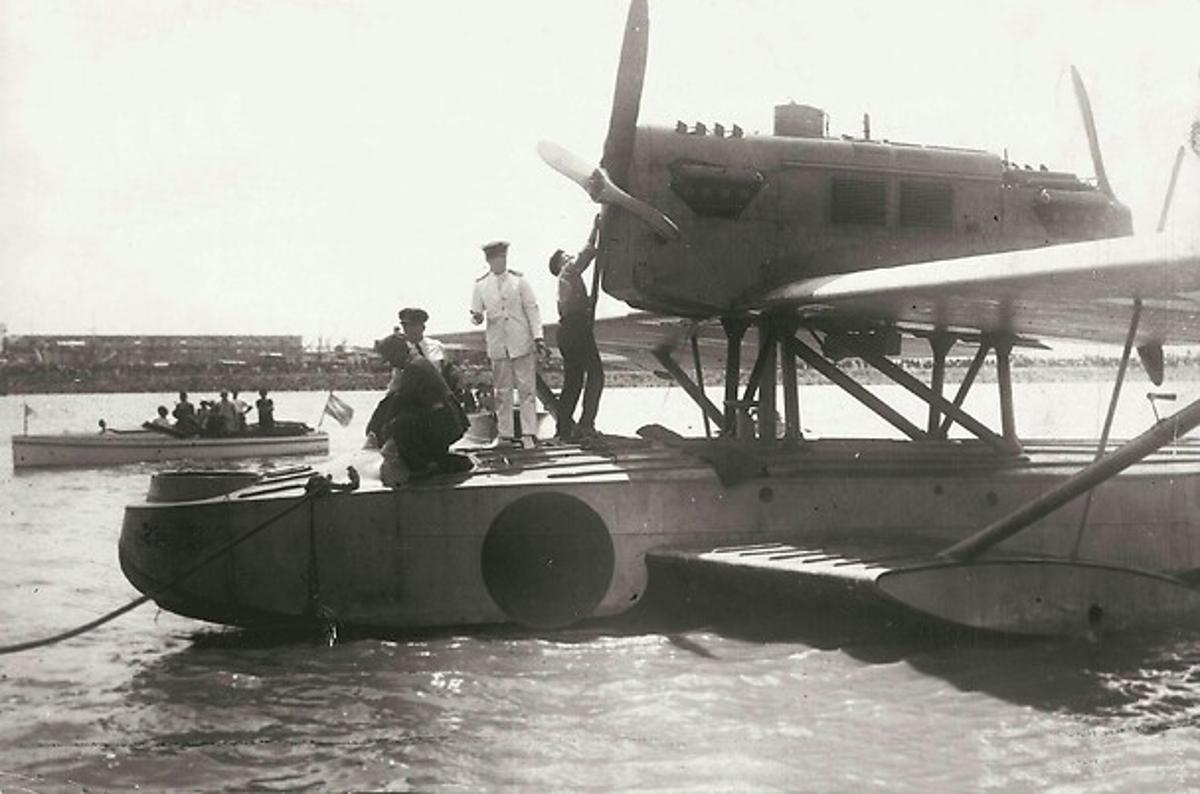
The Plus Ultra was a Dornier J Wal, a revolutionary all‑metal ‘whale’ (Wal in German) designed by Claudius Dornier. It belonged to a series of seaplanes purchased by the Spanish Military Aeronautics (the precursor to the current Air and Space Force). Although the original aircraft was built in Marina di Pisa, Italy, its legacy is deeply intertwined with the Spanish heritage of Airbus.

Construcciones Aeronáuticas S.A. (CASA), the direct predecessor of Airbus in Spain, subsequently manufactured these advanced seaplanes under licence at its facilities in Cádiz for the Spanish Air Force, the Navy and even the Spanish Postal Airlines (LAPE).

This early experience in maritime patrol and long‑range aircraft laid the foundations for Spain's integral role in the development of modern military aviation and aerospace engineering.

The Plus Ultra in Las Palmas. In the cockpit, you can see pilot Ramón Franco and, tending to the engines, mechanic Pablo Rada. With a double‑finned hydrofoil configuration, the Dornier J Wal was constructed entirely of metal and had two engines in tandem. It was equipped with side floats that increased its stability on the water and carried a crew of up to five people.

A pioneering Atlantic crossing: overcoming the elements

The 1926 crossing was far from a routine flight; it was a test of endurance fraught with technical challenges that pushed the Dornier J Wal to the limits of its capabilities.

The expedition began on 22 January, and the first stage ended in Las Palmas de Gran Canaria. Four days later, the crew continued on to Porto Praia, Cape Verde. It was there that a difficult strategic decision was made: Lieutenant Durán disembarked to lighten the aircraft's load for the gruelling 2,305‑kilometre stretch over the open ocean.

Cockpit of the Dornier Wal Plus Ultra

In the middle of the Atlantic, the mission faced its greatest test. Strong headwinds burnt through their fuel reserves, making their original destination of Pernambuco, Brazil, unreachable. In a demonstration of expert aerial navigation, Commander Franco managed to land the Plus Ultra on the small island of Fernando de Noronha, located 354 kilometres from the Brazilian coast, with the fuel tanks almost empty.

The drama continued during the next 540 km leg to Pernambuco, when the rear engine propeller broke. In a feat of aerial engineering, the crew managed to make repairs while still in the air. Once they reached the South American continent, Durán rejoined the expedition for the final victory lap.

The welcome given to the flying aces in Rio de Janeiro, Montevideo and Buenos Aires was impressive, with huge crowds of people turning out to see them. It all culminated in a triumphant parade in the Argentine capital on 10 February, attended by 300,000 spectators.

Reception of the Plus Ultra seaplane in Buenos Aires.

Bold spirit: then and now

When the Airbus A400M flies this historic route again in 2026, it will be a symbol of the evolution of aviation, from the first metal seaplanes to the multifunctional military transport aircraft of the 21st century. Airbus continues to look “beyond”, ensuring that the future of the aerospace industry is as pioneering as its past.

Read Original Article
0

Comments

Want to join the conversation?

Loading comments...