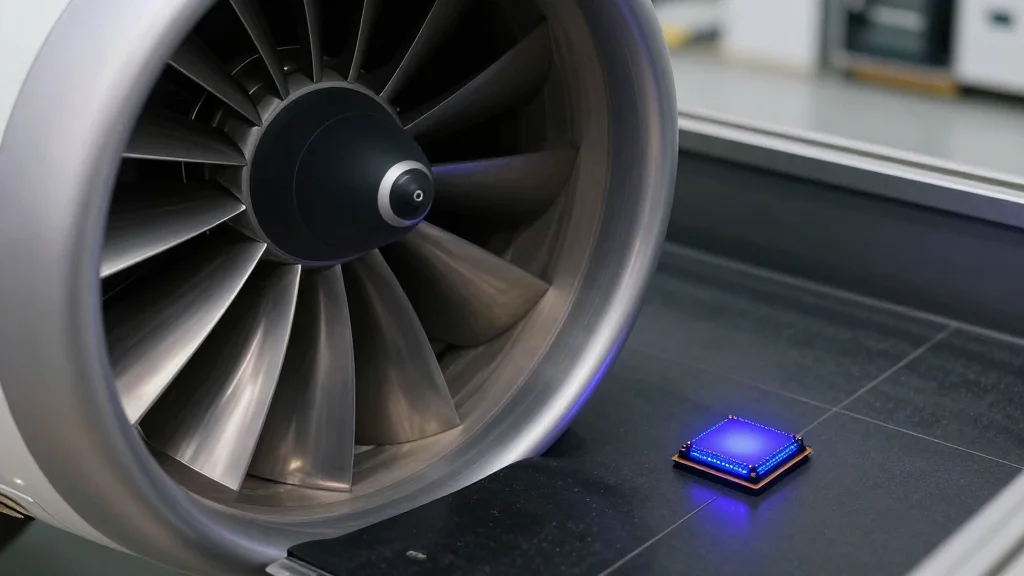
GE Aerospace and Wolfspeed Sign MoU to Collaborate on Accelerating High-Voltage Silicon Carbide Adoption
Companies Mentioned
Why It Matters
The collaboration fast‑tracks domestic production of high‑voltage SiC, a critical enabler for electrified platforms and a solution to the power‑delivery bottleneck facing AI, aerospace, and defense sectors. It also reduces reliance on legacy silicon and foreign sources, bolstering U.S. strategic technology independence.
Key Takeaways
- •GE Aerospace, Wolfspeed partner to set high‑voltage SiC standards.
- •New 10 kV SiC MOSFET offers production‑ready power for A&D.
- •Collaboration aims to boost domestic supply chain resilience.
- •High‑voltage SiC modules reduce system complexity and improve efficiency.
- •Qualified SiC units ready for US military ground vehicles.
Pulse Analysis
Silicon carbide is emerging as the material of choice for next‑generation power electronics, thanks to its superior thermal conductivity and ability to operate at higher voltages than traditional silicon. As AI workloads, electric propulsion, and advanced defense systems demand ever‑greater power density, manufacturers are scrambling for components that can deliver efficiency without excessive cooling or weight. High‑voltage SiC devices, especially those exceeding 10 kV, provide a pathway to solid‑state transformers and compact power modules that can replace bulky, series‑connected silicon stacks.
The GE Aerospace‑Wolfspeed memorandum of understanding goes beyond a simple supplier relationship; it establishes a joint effort to create industry‑wide standards for high‑voltage SiC power modules. By aligning on design specifications, testing protocols, and qualification criteria, the two firms aim to reduce time‑to‑market for new aerospace and defense platforms. The partnership also emphasizes domestic sourcing, a strategic move to insulate critical supply chains from geopolitical disruptions. Wolfspeed’s leadership in 200 mm SiC wafer production and its recent 10 kV MOSFET launch complement GE Aerospace’s proven aerospace qualification processes, creating a robust ecosystem for high‑power, low‑loss components.
For the broader market, this collaboration signals a maturation of SiC technology from niche applications to mainstream adoption. Competitors will feel pressure to accelerate their own SiC roadmaps, while end‑users—aircraft manufacturers, defense contractors, and industrial equipment makers—can anticipate more reliable, lighter, and energy‑efficient power solutions. In the long term, widespread SiC integration could reshape design architectures, lower operating costs, and support the United States’ push for energy‑secure, high‑performance platforms. The partnership thus not only addresses an immediate power‑delivery crunch but also sets the stage for a new era of electrified, high‑performance systems.
GE Aerospace and Wolfspeed sign MoU to collaborate on accelerating high-voltage silicon carbide adoption
Comments
Want to join the conversation?
Loading comments...