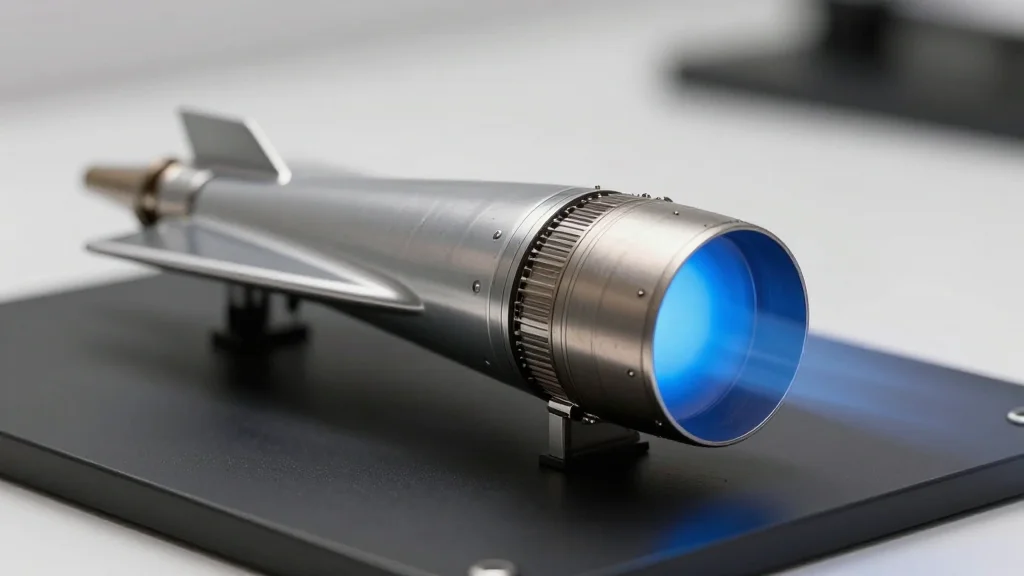
GE Aerospace Cuts Hypersonic Ramjet Design Time to Seconds with Generative AI

Why It Matters
The ability to generate a viable hypersonic ramjet layout in seconds could dramatically shorten the development timeline for weapons that the U.S. military deems essential for future conflict scenarios. Faster design cycles reduce costs, lower risk, and enable more rapid fielding of next‑generation capabilities. In the commercial sector, the same AI‑driven approach promises to accelerate the transition to sustainable engine technologies, helping airlines meet aggressive emissions targets while maintaining performance. If the technology scales, it may also democratize advanced propulsion design, allowing smaller firms or government labs to prototype high‑performance engines without the extensive human expertise traditionally required. This could broaden the competitive landscape and spur a wave of innovation across the aerospace ecosystem.
Key Takeaways
- •GE Aerospace generated a preliminary hypersonic ramjet design in seconds using generative AI
- •Design time reduced from weeks/months to seconds, meeting all flight safety criteria
- •Joe Vinciquerra, GE Aerospace Research GM, emphasized AI as a strategic differentiator
- •AI tool will be applied to CFM's RISE sustainable engine program and the GE426 autonomous combat engine
- •U.S. Air Force contract for GE426 PDR awarded; financial terms not disclosed
Pulse Analysis
GE Aerospace’s AI breakthrough arrives at a pivotal moment when hypersonic capability is a focal point of U.S. defense strategy. Historically, engine development cycles have been a bottleneck, often spanning several years from concept to flight test. By compressing the preliminary design phase to seconds, GE not only accelerates internal timelines but also forces competitors to reconsider their own R&D processes. Companies like Pratt & Whitney and Rolls‑Royce, which have invested heavily in traditional CFD and wind‑tunnel testing, may need to integrate similar AI workflows to stay relevant.
The commercial implications are equally profound. The RISE program’s focus on open‑fan architectures aligns with industry pressure to cut fuel burn and emissions. If AI can reliably generate viable design alternatives across a spectrum of performance targets, engine manufacturers could iterate dozens of concepts in a single day, dramatically expanding the design space. This could lead to breakthroughs that were previously impractical due to time and cost constraints.
However, the rapid design capability also raises questions about verification and validation. While the preliminary layout meets safety criteria, downstream analysis—structural integrity, thermal management, and real‑world testing—still requires rigorous scrutiny. The industry will need robust frameworks to ensure AI‑generated designs do not bypass essential safety checks. If GE Aerospace can demonstrate a seamless integration of AI design with traditional validation pipelines, it could set a new standard for how aerospace engineering is conducted in the 2030s.
GE Aerospace Cuts Hypersonic Ramjet Design Time to Seconds with Generative AI
Comments
Want to join the conversation?
Loading comments...