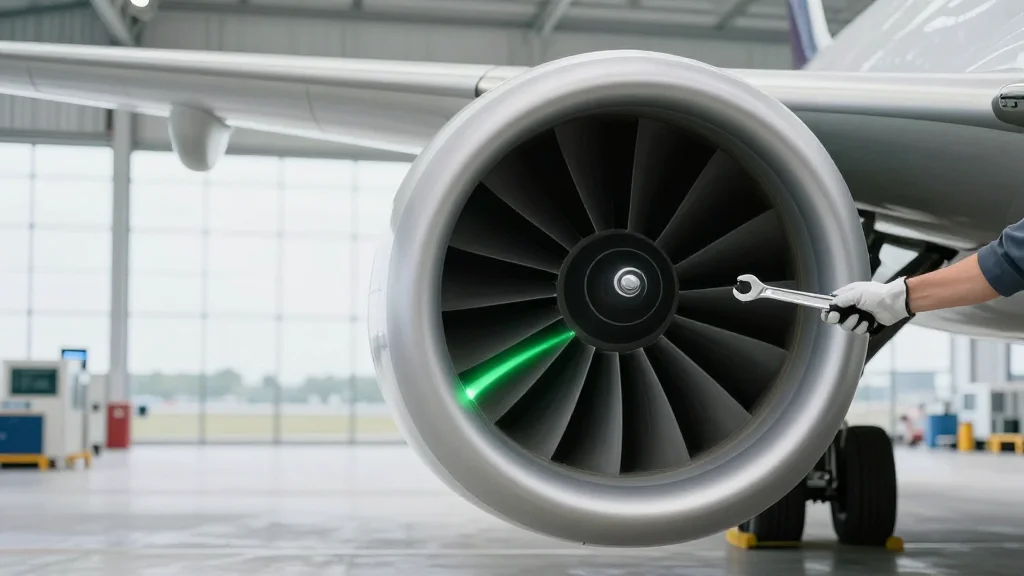
GE Aerospace, Delta TechOps Target 34% Faster CF6 Engine Maintenance

Companies Mentioned

Why It Matters
The CF6 engine remains a backbone of the U.S. wide‑body fleet, and any efficiency gain reverberates through airline cost structures, ticket pricing, and schedule reliability. By demonstrating that a systematic lean approach can shave a third off maintenance turnaround, GE Aerospace and Delta TechOps provide a template for the broader MRO industry, which faces chronic labor shortages and escalating parts costs. The initiative also highlights the strategic importance of aftermarket services as a growth engine for engine manufacturers, shifting revenue focus from new‑engine sales to long‑term service contracts. Beyond immediate cost savings, the partnership underscores a cultural shift toward data‑driven, ergonomics‑focused shop‑floor practices. Reducing technician travel and improving safety not only boosts productivity but also addresses workforce retention challenges in a sector where skilled labor is scarce. If other OEMs adopt similar models, the cumulative effect could be a more resilient, faster‑turning aviation ecosystem capable of absorbing future disruptions.
Key Takeaways
- •GE Aerospace and Delta TechOps aim for a 34% reduction in CF6 engine maintenance TAT by end‑2026.
- •The program has already achieved a 25% reduction in turnaround time after eight kaizen events.
- •Vertical assembly of CF6 rotating components cut cycle time by 54% and technician travel by 34%.
- •Ergonomic risk for technicians dropped from “high” to “low,” improving workplace safety.
- •CF6 powers roughly 25% of Delta’s wide‑body fleet, making the efficiency gains directly impactful on airline operations.
Pulse Analysis
The GE‑Delta partnership arrives at a moment when airlines are scrambling to recover from pandemic‑induced capacity gaps while contending with a tightening labor market in MRO. Historically, engine manufacturers have relied on incremental process tweaks; this joint effort represents a more aggressive, data‑centric overhaul that could reset industry benchmarks for maintenance efficiency. By embedding the FLIGHT DECK model into daily shop‑floor routines, GE is not just selling a methodology but also cementing a long‑term service relationship that could lock in aftermarket revenue for years to come.
From a competitive standpoint, the success of this initiative may force rivals to accelerate their own lean transformations. Rolls‑Royce’s recent "Lean Engine" pilot and Pratt & Whitney’s digital twin‑driven maintenance programs suggest a converging trend: OEMs are betting on operational excellence as a differentiator. If GE can demonstrate quantifiable cost savings and safety improvements across multiple engine families, it could capture a larger share of the lucrative aftermarket market, especially as airlines prioritize reliability over new‑engine purchases in a cost‑conscious environment.
Looking ahead, the real test will be scalability. The CF6 program benefits from Delta’s sizable in‑house MRO capability and a relatively homogeneous fleet. Extending the model to more diverse fleets, or to airlines with less integrated MRO operations, will require adaptable tooling, robust data analytics, and perhaps new partnership structures. Nonetheless, the early results provide a compelling proof point that lean, ergonomics‑focused interventions can deliver double‑digit efficiency gains, a narrative that could reshape how the aerospace industry approaches maintenance in the next decade.
GE Aerospace, Delta TechOps Target 34% Faster CF6 Engine Maintenance
Comments
Want to join the conversation?
Loading comments...