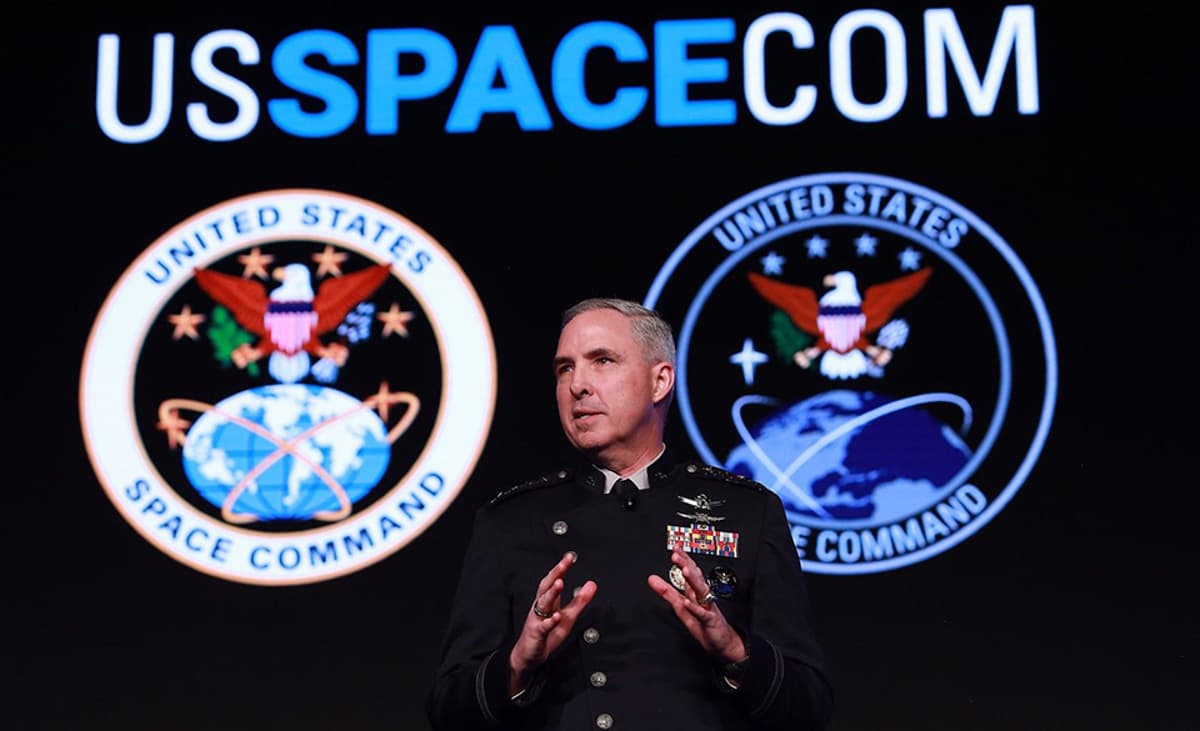
Gen. Stephen Whiting: First USSPACECOM Operational Staff Arrive at Redstone This Week
Why It Matters
The move accelerates USSPACECOM’s operational readiness in space, reinforcing U.S. deterrence and integrating civilian talent with new warfighting concepts. It also signals deeper multinational collaboration and a shift toward rapid, maneuver‑centric space operations.
Key Takeaways
- •First eight USSPACECOM intelligence analysts start operational work at Redstone
- •Redstone will host 200 staff by year‑end, full HQ by 2031‑32
- •Civilians receive up to 100% salary incentive to relocate to Huntsville
- •USSPACECOM develops “Apollo maneuvers” and war‑gaming for space maneuver warfare
- •Germany pledges €35 billion (~$38 billion) to joint space strategy
Pulse Analysis
The relocation of USSPACECOM’s first operational personnel to Redstone Arsenal underscores a strategic pivot toward a permanent, combat‑ready space headquarters. By accelerating construction timelines—thanks to new authorities in the National Defense Authorization Act—the command expects to field 200 staff by the end of 2026 and achieve full headquarters capability by the early 2030s. This rapid buildup not only consolidates command functions but also embeds a sizable civilian workforce, incentivized with up to a 100% salary boost to ensure continuity of expertise during the transition.
Beyond the physical move, USSPACECOM is redefining how the United States fights in orbit. General Whiting highlighted the development of "Apollo maneuvers," a suite of modeling, simulation, and war‑gaming activities designed to enable agile, maneuver‑centric operations in space. Drawing lessons from the recent Iran conflict, the command stresses that even medium powers will target U.S. space assets, prompting a shift from sanctuary to active defense. Integration with U.S. Cyber Command and the deployment of the Counter‑Communication System illustrate a multi‑domain approach that blends space, cyber, and kinetic capabilities to deny adversaries critical communications.
International cooperation forms the third pillar of the strategy. Allies including Germany, France, the United Kingdom, Australia, Canada, and New Zealand have pledged support under Operation Olympic Defender, with Germany alone committing roughly $38 billion to a joint space strategy. The command is also monitoring Chinese lunar ambitions, developing cislunar requirements to counter potential threats from the moon’s far side. As Redstone’s footprint expands through 2027‑28, USSPACECOM aims to cement the United States’ leadership in space warfare while fostering a robust, allied network to address emerging challenges.
Gen. Stephen Whiting: First USSPACECOM Operational Staff Arrive at Redstone This Week
Comments
Want to join the conversation?
Loading comments...