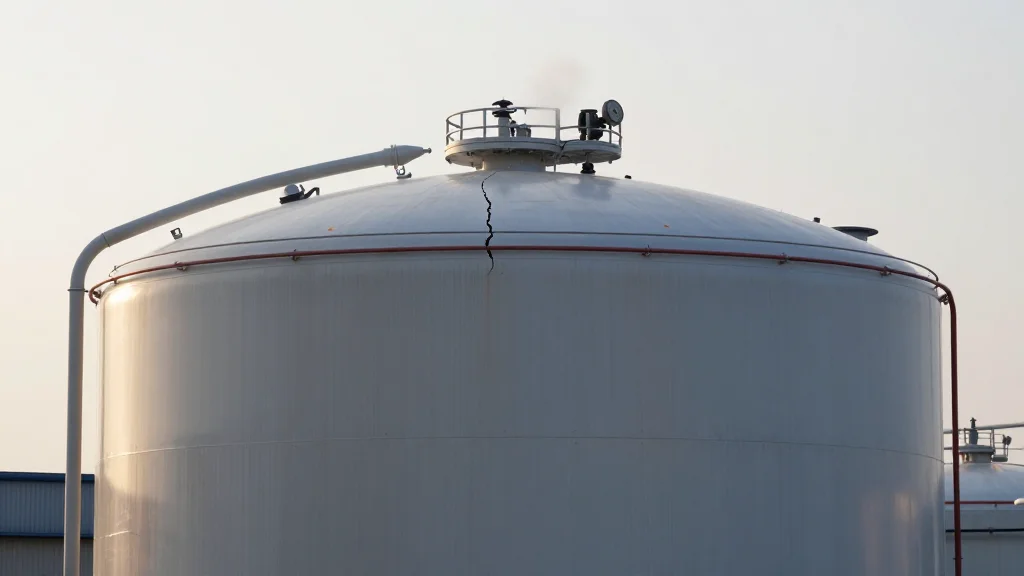
GKN Aerospace Tank Crack Eases Explosion Threat as 50,000 Remain Evacuated

Why It Matters
The Garden Grove incident underscores how a single chemical‑storage failure can jeopardize public safety, disrupt aerospace supply chains, and trigger costly legal and regulatory fallout. With GKN Aerospace supplying components for both commercial jets and defense programs, any prolonged shutdown could ripple through aircraft manufacturers that rely on its composite parts, potentially delaying production schedules and increasing costs. Beyond the immediate hazard, the event may prompt the Federal Aviation Administration and the Occupational Safety and Health Administration to revisit guidelines for hazardous‑material storage at aerospace facilities. Stricter oversight could lead to higher compliance expenses, but it also offers an opportunity to embed more resilient safety designs—such as redundant venting mechanisms—into future plant layouts, thereby reducing the likelihood of similar emergencies.
Key Takeaways
- •Approximately 50,000 Garden Grove residents remain under evacuation orders after a tank breach at GKN Aerospace.
- •The tank holds 6,000‑7,000 gallons of methyl methacrylate, a volatile chemical used in aerospace plastics.
- •Temperature peaked at 100 °F (37.7 °C) on Sunday, then fell to 93 °F after cooling efforts.
- •Interim fire chief T.J. McGovern said the crack could change the emergency response trajectory.
- •Governor Newsom declared a state of emergency; President Trump issued a federal emergency declaration.
Pulse Analysis
The Garden Grove episode is a textbook case of how chemical‑process risk management intersects with aerospace manufacturing. Historically, the industry has focused on flight‑safety standards, but incidents like this highlight a blind spot: the safety of the supply‑chain facilities that produce the very materials that keep aircraft aloft. The crack in the tank, while fortuitous, exposed a lack of redundant pressure‑relief systems that are standard in petrochemical plants but less common in aerospace component factories. Moving forward, firms will likely invest in dual‑venting designs and real‑time thermal imaging to preempt thermal runaway scenarios.
From a market perspective, the incident could tighten credit terms for aerospace suppliers that store large volumes of hazardous chemicals near urban centers. Insurers may raise premiums, and investors could demand higher ESG (environmental, social, governance) scores, pressuring companies to disclose chemical‑safety metrics more transparently. The class‑action lawsuit against GKN Aerospace also signals that community stakeholders are prepared to hold manufacturers accountable, potentially accelerating the adoption of stricter local ordinances.
Finally, the response coordination between state, federal, and local agencies offers a template for future emergencies. The rapid deployment of drones, continuous atmospheric monitoring, and the use of social media to correct misinformation set a new operational benchmark. If the evacuation can be lifted without incident, the episode may become a case study in effective crisis mitigation; if not, it could catalyze a regulatory overhaul that reshapes how aerospace manufacturers manage chemical hazards nationwide.
GKN Aerospace Tank Crack Eases Explosion Threat as 50,000 Remain Evacuated
Comments
Want to join the conversation?
Loading comments...