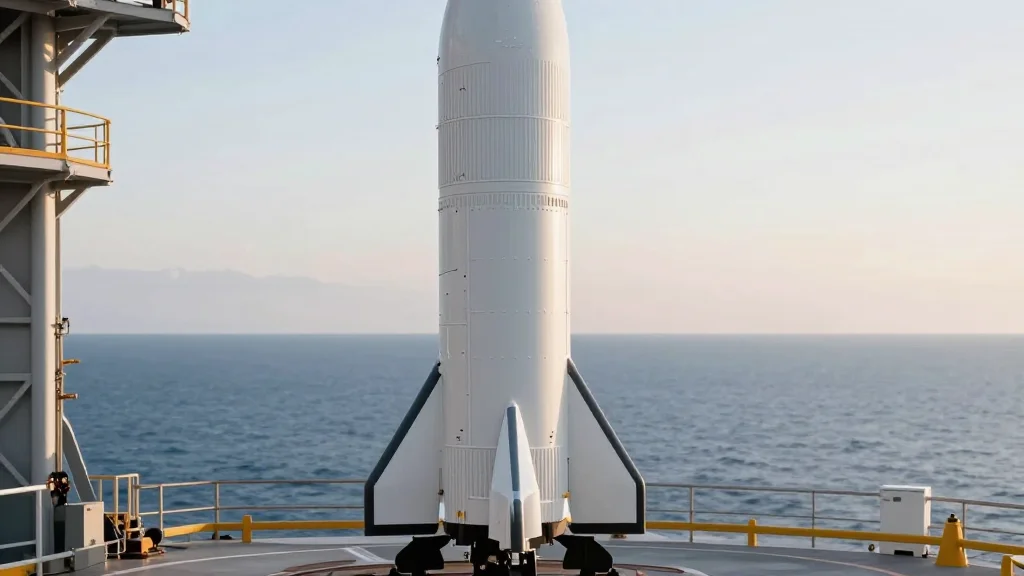
Growing Launch Demand Revives Interest in Offshore Rocket Operations
Why It Matters
Offshore launch capability could quickly expand U.S. launch capacity without costly new land facilities, strengthening both commercial competitiveness and national security resilience.
Key Takeaways
- •U.S. launch demand projected to exceed 100 missions annually by 2030
- •Sea‑based platforms could add 30% more launch slots without new land sites
- •Companies like Blue Origin and Firefly explore mobile sea launch concepts
- •Defense agencies see offshore launches as resilient option against terrestrial threats
- •Regulatory hurdles include maritime law, range safety, and environmental permits
Pulse Analysis
The United States faces a looming "spaceport crunch" as satellite constellations, lunar missions, and defense payloads drive launch forecasts beyond 100 flights per year by the end of the decade. Existing launch pads are constrained by geographic, environmental, and political factors, leading to scheduling bottlenecks and rising costs. Offshore launch sites, positioned in international waters, promise a modular solution that can be deployed where demand spikes, sidestepping the lengthy permitting processes tied to new terrestrial facilities.
Historically, sea‑based launches have struggled with technical reliability and high operational expense, exemplified by early attempts that never achieved sustained commercial viability. However, advances in reusable launch vehicles, autonomous navigation, and maritime logistics are reshaping the equation. Companies such as Blue Origin and Firefly are leveraging their experience with reusable boosters to design smaller, self‑contained launch platforms that can be towed to optimal launch windows. These innovations reduce turnaround time and improve safety margins, making offshore operations increasingly attractive to both private and government customers.
For the defense sector, offshore launch capability adds a layer of strategic redundancy, ensuring critical payloads can be sent to orbit even if land‑based sites are compromised by natural disasters or adversarial actions. Policymakers are now grappling with regulatory challenges, including compliance with maritime law, range safety coordination, and environmental impact assessments. If these hurdles can be navigated, sea‑based launch could become a cornerstone of a more resilient, flexible U.S. space architecture, unlocking new market opportunities and reinforcing national security objectives.
Growing Launch Demand Revives Interest in Offshore Rocket Operations
Comments
Want to join the conversation?
Loading comments...