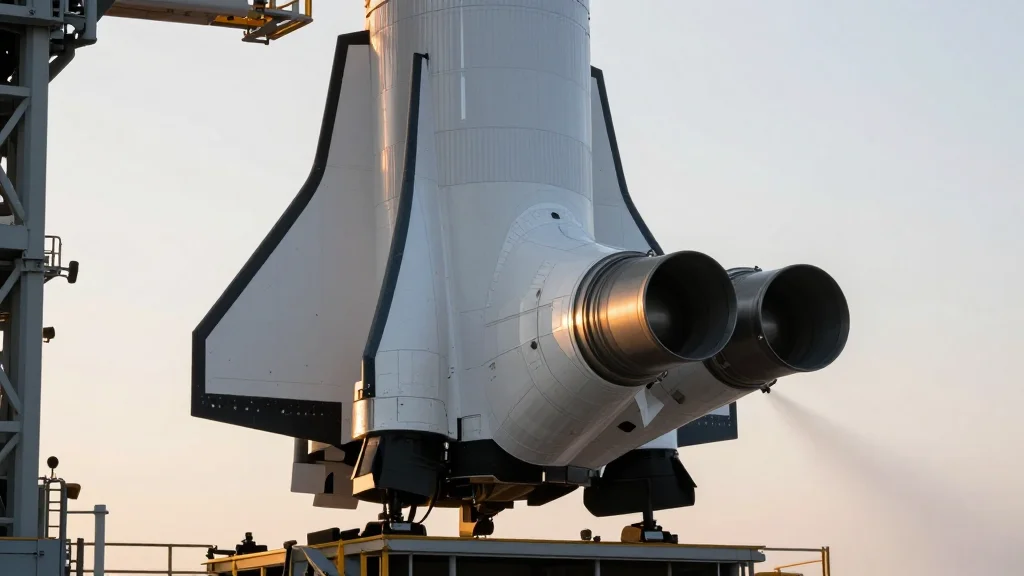
Hanwha Accelerates to Become Korea’s SpaceX with New Launch Vehicle Plans

Companies Mentioned
Why It Matters
Hanwha’s move to become Korea’s private launch provider could dramatically lower the cost of access to orbit for Korean satellites, fostering a domestic commercial space industry and reducing dependence on foreign launch services. By internalizing the entire launch stack, South Korea can accelerate technology transfer, create high‑skill jobs, and position itself as a launch hub for regional customers seeking alternatives to SpaceX’s Falcon 9. The broader Asian launch ecosystem stands to feel the ripple effects. A successful Korean reusable vehicle would increase competition, drive down prices, and spur further innovation among neighboring providers. It also signals to governments worldwide that state‑funded private launch initiatives can be a viable path to strategic autonomy in space.
Key Takeaways
- •Hanwha Aerospace announced a fast‑track development program for a reusable launch vehicle, aiming to become Korea’s SpaceX.
- •Hanwha now controls the Nuri (KSLV‑II) rocket, the upcoming KSLV‑III, and the domestic engine supply chain.
- •KASA’s 2025 budget is ₩964.9 billion (~$725 million), shifting the state’s role from operator to customer.
- •South Korea paid roughly $5 million for a Falcon 9 ride‑share of the CAS500‑2 satellite, a price Hanwha hopes to beat.
- •Next milestones: engine static‑fire test in late 2026 and sub‑orbital flight in early 2027.
Pulse Analysis
Hanwha’s strategy reflects a broader global trend where governments leverage private capital and expertise to achieve strategic space objectives. By consolidating launch vehicle development, propulsion, and integration under one corporate roof, Hanwha reduces coordination friction and can iterate faster than a fragmented state‑run program. The $725 million budget earmarked by KASA provides a clear financial runway, but the real test will be whether Hanwha can translate that funding into a reusable system that competes on price and cadence with SpaceX’s proven Falcon 9.
Historically, Korea’s space ambitions have been hampered by limited launch capacity and high costs. The Nuri rocket demonstrated technical competence but lacked reusability, keeping launch prices above market expectations. Hanwha’s vertical integration mirrors SpaceX’s model, where engine development, vehicle design and launch operations are co‑located, enabling rapid feedback loops. If Hanwha can achieve a 70‑80% refurbishment rate similar to Falcon 9, it could undercut the $5 million ride‑share cost that prompted the recent KASA‑SpaceX mission, making domestic launches financially attractive for Korean firms and regional customers.
The competitive landscape in East Asia is heating up. Japan’s upcoming reusable vehicle, India’s small‑sat launchers, and several Indian and Japanese startups are all vying for market share. Hanwha’s advantage lies in its deep industrial base, government backing, and existing launch heritage. However, success will require mastering reusability, scaling production, and securing a pipeline of commercial payloads. The upcoming static‑fire test and sub‑orbital flight will be critical proof points. A successful demonstration could catalyze a new era of Korean space commerce, while a setback may reinforce reliance on foreign launch services and slow the region’s move toward independent access to space.
Hanwha Accelerates to Become Korea’s SpaceX with New Launch Vehicle Plans
Comments
Want to join the conversation?
Loading comments...