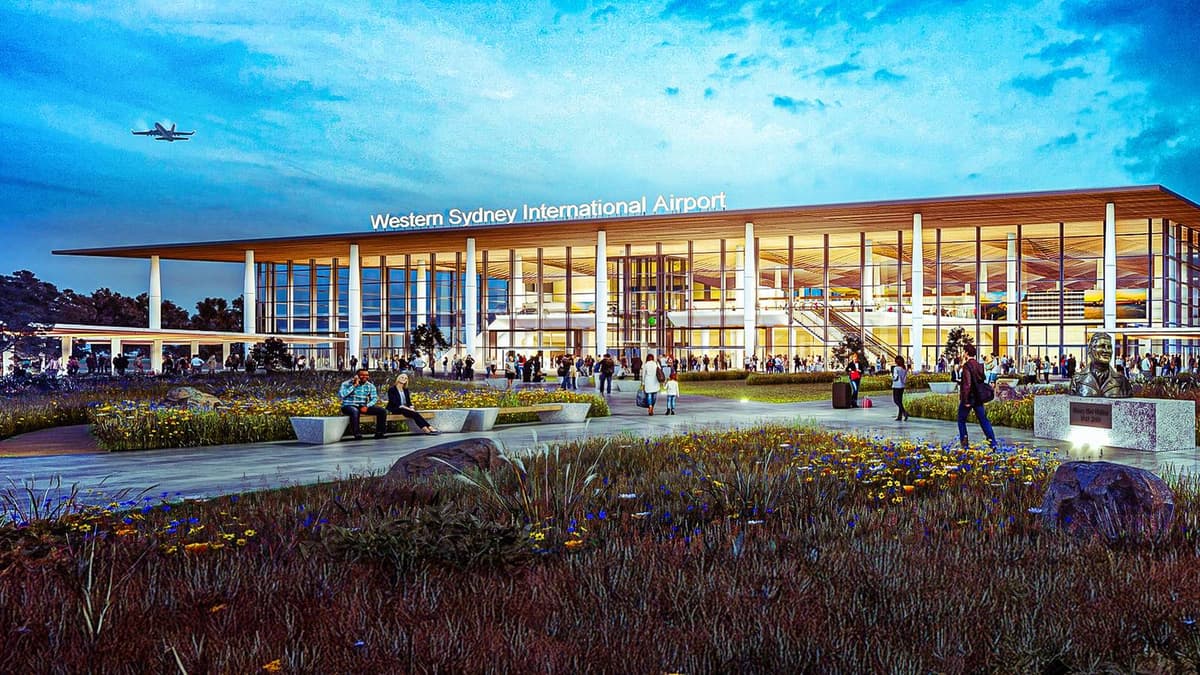
Here's Why Australia's New 24/7 Airport Is Reshaping Airline Schedules Before It Even Opens
Companies Mentioned
Why It Matters
WSI gives airlines unrestricted scheduling flexibility, challenging Sydney’s curfew‑bound model and unlocking new growth opportunities for carriers and the regional economy.
Key Takeaways
- •WSI will operate 24/7 with no curfew or movement cap
- •Qantas and Jetstar will launch core domestic services in first year
- •Singapore Airlines and Air New Zealand will add daily and thrice‑weekly routes
- •Gulf carriers eye WSI for late‑night departures improving Europe connections
- •$9.3 billion infrastructure spend underpins airport and transport links
Pulse Analysis
Sydney’s aviation market has long been constrained by the 11 p.m. curfew at Kingsford Smith Airport, limiting aircraft utilization and forcing airlines to stagger late‑night connections. Western Sydney International Airport breaks that paradigm by offering a fully curfew‑free, 24‑hour runway, immediately expanding capacity and providing a new hub for airlines seeking to maximize fleet efficiency. The airport’s design, with a single runway and an integrated domestic‑international terminal, is built for scalability, positioning it to handle up to eight million passengers as demand grows.
For carriers, the operational freedom translates into tangible scheduling advantages. Qantas and Jetstar can now run additional domestic frequencies without the bottlenecks that have plagued SYD, while Singapore Airlines and Air New Zealand gain a strategic foothold for daily and thrice‑weekly services that sidestep curfew penalties. Gulf airlines such as Emirates and Qatar Airways see WSI as a gateway for late‑night departures, enabling tighter connections to Europe and the UK. This flexibility is likely to spur competitive fare structures and new route development, especially for value‑focused Asian carriers eyeing the Western Sydney catchment.
Beyond airline economics, the $7.9 billion Sydney Metro‑Western Sydney line and $1.4 billion M12 motorway create a multimodal transport corridor that integrates the airport with the city’s broader economy. The infrastructure investment not only supports passenger flow but also attracts logistics, hospitality, and tech firms to the region. As WSI becomes operational, it will serve as a catalyst for regional growth, challenging the monopoly of Kingsford Smith and redefining Australia’s position in the Asia‑Pacific aviation network.
Here's Why Australia's New 24/7 Airport Is Reshaping Airline Schedules Before It Even Opens
Comments
Want to join the conversation?
Loading comments...