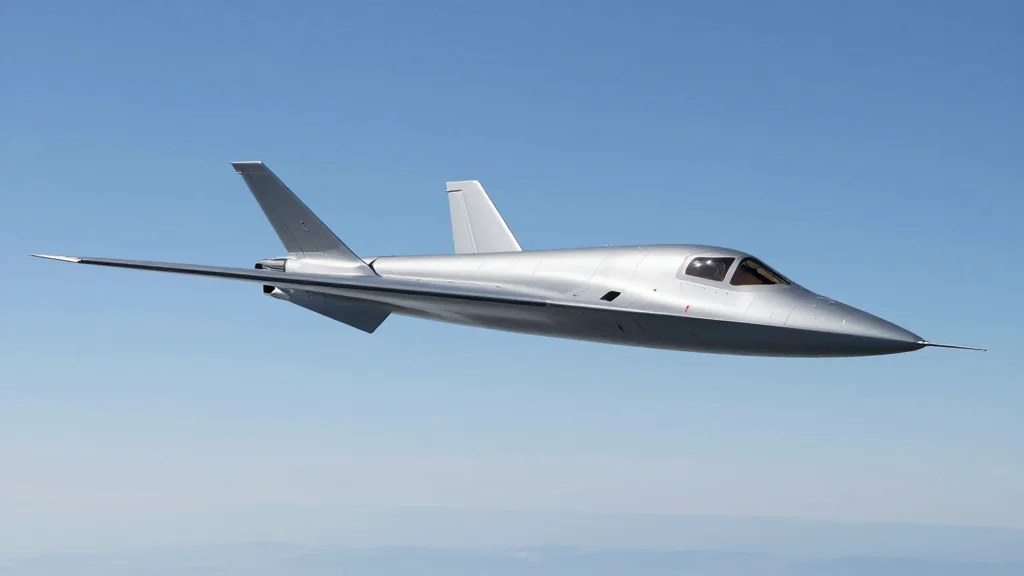
Hermeus Reaches Supersonic Speed in Historic Quarterhorse Test Flight
Companies Mentioned
Why It Matters
The achievement proves private firms can deliver operational supersonic UAVs, accelerating commercial hypersonic transport development and reshaping defense logistics.
Key Takeaways
- •Quarterhorse Mk 2.1 reached sustained supersonic cruise (Mach >1).
- •First U.S. privately funded, uncrewed aircraft to break sound barrier.
- •Demonstrates viability of Hermeus' lightweight turbine‑combustion engine.
- •Signals potential for rapid point‑to‑point passenger and cargo services.
Pulse Analysis
The race for hypersonic capability has long been dominated by government programs, but Hermeus’ recent Quarterhorse test signals a shift toward private‑sector leadership. By achieving sustained Mach‑1+ flight without a crew, the company demonstrates that commercial funding models can meet the rigorous performance and safety standards traditionally reserved for defense contractors. This breakthrough aligns with broader industry trends where venture capital and strategic aerospace investors are betting on rapid‑transit concepts that could compress coast‑to‑coast trips to under two hours.
Technically, the Quarterhorse Mk 2.1 leverages a lightweight turbine‑combustion engine paired with advanced thermal‑shielding materials, allowing it to manage the intense heat generated at supersonic speeds. The aircraft’s uncrewed design simplifies control architecture and reduces weight, while its modular airframe supports rapid iteration. Engineers reported that the propulsion system maintained efficient thrust across the flight envelope, a critical hurdle that has slowed many hypersonic projects. Successful thermal management also suggests the platform could scale to higher Mach numbers, opening pathways to true hypersonic (Mach 5+) operations.
Market implications are profound. Defense agencies see unmanned supersonic platforms as force multipliers for rapid strike and reconnaissance, while commercial operators envision ultra‑fast cargo and passenger services that could disrupt traditional airline economics. Hermeus’ achievement may spur regulatory bodies to craft new airspace rules for high‑speed UAVs, and it could attract additional private investment seeking to capitalize on a nascent market. If the company can transition from demonstrator to production, the United States could regain a competitive edge in a sector poised for exponential growth.
Hermeus Reaches Supersonic Speed in Historic Quarterhorse Test Flight
Comments
Want to join the conversation?
Loading comments...