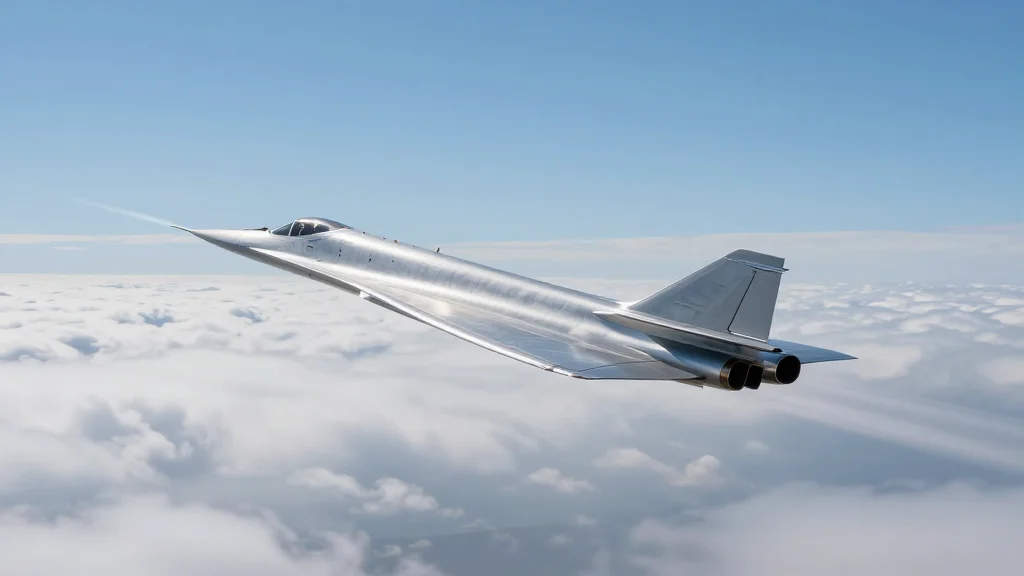
Hermeus Secures $350 Million Series C, Valuing Unmanned Supersonic Fighter Maker at $1 Billion

Companies Mentioned

Why It Matters
The infusion of $350 million into Hermeus signals a rapid acceleration of private capital into high‑speed unmanned weapons, a segment traditionally dominated by legacy defense contractors. By delivering supersonic and hypersonic capabilities on an unmanned, lower‑cost platform, Hermeus could reshape procurement priorities, forcing the Pentagon to reconsider how it sources cutting‑edge air power. If Hermeus meets its development milestones, the United States could gain a strategic edge in a domain where Russia and China already field operational hypersonic systems. The move also illustrates how venture investors are increasingly comfortable backing defense ventures with high technical risk, potentially reshaping the funding landscape for future aerospace innovation.
Key Takeaways
- •Hermeus raised $350 million in a Series C round led by Khosla Ventures.
- •Post‑money valuation exceeds $1 billion, total capital raised now over $500 million.
- •Funding will support two new Quarterhorse supersonic jets and expansion of manufacturing capacity.
- •The company continues development of the Mach 3+ Darkhorse hypersonic uncrewed jet.
- •Investors include Founders Fund, Canaan Partners, RTX Ventures and In‑Q‑Tel.
Pulse Analysis
Hermeus’s latest financing reflects a broader trend where venture capital is filling the gap left by sluggish government procurement cycles. Traditional defense primes have struggled to deliver hypersonic systems on schedule, prompting the Pentagon to look toward agile startups that can iterate quickly. Hermeus’s rapid‑prototype approach—building, flying, and feeding real‑world data back into the next design—mirrors the lean development models that have transformed commercial aerospace, such as SpaceX’s reusable launch vehicles.
The strategic calculus for the United States hinges on closing the hypersonic gap before adversaries field larger arsenals. An unmanned platform like Darkhorse offers several advantages: reduced crew risk, lower operational costs, and the ability to field larger payloads than current missile‑only solutions. If Hermeus can demonstrate a reliable, repeatable Mach 3+ system, it could become a cornerstone of future joint‑force strike concepts, potentially reshaping doctrines that currently rely on manned fighters and cruise missiles.
However, the path forward is fraught with technical and regulatory hurdles. Hypersonic flight imposes extreme thermal and material stresses, and integrating advanced avionics into an unmanned airframe adds layers of complexity. Moreover, the defense acquisition system may still favor established primes for large‑scale contracts, meaning Hermeus will need to prove not only performance but also production scalability. The next 12‑18 months—marked by Quarterhorse flight tests and a Darkhorse demonstrator—will be a decisive period that could either cement Hermeus as a new pillar of U.S. air power or relegate it to a niche experimental role.
Hermeus Secures $350 Million Series C, Valuing Unmanned Supersonic Fighter Maker at $1 Billion
Comments
Want to join the conversation?
Loading comments...