How Air Astana’s Sleeper Seats Could Redefine Economy Travel
Companies Mentioned
Why It Matters
The offering shows airlines can generate new revenue streams and differentiate service without heavy capital outlays, potentially redefining economy‑class expectations across the industry.
Key Takeaways
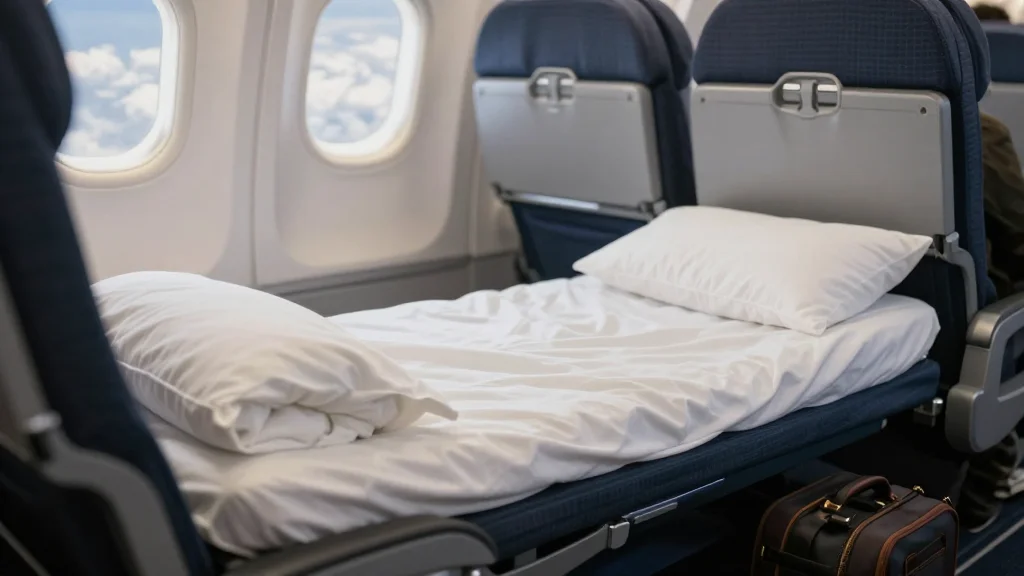
- •Air Astana sells three-seat rows as flat sleeping surfaces.
- •Product costs far less than installing new lie‑flat seats.
- •Appeals to long‑haul travelers unwilling to pay business‑class rates.
- •Simplicity enables quick adoption across carriers with minimal capital.
- •Scalability limited on routes with consistently full bookings.
Pulse Analysis
Airlines have long wrestled with the paradox of improving passenger comfort while protecting revenue per square metre. Traditional upgrades—such as premium economy or business‑class lie‑flat seats—require costly cabin redesigns and extensive certification. Air Astana’s Economy Sleeper sidesteps these barriers by repurposing existing economy seats into a temporary flat bed, using a mattress topper, pillow and blanket. This low‑tech solution leverages under‑utilised seat inventory, especially on long‑haul routes where load factors can dip, turning idle space into a sellable amenity without major capital expense.
From a business perspective, the model creates a new fare class that sits between standard economy and premium offerings. Pricing can be dynamic, reflecting demand, and the airline can capture additional yield from passengers who value sleep but balk at business‑class prices. Competitors such as Air New Zealand’s Skycouch and Lufthansa’s experimental sleeper rows illustrate a broader industry trend toward modular comfort. However, Air Astana’s approach is uniquely cost‑efficient because it avoids mechanical seat transformations, allowing rapid deployment across compatible aircraft types and reducing maintenance complexity.
The broader implication is a potential re‑segmentation of cabin classes. If more carriers adopt similar sleeper rows, the traditional hierarchy of economy, premium economy, business and first could become more fluid, with passengers mixing and matching space to suit their needs. Yet scalability remains a challenge on high‑demand routes where dedicating three seats to a single traveler may erode overall load factor. Nonetheless, the concept highlights how incremental, low‑cost innovations can drive differentiation in a post‑pandemic market hungry for comfort and value.
How Air Astana’s Sleeper Seats Could Redefine Economy Travel
Comments
Want to join the conversation?
Loading comments...