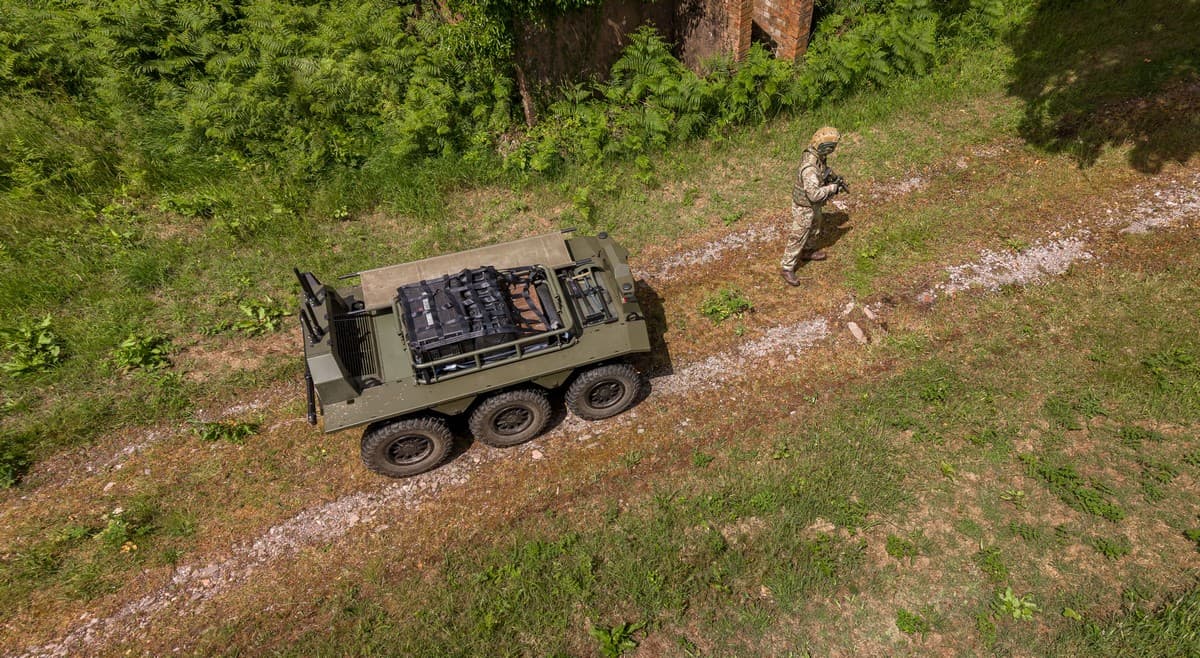
How IDV Builds Robots that Can Be Reborn as Tech Advances
Key Takeaways
- •IDV's Viking UGV uses modular sensors and compute doubling every 18 months
- •Vehicle designed for easy line‑replaceable upgrades, like swapping a car wheel
- •Customers can refresh lidar, cameras, and AI without replacing the chassis
- •Standard power and data connectors let new payloads plug in instantly
- •Modular design pressures defence procurement to adopt faster acquisition cycles
Pulse Analysis
The rapid pace of sensor and processor innovation—often likened to Moore’s Law—has long outstripped the acquisition cycles of military hardware. IDV Robotics tackles this mismatch by engineering the Viking UGV as a refreshable platform rather than a fixed‑function vehicle. Every 18 months, lidar arrays double in laser count, camera resolution climbs, and compute power skyrockets while prices fall. By decoupling these core technologies from the chassis, IDV lets operators install next‑generation components as soon as they become available, effectively turning a single vehicle into a rolling upgrade program.
Beyond raw performance, the modular architecture simplifies logistics and battlefield repair, a lesson sharpened by the Ukrainian conflict where cheap drones have repeatedly disabled expensive platforms. The Viking’s line‑replaceable units—mirroring automotive practices—allow a mechanic to change a wheel, swap a battery, or replace a sensor suite in minutes, without returning the vehicle to a factory. Standardized power and data connectors mean new payloads can be bolted on and automatically recognized by onboard software, while AI models are retrained and reloaded remotely. This reduces downtime, cuts spare‑part inventories, and extends operational lifespan.
The real test lies in defence procurement, which traditionally runs ten‑year programmes that lock in specifications long before they are fielded. IDV’s approach forces acquisition offices to consider incremental buying, performance‑based contracts, and faster budgeting cycles. If embraced, the model could lower total ownership costs, accelerate technology diffusion, and give NATO allies a common, upgradable robotic chassis. However, shifting entrenched procurement mind‑sets will require policy reforms, such as the UK Defence Investment Plan accommodating modular upgrades. Success could set a new benchmark for how militaries buy and sustain autonomous systems.
How IDV builds robots that can be reborn as tech advances
Comments
Want to join the conversation?