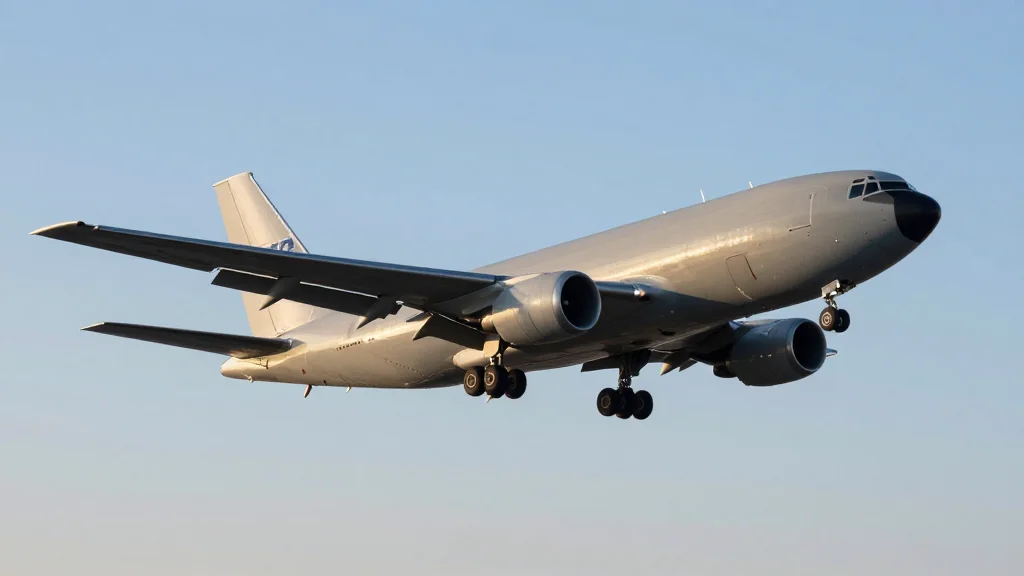
How the 2027 Budget Will Change the Air Force Tanker Fleet
Companies Mentioned
Why It Matters
Meeting the congressional tanker mandate is critical for U.S. global reach and rapid deployment, and the procurement shift directly impacts Boeing’s financial exposure and the Air Force’s ability to replace aging KC‑135s. Delays or contract issues could force costly life‑extension programs for the legacy fleet.
Key Takeaways
- •Air Force must reach 502 tankers by FY2029 per NDAA
- •FY2027 budget retires 20 KC-135s, adds 20 KC-46s
- •Boeing seeks $3.9 bn for 15 KC-46s, deliveries start Oct 2029
- •Additional 75 KC-46s contract hinges on fixing vision system flaws
- •KC-46 production to rise to 18 units annually FY2028‑FY2031
Pulse Analysis
The FY2027 budget marks a strategic pivot for the Air Force’s aerial refueling capability. By decoupling retirements from new deliveries, the service can incrementally increase its tanker count, aligning with the National Defense Authorization Act’s requirement of 502 aircraft by FY2029. This approach mitigates the risk of a shortfall while allowing Boeing to fulfill a final production lot of 184 KC‑46s, despite the aircraft’s troubled history and the $7 billion loss Boeing has incurred under the fixed‑price contract.
Beyond meeting congressional mandates, the tanker expansion has broader implications for U.S. power projection. A larger, modern fleet enhances the Air Mobility Command’s ability to support global operations, from rapid troop deployments to sustained air campaigns. The decision to purchase an extra 75 KC‑46s—contingent on resolving Remote Vision System visibility issues and boom actuator stiffness—signals confidence in the platform’s long‑term viability, while also preserving the industrial base that sustains high‑rate production through FY2031.
However, the timeline is tight. The 15 KC‑46s slated for FY2027 won’t arrive until late 2029, creating a temporary reliance on the aging KC‑135 fleet. Any further delays could force the Air Force to consider costly service‑life extensions for the Eisenhower‑era tankers, a scenario that would strain budgets and operational readiness. The upcoming Mobility Capability Requirements Study will provide risk analysis to guide Congress and the service on whether to pursue a next‑generation refueling system or continue bolstering the KC‑46 pipeline.
How the 2027 Budget Will Change the Air Force Tanker Fleet
Comments
Want to join the conversation?
Loading comments...