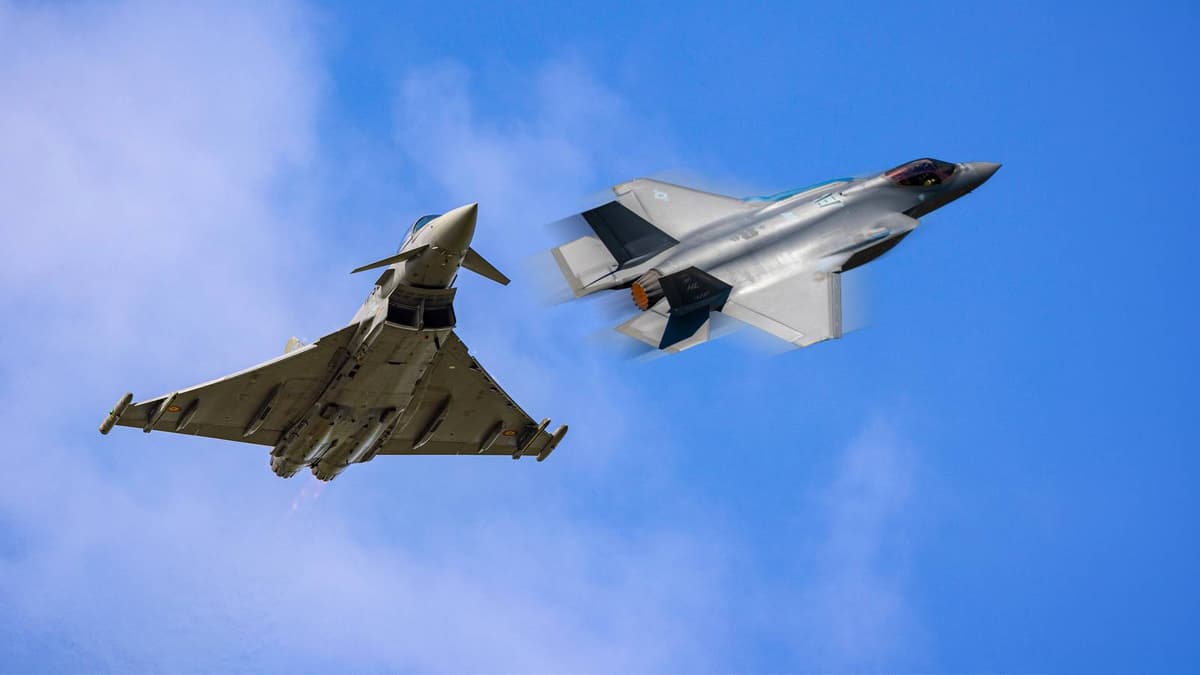
How The Eurofighter Typhoon's AESA Radar Compares To The F-35's AN/APG-81
Companies Mentioned
Why It Matters
The radar disparity influences how NATO allies balance stealth, detection range, and electronic‑warfare readiness, shaping future air‑combat doctrine and procurement choices.
Key Takeaways
- •CAPTOR‑E’s steerable array offers ~200° field of regard.
- •AN/APG‑81 integrates radar with sensor‑fusion for superior situational awareness.
- •Typhoon’s larger antenna yields ~120‑mile detection versus ~90‑mile for F‑35.
- •UK MoD commits ~US$260 million to ECRS Mk2 production by 2028.
Pulse Analysis
Antenna physics drives the core performance gap between the Typhoon’s CAPTOR‑E and the F‑35’s AN/APG‑81. The Eurofighter’s broader nose permits a larger aperture, concentrating more energy on targets and extending detection ranges to roughly 120 miles. By contrast, the F‑35’s stealth‑optimized, smaller array sacrifices raw reach for a reduced radar cross‑section, limiting its horizon to about 90‑100 miles. This trade‑off reflects divergent doctrinal priorities: raw situational awareness versus low observability in contested airspace.
Beyond pure detection, electronic‑warfare capability differentiates the two systems. The APG‑81 was built as a multifunction sensor, offering electronic protection, attack, and support from day one, and feeding data into the F‑35’s fused cockpit picture. The Typhoon’s CAPTOR‑E, while historically a pure radar, is evolving with the ECRS Mk2 upgrade that adds offensive EW functions, narrowing the gap in electromagnetic dominance. The steerable array also grants a 50% wider scan arc, improving target tracking in dynamic engagements.
Strategically, these technical nuances affect procurement and alliance interoperability. Europe’s £204.6 million (≈US$260 million) investment in the Mk2 signals a commitment to keep the Typhoon relevant against fifth‑generation rivals, especially for nations without F‑35 fleets. Meanwhile, the F‑35’s integrated sensor suite continues to set a benchmark for network‑centric warfare. As NATO modernizes, balancing stealth, detection range, and electronic‑warfare versatility will dictate which radar architecture gains favor in future air‑combat doctrines.
How The Eurofighter Typhoon's AESA Radar Compares To The F-35's AN/APG-81
Comments
Want to join the conversation?
Loading comments...