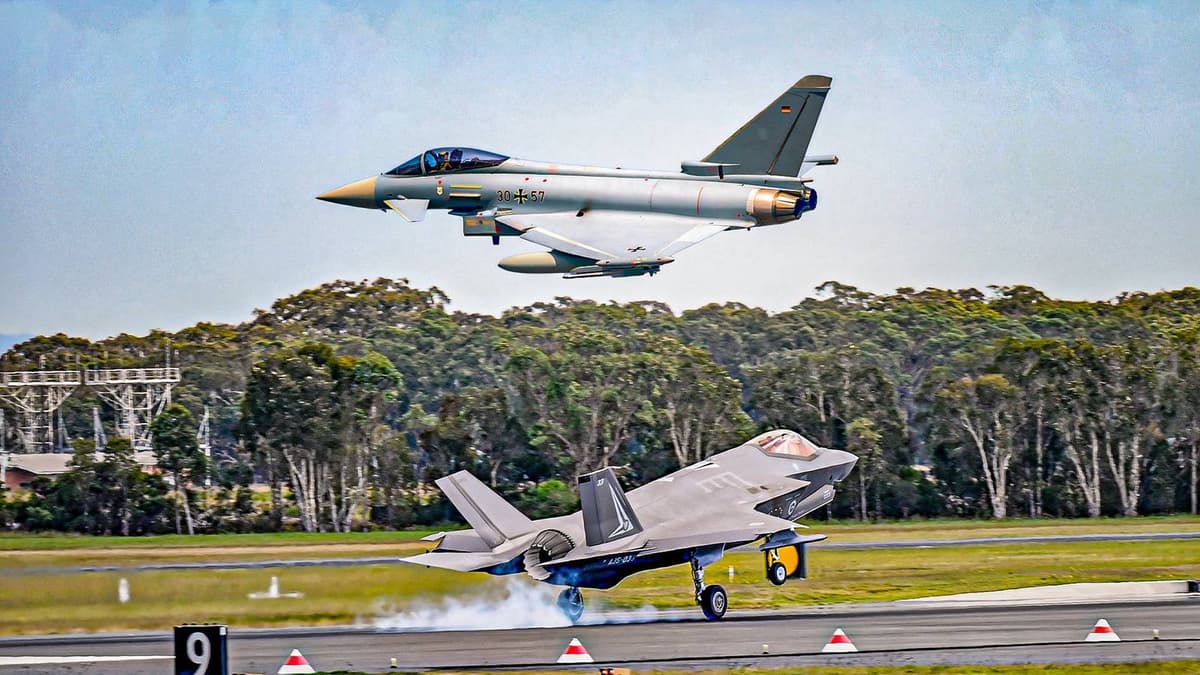
How The F-35 Stacks Up Against The Eurofighter Typhoon In 2026
•March 1, 2026
0
Why It Matters
The combined use of stealth‑focused and high‑performance fighters maximizes combat effectiveness while containing operating costs, reshaping European air‑force doctrines and procurement decisions.
Key Takeaways
- •UK and Italy operate F‑35 and Typhoon together
- •F‑35 offers stealth, sensor fusion; Typhoon provides speed, payload
- •Dual fleet reduces costs, leverages each platform’s strengths
- •Germany likely to adopt similar hybrid model
- •Integration drives future European combat air programs
Pulse Analysis
The United Kingdom and Italy have become the only NATO members fielding both the Lockheed Martin F‑35 Lightning II and the Eurofighter Typhoon in 2026, turning a theoretical debate into a live operational model. Their mixed fleets reflect a pragmatic balance between fifth‑generation stealth capabilities and the proven kinetic performance of a 4.5‑generation platform. By assigning the F‑35 to high‑threat, contested‑airspace missions and the Typhoon to air‑defence and routine patrols, the services extract maximum combat value while preserving national aerospace expertise.
This division of labour also yields measurable cost efficiencies. The Typhoon’s lower cost per flight hour—roughly half that of the F‑35—makes it ideal for sustained presence missions, while the F‑35’s sensor‑fusion suite creates a shared battlespace that lets the Typhoon engage targets with pre‑validated data. Network‑centric operations enable the ‘see‑first, shoot‑later’ paradigm, reducing exposure to advanced air‑defences. For NATO, the hybrid approach strengthens collective deterrence, allowing member states to meet both nuclear‑sharing obligations and conventional air‑superiority requirements without redundant procurement.
The emerging dual‑operator template is influencing other European air forces. Germany’s pending F‑35A purchase alongside its existing Typhoon fleet suggests a repeat of the UK‑Italy model, while Turkey’s pivot to an expanded Typhoon roster underscores the industrial pull of legacy programs. As the Global Combat Air Programme advances toward sixth‑generation fighters, maintaining expertise in both stealth and high‑performance aerodynamics will be crucial. Policymakers therefore view integration not as a stop‑gap but as a strategic bridge toward future combat‑air ecosystems.
How The F-35 Stacks Up Against The Eurofighter Typhoon In 2026
0
Comments
Want to join the conversation?
Loading comments...