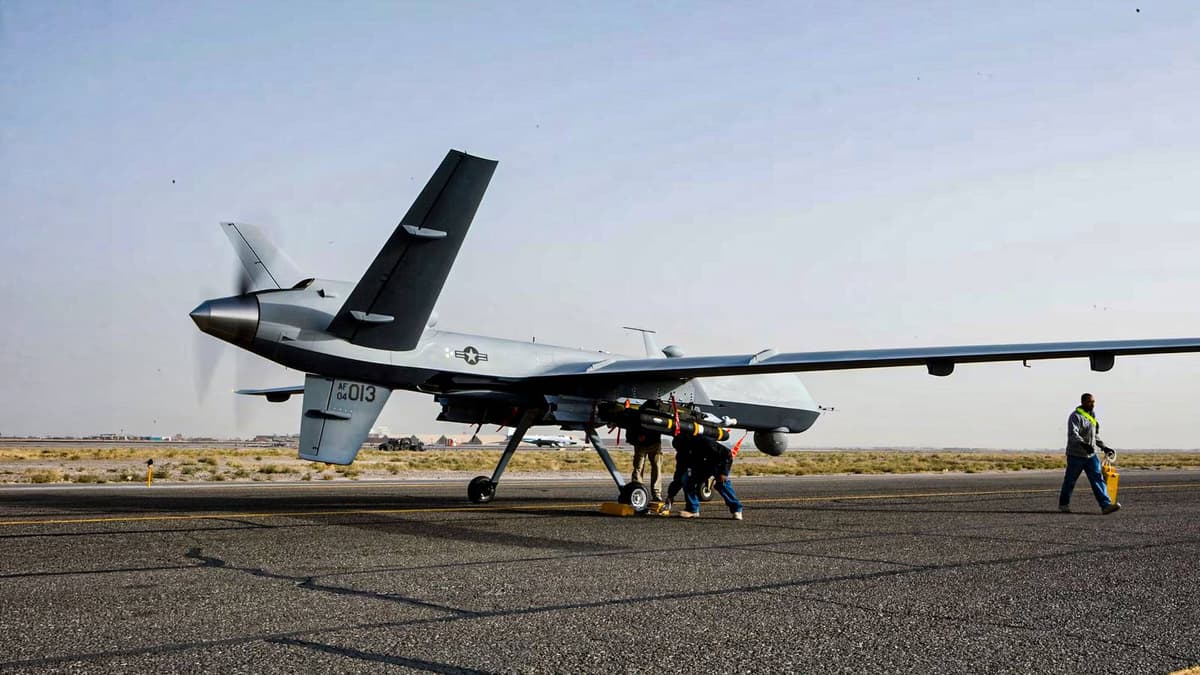
How The MQ-9 Reaper's Triple-Redundant Avionics Keep It Flying For 40 Hours Straight
Companies Mentioned
Why It Matters
Extended endurance and fault‑tolerant avionics keep the Reaper relevant for persistent surveillance, but its impending phase‑out signals a shift toward cheaper, fully autonomous drones across U.S. and allied forces.
Key Takeaways
- •Triple‑redundant avionics eliminate single points of failure
- •Honeywell TPE331‑10 engine delivers best‑in‑class fuel efficiency
- •Extended Range model adds wing fuel pods, boosting endurance past 30 hours
- •Real‑world combat missions cut endurance to 30‑34 hours versus ideal 40+
- •USAF plans to replace Reaper with cheaper autonomous ISR platforms by 2030
Pulse Analysis
The MQ‑9 Reaper’s endurance advantage stems from a blend of aerodynamic efficiency and power‑plant design. Its 66‑foot wingspan yields a high aspect ratio, reducing drag while the Honeywell TPE331‑10 turboprop, paired with digital engine control, offers superior fuel economy at cruise speeds of 150‑230 knots. Optional wing‑borne fuel pods and a four‑blade propeller push the ER variant’s endurance beyond 30 hours, making it a premier platform for long‑duration ISR missions in low‑threat environments.
Reliability is equally critical, and the Reaper’s triple‑redundant avionics architecture sets a benchmark for unmanned systems. By employing three independent computers for flight control, navigation, and data links, the system can outvote a faulty unit, ensuring continuous operation without ground intervention. This fault‑tolerant design meets manned‑aircraft reliability standards, allowing the drone to loiter over targets for days while maintaining safe autonomous flight, a capability that remains valuable despite emerging threats.
However, the platform’s future is limited. The USAF’s roadmap targets retirement by the early 2030s, favoring cheaper, fully autonomous ISR aircraft that reduce operational costs and logistical footprints. International customers, such as Belgium, Poland, and Taiwan, are already fielding the newer RQ‑9B SkyGuardian, which incorporates similar endurance features with modern sensor suites. The transition underscores a broader industry trend: moving from high‑cost, man‑in‑the‑loop drones to scalable, AI‑driven systems that can deliver persistent surveillance at lower expense.
How The MQ-9 Reaper's Triple-Redundant Avionics Keep It Flying For 40 Hours Straight
Comments
Want to join the conversation?
Loading comments...