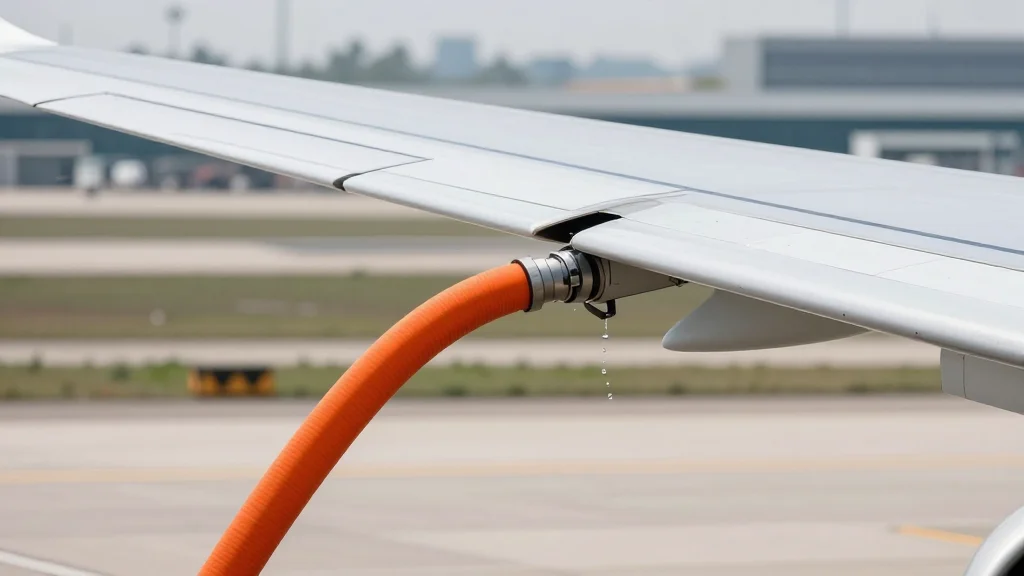
IATA Cuts Airline Profit Outlook in Half as Jet Fuel Prices Soar to $156 per Barrel

Companies Mentioned
Why It Matters
The profit contraction underscores how volatile energy markets can quickly erode airline earnings, threatening the financial health of carriers that already operate on thin margins. A sustained fuel price shock forces airlines to cut capacity, delay fleet upgrades, and postpone investments in sustainable aviation fuel, slowing the industry's decarbonisation trajectory. Moreover, reduced profitability may limit airlines' ability to fund safety and technology upgrades, such as predictive aircraft health monitoring systems, which rely on robust cash flows. Government interventions like India's ATF stabilisation fund highlight a growing recognition that fuel price volatility is a systemic risk. If more jurisdictions adopt similar mechanisms, the competitive landscape could shift, favouring carriers with stronger state backing and potentially reshaping global route networks. The outcome will affect not only airlines but also airports, MRO providers, and downstream suppliers that depend on steady traffic volumes.
Key Takeaways
- •IATA cuts 2026 net profit forecast to $23 bn, half of 2025's $45 bn
- •Industry net margin projected to fall from 4.2% to 2.0%
- •Jet fuel price stabilised at $156 per barrel after peaking at $188
- •India launches up to Rs 10,000 crore (~$1.2 bn) ATF price‑stabilisation fund
- •European airlines expected to retain highest margins at 3.1% in 2026
Pulse Analysis
The latest IATA forecast signals a turning point for airline finance, where fuel cost volatility has moved from a manageable expense line item to a headline‑grabbing risk driver. Historically, airlines have weathered oil price spikes by passing costs to passengers or hedging futures contracts. This time, the scale of the shock—fuel prices more than 60% above pre‑war levels—combined with already constrained demand from lingering pandemic effects and geopolitical uncertainty, leaves little room for price pass‑through. The result is a double‑edged squeeze: airlines must cut capacity to preserve cash while simultaneously defending market share against low‑cost rivals that may be better hedged or subsidised.
From a strategic perspective, the profit dip accelerates the industry's pivot toward alternative fuels and digital efficiency tools. Sustainable aviation fuel (SAF) remains a niche, accounting for just 0.8% of jet fuel use, and the IATA's own commentary suggests policy inertia is hampering scale‑up. Airlines that can secure SAF supply or invest in hybrid‑electric propulsion may gain a competitive edge as regulators tighten emissions standards. Simultaneously, predictive aircraft health monitoring—forecast to grow to $8.6 bn by 2028—offers a cost‑saving lever that can offset fuel‑related cash drains by reducing AOG events and maintenance overhead.
Looking ahead, the decisive factor will be the durability of government support. India's ATF fund is a prototype of how state‑backed price buffers can stabilize operating costs and preserve route connectivity. If similar schemes proliferate—especially in Europe and North America—they could blunt the worst of the fuel shock, but they also risk creating uneven playing fields. Airlines that navigate this environment successfully will likely be those that blend aggressive cost‑control, strategic hedging, and accelerated adoption of low‑carbon technologies, positioning themselves for a post‑crisis recovery that rewards resilience over sheer scale.
IATA cuts airline profit outlook in half as jet fuel prices soar to $156 per barrel
Comments
Want to join the conversation?
Loading comments...