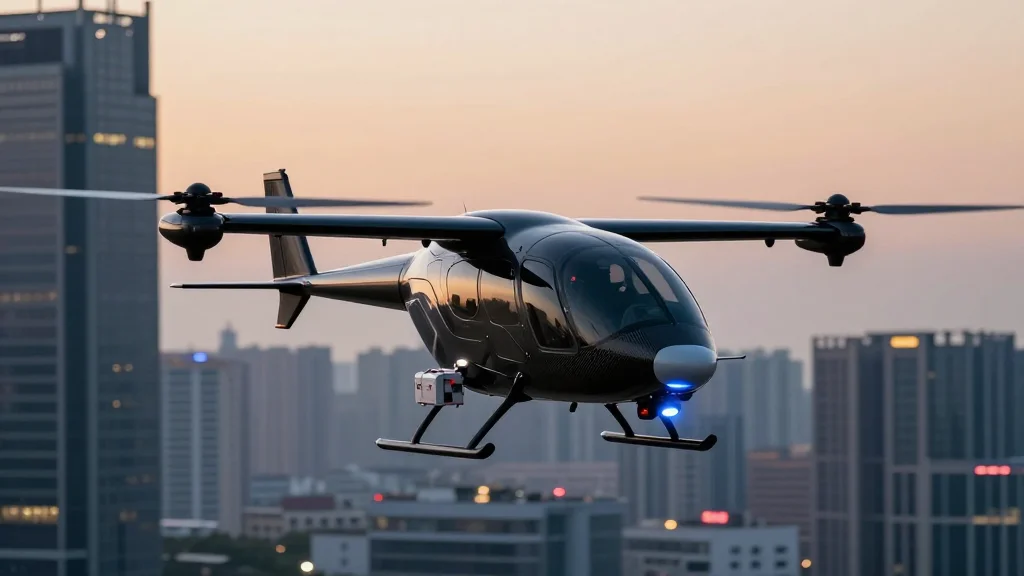
India’s Magnum Wings Reports First Flight of Copter V2 2.0 eVTOL
Why It Matters
The test validates India's capability to produce homegrown electric vertical take‑off and landing vehicles, reducing reliance on foreign technology and opening new revenue streams in urban mobility and emergency services.
Key Takeaways
- •Magnum Wings completed first flight of Copter V2 2.0 eVTOL.
- •Copter V2 seats two, targeting urban commuters, healthcare, logistics.
- •X4 prototype will carry three passengers for rapid, zero‑emission missions.
- •India's eVTOL market gains domestic player with aerospace‑grade carbon composites.
Pulse Analysis
The electric vertical take‑off and landing (eVTOL) sector has accelerated worldwide as cities seek congestion‑free, low‑emission transport. While North America and Europe dominate with firms like Joby and Volocopter, emerging markets are rapidly catching up. India, with its burgeoning aerospace ecosystem and supportive government policies such as the National Air Mobility Roadmap, is positioning itself to become a regional hub for urban air mobility. Recent regulatory steps, including the Civil Aviation Requirements for unmanned aircraft, have lowered barriers for domestic developers, creating a fertile environment for startups to test and certify new platforms.
Magnum Wings, a Bangalore‑based venture, marked a significant milestone by completing the first flight of its Copter V2 2.0, a two‑seat electric air taxi. The aircraft employs lightweight carbon‑fiber composites, precision aerodynamics and a proprietary electric propulsion system that promises silent operation and zero‑emission performance. By targeting high‑density corridors, medical evacuations and last‑mile logistics, the company aims to address three of India’s most pressing mobility challenges. Its upcoming X4 model expands capacity to three seats, emphasizing rapid response capabilities for cargo and emergency services, and underscores a design philosophy centered on safety and scalability.
The successful test positions Magnum Wings to attract both private capital and public contracts, especially as Indian cities grapple with traffic bottlenecks and air‑ambulance shortages. Investors are increasingly viewing eVTOLs as a multi‑billion‑dollar opportunity, and domestic certification could give Indian manufacturers a cost advantage over imported alternatives. However, scaling production will require robust supply chains for batteries, skilled aerospace talent, and integration with air‑traffic management systems. If these hurdles are met, India could see a new layer of urban mobility that reshapes logistics, healthcare delivery and commuter patterns, while bolstering its reputation in advanced aerospace manufacturing.
India’s Magnum Wings reports first flight of Copter V2 2.0 eVTOL
Comments
Want to join the conversation?
Loading comments...