Introducing the 'Interplanetary Habitable Zone'
•March 4, 2026
0
Why It Matters
The IHZ reshapes target selection for astrobiology missions and informs long‑term human expansion strategies.
Key Takeaways
- •IHZ adds power, radiation, transport, resources dimensions.
- •Simulation predicts TRAPPIST‑1 civilization collapse in 45 years.
- •Radiation shielding could extend habitability on red dwarf planets.
- •Asteroid resources become early hubs for space economies.
- •Framework guides exoplanet habitability assessments beyond traditional zones.
Pulse Analysis
The Interplanetary Habitable Zone model reflects a shift from a single‑parameter view of habitability toward a systems‑level perspective. By quantifying power output, radiation environments, delta‑v costs, and raw material accessibility, researchers can map a planet’s suitability not just for life’s origin but for its sustained technological evolution. This approach acknowledges that advanced organisms may relocate, exploiting nearby asteroids or moons, and that the optimal niche may lie far from the traditional circumstellar sweet spot.
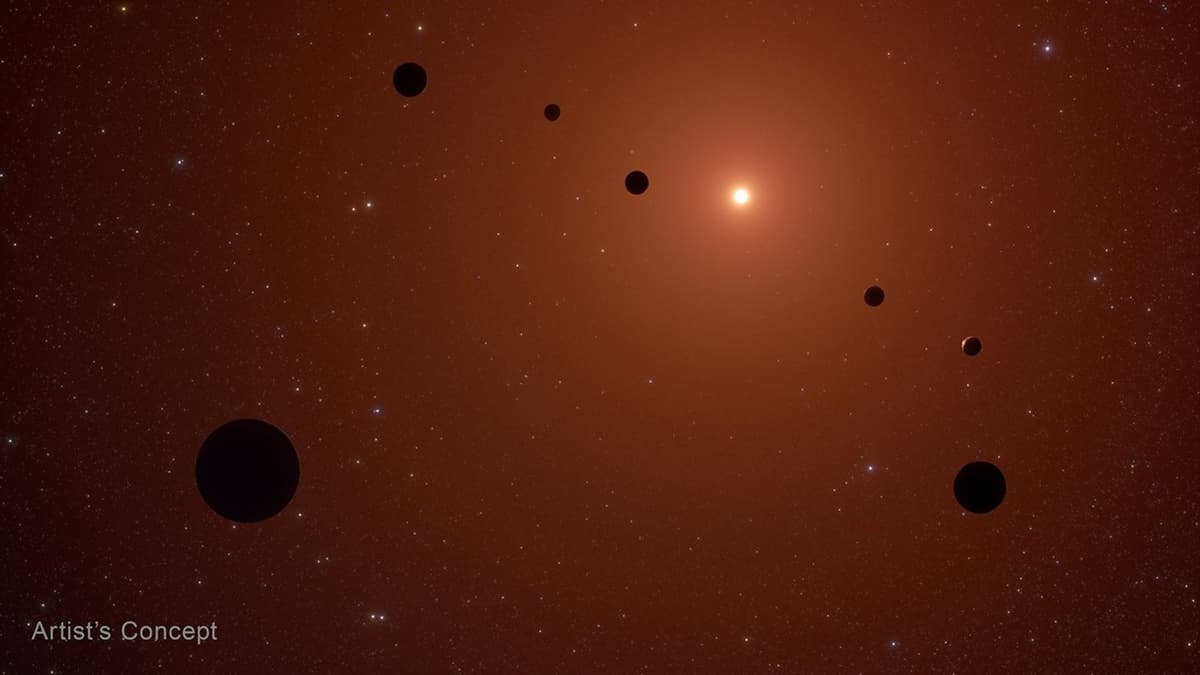
In Scharf’s simulation, 1,000 digital agents faced periodic choices—stay, harvest, reproduce, or migrate—mirroring decisions a nascent space‑faring species might make. The agents’ trajectories echoed humanity’s projected path: Earth to Mars, then to the asteroid belt, and finally to lunar outposts. When the same parameters were applied to the seven‑planet TRAPPIST‑1 system, the model flagged lethal radiation levels, projecting civilization collapse within four decades unless artificial shielding reduced exposure by half. This stark outcome underscores how radiation risk can dominate habitability calculations for red‑dwarf worlds.
Beyond academic curiosity, the IHZ framework offers practical guidance for mission planners and policy makers. Prioritizing targets with abundant low‑gravity resources, manageable transport delta‑v, and moderate radiation profiles could accelerate the development of a sustainable space economy. Moreover, the model can inform the design of protective habitats and radiation mitigation technologies, ensuring that future explorers avoid the pitfalls identified for TRAPPIST‑1. As exoplanet catalogs expand, the IHZ will become an essential tool for distinguishing merely habitable worlds from those capable of supporting enduring technological life.
Introducing the 'Interplanetary Habitable Zone'
0
Comments
Want to join the conversation?
Loading comments...