Is It True That Long-Haul Pilots Sleep In Secret Bunks During Flights?
Companies Mentioned
Why It Matters
In‑flight pilot rest directly reduces fatigue‑related risk, preserving safety on the world’s longest routes. As airlines expand ultra‑long‑haul services, effective rest management becomes a competitive and regulatory imperative.
Key Takeaways
- •Augmented crews rotate pilots, guaranteeing two awake pilots at all times
- •Crew‑rest compartments are concealed, equipped with bunks, belts, and oxygen masks
- •FAA/EASA rules specify duty limits and minimum rest before/after flights
- •Narrow‑body ultra‑long‑range jets lack traditional rest bays, spurring design innovation
Pulse Analysis
Fatigue is the leading human factor in aviation incidents, which is why regulators such as the FAA and EASA have codified strict duty‑time limits and mandatory rest periods. Modern research on circadian rhythms informs these rules, requiring airlines to schedule in‑flight sleep for crews on routes longer than eight hours. By integrating data‑driven fatigue‑risk‑management systems, carriers can predict optimal rest windows, aligning them with the cruise phase when workload is minimal. This systematic approach not only satisfies compliance but also enhances overall operational efficiency.
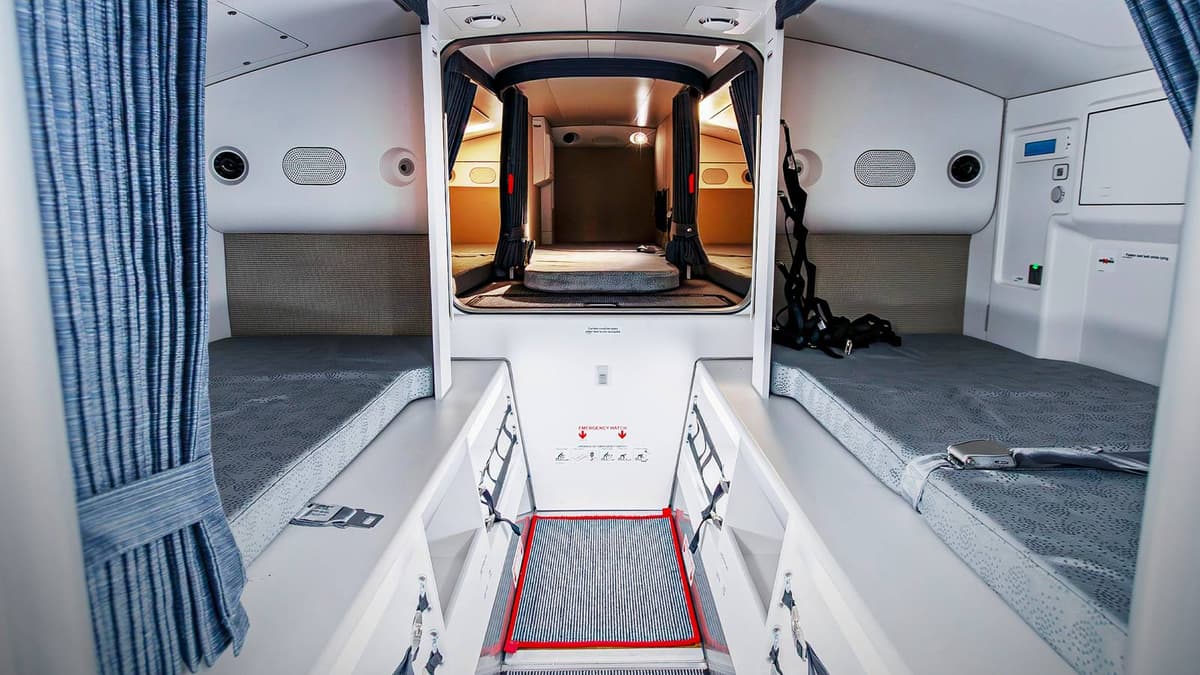
The physical embodiment of these policies is the crew‑rest compartment, a compact, lockable space typically situated above the cockpit or in the upper fuselage. Designed like a capsule hotel, each area contains two bunks, padded mattresses, privacy curtains, and built‑in safety features such as seatbelts and oxygen mask access. Pilots use intercom links to stay reachable, and at least two qualified pilots remain on the flight deck throughout the journey. This redundancy ensures continuous monitoring of aircraft systems while allowing rested crew members to resume duties for high‑workload phases like descent and landing.
The rise of long‑range narrow‑body aircraft, exemplified by the Airbus A321XLR, challenges the traditional crew‑rest model. These planes lack the spacious upper decks of wide‑bodies, prompting airlines and manufacturers to explore innovative solutions such as compact rest pods within the passenger cabin or modular mobile units. Regulators must adapt existing fatigue‑management standards to these new configurations, ensuring that safety is not compromised by commercial seat‑maximisation pressures. As the industry balances efficiency with vigilance, the evolution of crew‑rest design will remain a critical factor in sustaining the safety record of ultra‑long‑haul aviation.
Is It True That Long-Haul Pilots Sleep In Secret Bunks During Flights?
Comments
Want to join the conversation?
Loading comments...