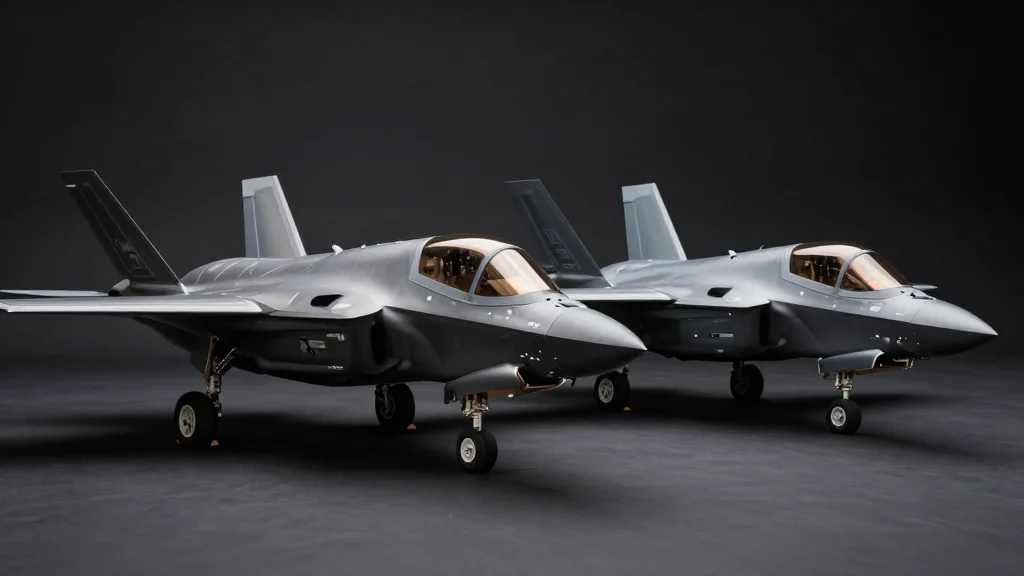
Israel to Double F‑35 Fleet and Add 50 F‑15IAs in $100 Billion Procurement Push

Companies Mentioned
Why It Matters
The procurement reshapes the balance of air power in the volatile Middle East, giving Israel a decisive edge in stealth, range and payload capacity. By locking in a massive, multi‑year spend, Israel signals its intent to deter regional adversaries and to maintain a qualitative military advantage, which could deter further escalation with Hezbollah and Iran‑backed groups. Globally, the deal underscores the strategic importance of advanced fighter platforms in modern warfare, reinforcing the United States' position as the premier supplier of fifth‑generation aircraft. It also accelerates the diffusion of autonomous and AI‑enabled combat technologies, setting a new standard for allied air forces and potentially prompting a regional arms race in next‑generation aerospace capabilities.
Key Takeaways
- •Israel will double its F‑35 fleet from 50 to 100 aircraft.
- •The new F‑15IA fleet will rise from 25 to 50 jets.
- •Procurement package valued at roughly $98 billion (NIS 350 billion).
- •Annual defense budget has risen to nearly NIS 150 billion (≈$42 billion).
- •Deal includes integration of autonomous flight, next‑gen radar and AI‑driven systems.
Pulse Analysis
Israel's $98 billion fighter jet procurement is more than a hardware purchase; it is a strategic declaration that air superiority remains the linchpin of its defense doctrine. Historically, Israel has leveraged a qualitative edge—first with the Mirage and later with the F‑15—to offset numerical disadvantages. The current expansion builds on that legacy, but the inclusion of autonomous capabilities marks a generational shift. By embedding AI‑driven decision aids and network‑centric warfare tools, Israel is positioning its air force to operate in contested, sensor‑dense environments where traditional platforms would be vulnerable.
The timing also reflects a broader trend among NATO and allied nations to lock in long‑term production lines for fifth‑generation aircraft, mitigating supply chain disruptions seen during the COVID‑19 pandemic and recent geopolitical shocks. For Lockheed Martin and Boeing, the Israeli contract provides a stable revenue stream that can fund further R&D, particularly in hypersonic weapons and directed‑energy systems that are likely to be integrated into future variants. However, the scale of the deal may provoke counter‑measures: Iran and Hezbollah could accelerate their own missile and drone programs, while regional rivals such as Saudi Arabia and the United Arab Emirates may seek comparable upgrades, potentially igniting a new wave of procurement competition.
In the longer view, Israel's expanded fleet will influence doctrine across the Middle East. The ability to conduct deep‑strike missions with stealthy F‑35s and long‑range F‑15IAs could shift the calculus of deterrence, making pre‑emptive or retaliatory strikes more credible. This may force neighboring states to invest in integrated air defense systems, electronic warfare, and asymmetric tactics, reshaping the regional security architecture for the next decade.
Israel to Double F‑35 Fleet and Add 50 F‑15IAs in $100 Billion Procurement Push
Comments
Want to join the conversation?
Loading comments...