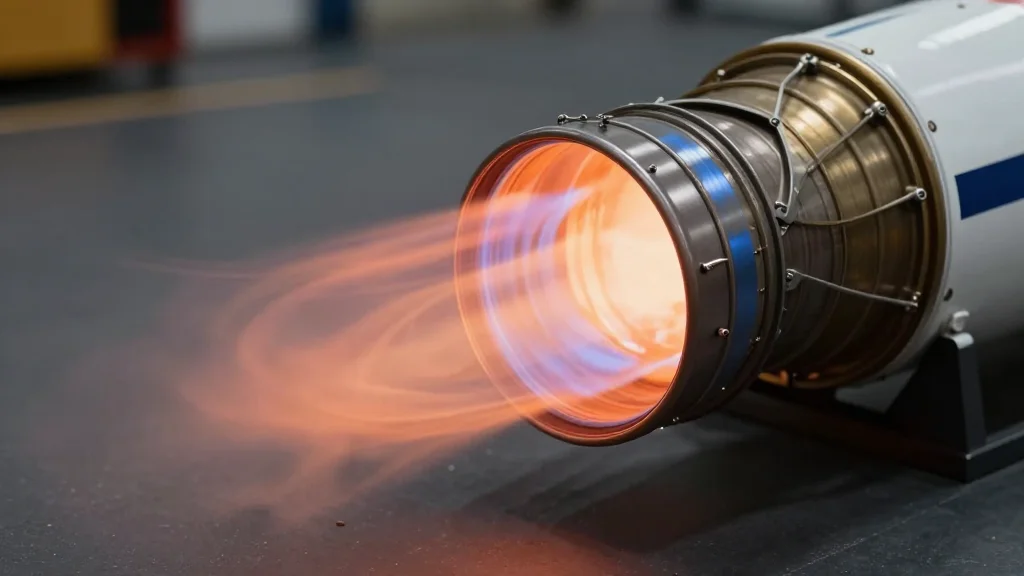
ISRO and Roscosmos Push Semi‑Cryogenic Engine Deal for Next‑Gen Heavy‑Lift Rockets

Companies Mentioned

Why It Matters
The ISRO‑Roscosmos engine deal could dramatically expand India’s launch capabilities, allowing it to service larger payloads and compete for lucrative commercial contracts that have traditionally been dominated by the United States and Europe. By leveraging Russian expertise in semi‑cryogenic technology, India may accelerate its roadmap for deep‑space missions, lunar exploration, and interplanetary probes, reducing reliance on costly foreign launch services. On a geopolitical level, the collaboration underscores a strategic partnership that balances India’s growing ties with the United States against its historic cooperation with Russia. A successful engine procurement would signal India’s ability to diversify its supply chain for critical space technologies, enhancing its resilience amid shifting international trade dynamics and export‑control regimes.
Key Takeaways
- •ISRO is negotiating a draft contract with Roscosmos for semi‑cryogenic engines delivering ~2,000 kN thrust.
- •The SE2000 engine could raise ISRO's GTO payload capacity from 4 t to 5 t, a 25 % increase.
- •Senior ISRO officials visited Moscow for technical talks; contract approval is pending.
- •Collaboration could introduce a cost‑effective, kerosene‑LOX propulsion option to the global market.
- •Successful integration may position India to compete for high‑value commercial launch contracts within 2‑3 years.
Pulse Analysis
India’s heavy‑lift ambitions have long been constrained by the limited thrust of its indigenous cryogenic engines. The SE2000’s staged‑combustion cycle, with a specific impulse of 335 seconds, places it in the same performance class as the engines powering the United States’ Delta IV Heavy and Europe’s Ariane 5. By tapping Russian expertise, ISRO sidesteps years of trial‑and‑error development, effectively leapfrogging to a technology that only a handful of nations have mastered. This mirrors a broader industry trend where emerging space powers seek strategic partnerships to accelerate capability gaps rather than reinvent the wheel.
From a market perspective, the addition of an Indian heavy‑lift vehicle could intensify price competition for GTO launches. Current incumbents—SpaceX, Arianespace, and China’s Long March—have driven launch costs down, but capacity constraints and geopolitical risk remain. An Indian offering, especially one built on a semi‑cryogenic engine that uses widely available propellants, could attract customers in Asia, the Middle East, and Africa seeking reliable, lower‑cost access. Moreover, the partnership may stimulate a new supply chain for engine components, benefitting both Russian manufacturers and Indian aerospace firms.
Looking ahead, the key risk lies in the execution of technology transfer and the ability to certify the engines for operational use. Historical challenges in joint propulsion programs—such as the US‑European Atlas‑V collaboration—highlight the importance of rigorous testing and clear liability frameworks. If ISRO can navigate these hurdles, the semi‑cryogenic engine deal could become a cornerstone of India’s next decade of space exploration, enabling more ambitious missions to the Moon, Mars, and beyond while reshaping the competitive dynamics of the global launch market.
ISRO and Roscosmos Push Semi‑Cryogenic Engine Deal for Next‑Gen Heavy‑Lift Rockets
Comments
Want to join the conversation?
Loading comments...