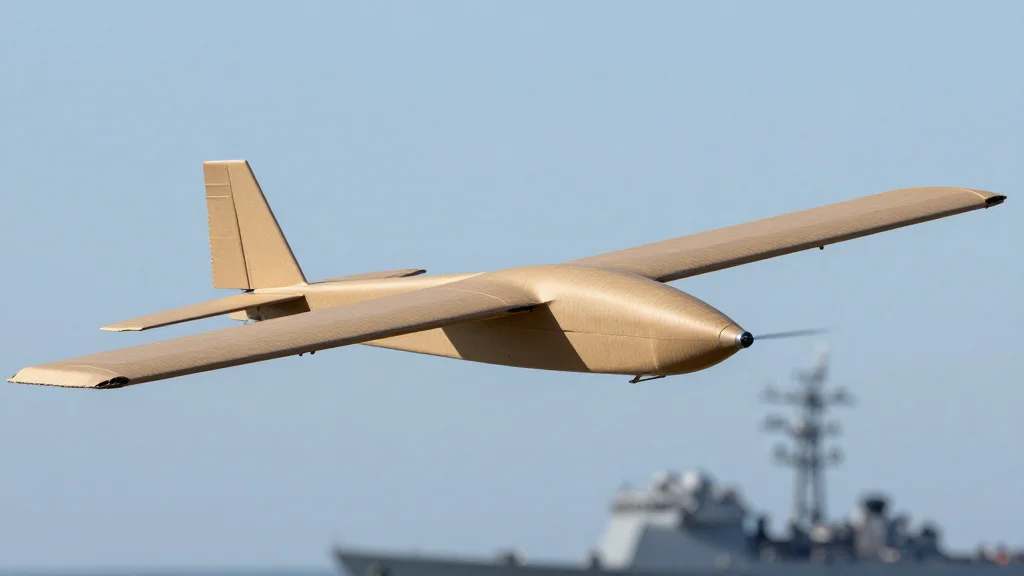
Japan Deploys $2,000 Cardboard Combat Drones for Frontline Use

Why It Matters
The introduction of cardboard‑based combat drones challenges the long‑standing paradigm that effective aerial weapons require expensive, high‑tech materials. If Japan can demonstrate operational utility, it may trigger a wave of low‑cost, high‑volume UAV development worldwide, pressuring traditional aerospace firms to reconsider pricing and production models. Moreover, the approach could democratize drone manufacturing, allowing smaller firms or even civilian facilities to contribute to national defense supply chains. For the aerospace industry, the AirKamuy 150 raises questions about durability, mission suitability, and regulatory oversight. While the drones are unlikely to replace high‑performance combat aircraft, their existence forces militaries to plan for swarms of cheap, disposable assets that can saturate defenses, complicate threat assessment, and potentially lower the threshold for kinetic engagement.
Key Takeaways
- •Japan’s defense minister announced deployment of AirKamuy 150 cardboard drones.
- •Each unit costs $2,000‑$2,500, far cheaper than Iran’s Shahed drones ($20,000‑$50,000).
- •Flight time is 80 minutes with a top speed of ~62 mph; assembly takes ~5 minutes.
- •CEO Yamaguchi Takumi highlighted mass‑production potential at any cardboard plant.
- •Initial use is as “targets” for the Maritime Self‑Defense Force, with broader roles under evaluation.
Pulse Analysis
Japan’s gamble on ultra‑low‑cost drones reflects a strategic calculus that quantity can offset quality in certain threat environments. By leveraging a ubiquitous material like corrugated cardboard, the AirKamuy 150 sidesteps the supply chain bottlenecks that have plagued high‑tech UAV programs, especially during periods of geopolitical tension. This could give Tokyo a tactical edge in saturation attacks, where swarms overwhelm radar and missile defenses, a concept already explored in academic circles but rarely fielded at scale.
Historically, disposable weapons have been limited to missiles or small munitions; extending the concept to an entire airframe is novel. The move may force adversaries to allocate more resources to detection and interception, inflating the cost per engagement for them. However, the durability concerns are real—cardboard degrades quickly under moisture, temperature extremes, and combat damage. The success of the program will hinge on whether the Japanese military can integrate these drones into a broader networked system that compensates for their fragility with redundancy and rapid re‑deployment.
If the AirKamuy 150 proves viable, we could see a cascade of similar initiatives from other nations seeking cost‑effective force multipliers. Traditional aerospace manufacturers might respond by offering modular, low‑cost add‑ons or by developing hybrid designs that blend cheap structural elements with more robust avionics. The key takeaway for the industry is that the economics of warfare are shifting; affordability and scalability are becoming as decisive as performance metrics in the next generation of aerial combat.
Japan Deploys $2,000 Cardboard Combat Drones for Frontline Use
Comments
Want to join the conversation?
Loading comments...