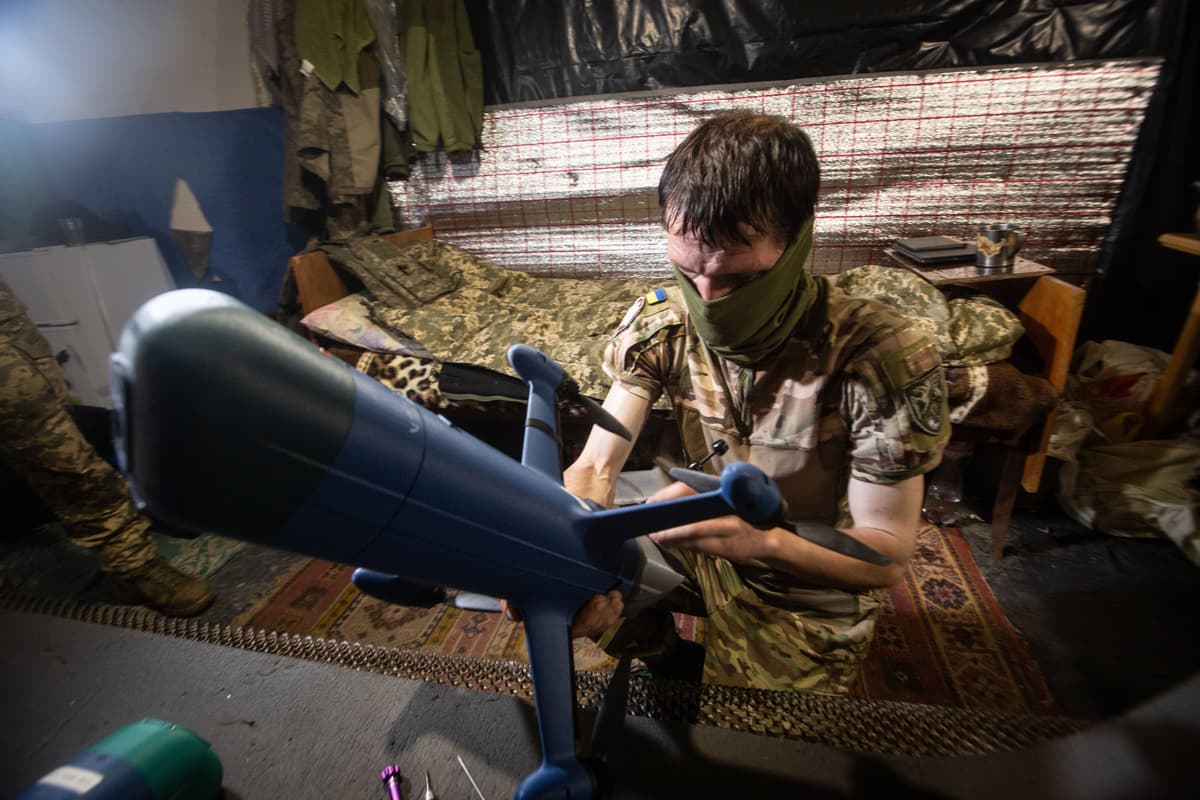
Japan Joins the Global Craze to Field Interceptor Drones
Companies Mentioned
Why It Matters
Interceptor drones offer a low‑cost, rapid‑response layer of air defense, reducing Japan’s reliance on scarce U.S. missile stockpiles and strengthening regional security against drone threats. The program signals a shift toward domestic, autonomous weapons systems across East Asia.
Key Takeaways
- •Japan targets 2027 deployment of interceptor drones
- •Terra Drone’s Ukraine‑tested interceptors form core technology
- •Unmanned defense budget jumps to $1.72 billion in 2024
- •Program aims to counter Shahed‑type suicide UAV swarms
- •Goal to produce 80,000 drones annually by 2030
Pulse Analysis
The rise of inexpensive, long‑range suicide drones has forced traditional powers to rethink air‑defense architectures. Japan’s latest initiative mirrors a global scramble, from the United States to European nations, to field autonomous interceptor platforms that can engage swarms at low cost. By leveraging Terra Drone’s combat‑tested systems—originally fielded in Ukraine—Japan shortens development cycles and taps into a proven playbook for rapid deployment, while integrating the drones with existing radar and command networks for seamless operation.
Domestically, the program is underpinned by a dramatic budget increase for unmanned capabilities, climbing from ¥111 billion ($690 million) in 2025 to ¥277 billion ($1.72 billion) this year. The procurement agency’s fast‑track demonstration schedule and the requirement for two‑person operation reflect a push for simplicity and scalability. At the same time, concerns over U.S. missile stockpile strain—exacerbated by the Iran campaign—have accelerated Japan’s drive for self‑sufficiency, complementing joint U.S.–Japan projects on SM‑6 and SM‑3 interceptors.
Strategically, the interceptor drone push bolsters Japan’s broader 2027 defensive umbrella, which includes standoff strike capabilities and a layered missile‑defense network. With Shahed‑type drones capable of traveling over 1,100 miles, the threat envelope now extends from the Middle East to Northeast Asia, putting Japan, South Korea and the Philippines within range. By committing to produce up to 80,000 drones a year by 2030, Japan not only safeguards its own territory but also positions its defense industry as a regional hub for autonomous weaponry, potentially reshaping procurement dynamics across allied nations.
Japan joins the global craze to field interceptor drones
Comments
Want to join the conversation?
Loading comments...