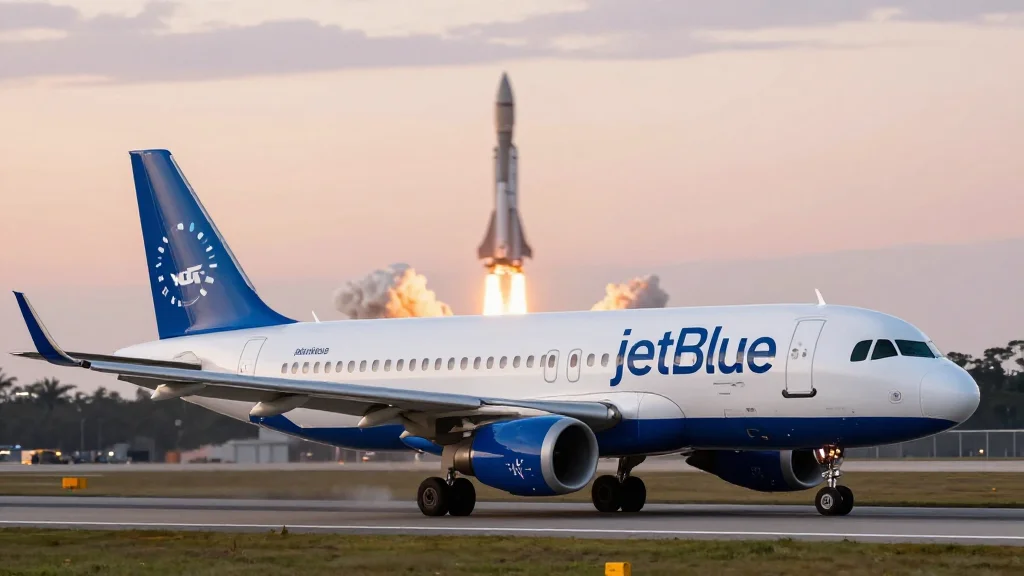
JetBlue Expands Fort Lauderdale Hub to 150+ Daily Flights Amid SpaceX Disruption

Companies Mentioned
Why It Matters
JetBlue’s aggressive Fort Lauderdale expansion reshapes the competitive dynamics of the Southeast U.S. market, potentially displacing legacy carriers and redefining passenger flow patterns across the Caribbean and Latin America. By establishing a true hub, JetBlue can leverage economies of scale, improve aircraft utilization, and capture higher-yield connecting traffic that previously flowed through Spirit’s network. The SpaceX‑induced airspace shutdown underscores a new operational variable for airlines: the need to integrate space launch schedules into flight planning. As commercial launch cadence accelerates, carriers like JetBlue must develop contingency protocols and collaborate with regulators to safeguard on‑time performance, a factor that could become a differentiator in airline reliability metrics.
Key Takeaways
- •JetBlue will increase Fort Lauderdale daily flights to ~128 by July and ~150 by Feb 2027, with potential to exceed 150.
- •The carrier plans to add a third pilot base in South Florida, supporting an additional 150 pilots by end‑2026.
- •JetBlue’s A220 fleet will grow to 70 aircraft by year‑end, enabling service to new, lower‑demand markets.
- •A SpaceX Starship launch forced JetBlue flight B61575 to return to Miami, highlighting space‑airline operational overlap.
- •Jamaica’s civil aviation authority warned of temporary departure suspensions during launch windows, a precedent for future airline‑space coordination.
Pulse Analysis
JetBlue’s hub push is a textbook case of network optimization in a post‑Spirit landscape. By concentrating flights at FLL, the airline can achieve higher load factors on connecting legs, reduce per‑seat costs, and create a virtuous cycle of demand generation. The move also signals confidence in the resilience of the South Florida market, which has historically been a springboard for low‑cost carriers seeking Caribbean and Latin American traffic. However, the rapid scaling of pilot staffing and A220 deliveries introduces execution risk; any lag in crew certification or aircraft receipt could blunt the intended schedule gains.
The SpaceX disruption adds a layer of complexity that the airline industry has not traditionally managed. While the FAA has established protocols for temporary airspace closures, the frequency of Starship launches—now five times in the Caribbean in a single year—means airlines must embed launch calendars into their operational planning tools. JetBlue’s experience with the forced return of flight B61575 could prompt the carrier to negotiate dedicated airspace corridors or real‑time data feeds from SpaceX, turning a reactive stance into a proactive advantage.
Looking ahead, JetBlue’s success will hinge on two interlinked factors: the ability to sustain hub growth without compromising on‑time performance, and the agility to adapt to an increasingly crowded low‑Earth orbit environment. If the airline can master both, it will not only dominate Fort Lauderdale but also set a precedent for how commercial aviation coexists with the burgeoning commercial space sector.
JetBlue expands Fort Lauderdale hub to 150+ daily flights amid SpaceX disruption
Comments
Want to join the conversation?
Loading comments...