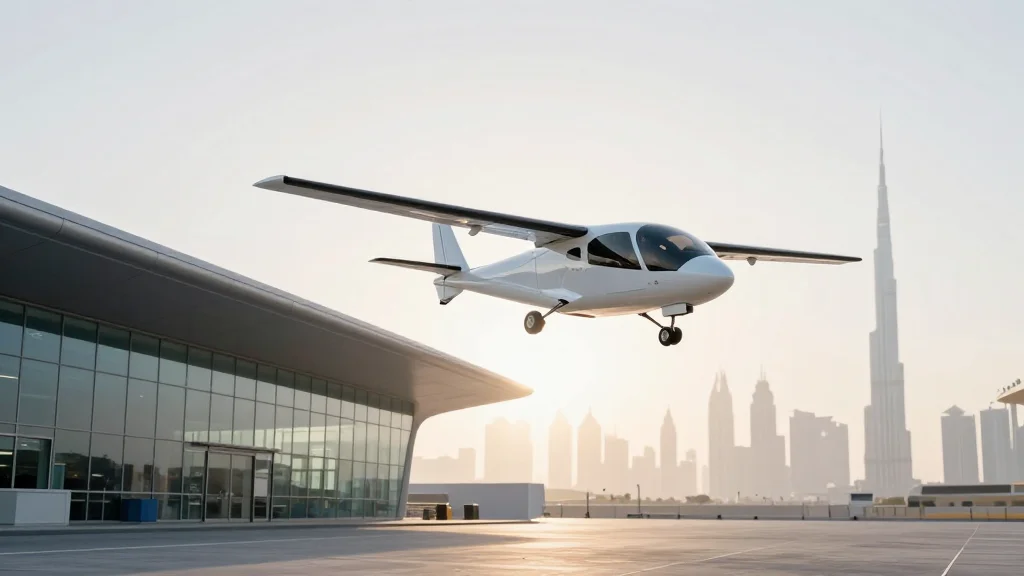
Joby Aviation Secures Six-Year Dubai Air‑Taxi Rights, Aims for 2026 Commercial Launch

Companies Mentioned
Why It Matters
The Dubai air‑taxi station is the first purpose‑built vertiport of its kind, providing a real‑world testbed for eVTOL operations. Joby’s exclusive rights give it a unique opportunity to prove the commercial viability of electric air mobility, a sector projected to grow into a multi‑billion‑dollar market over the next decade. Successful certification and passenger uptake in Dubai would signal that regulatory, infrastructure and consumer hurdles can be overcome, encouraging other cities and investors to commit resources to similar projects. Beyond the immediate commercial prospects, the launch could accelerate the shift toward low‑emission urban transport. Each eVTOL carries four passengers with zero direct emissions, offering a faster, quieter alternative to road traffic. If Dubai’s 10‑minute airport‑to‑Palm Jumeirah hop proves popular, it could reshape commuting patterns in megacities worldwide, prompting governments to invest in vertiport networks and influencing aviation policy on a global scale.
Key Takeaways
- •Joby Aviation granted exclusive six‑year operating rights at Dubai’s first eVTOL station
- •Station spans 3,100 sqm, includes two pads and can serve up to 170,000 passengers annually
- •Joby targets commercial passenger flights to begin by end‑2026 pending FAA certification
- •Dubai plans three additional vertiports, creating a city‑wide eVTOL network
- •Joby aims to double aircraft production to four per month in Dayton, Ohio, by 2027
Pulse Analysis
Joby’s Dubai deal is a strategic gamble that could pay off handsomely if the company clears the FAA’s final certification hurdle. The partnership gives Joby a live environment to refine operational protocols, gather real‑world performance data, and showcase a revenue‑generating service before tackling the more complex U.S. market. Historically, early movers in emerging transport sectors—think ride‑hailing or electric scooters—have leveraged a single city launch to attract global investors and secure regulatory goodwill. Joby appears to be following that playbook, using Dubai’s pro‑innovation stance as a springboard.
However, the competitive pressure is intensifying. Archer Aviation’s recent FAA compliance milestone narrows the certification gap, and both firms are racing to lock in city contracts. Joby’s advantage lies in its exclusive rights and its broader ecosystem partnerships with Uber, Delta and Toyota, which could translate into integrated booking platforms and fleet financing. Yet the company’s reliance on a single market for its first commercial rollout introduces concentration risk; any delay in Dubai—whether due to geopolitical tensions, supply‑chain hiccups, or unexpected regulatory demands—could stall the entire timeline.
Investors should watch two leading indicators over the next six months: (1) a formal FAA sign‑off on Joby’s S4 eVTOL, and (2) a successful passenger trial at the Dubai vertiport with measurable load factors and on‑time performance. Positive signals on both fronts would likely trigger a re‑rating of Joby’s valuation, moving it from a speculative play to a near‑term revenue generator. Conversely, setbacks could widen the gap between Joby and its rivals, reinforcing the notion that certification, not technology, is the ultimate gatekeeper in the eVTOL race.
Joby Aviation Secures Six-Year Dubai Air‑Taxi Rights, Aims for 2026 Commercial Launch
Comments
Want to join the conversation?
Loading comments...