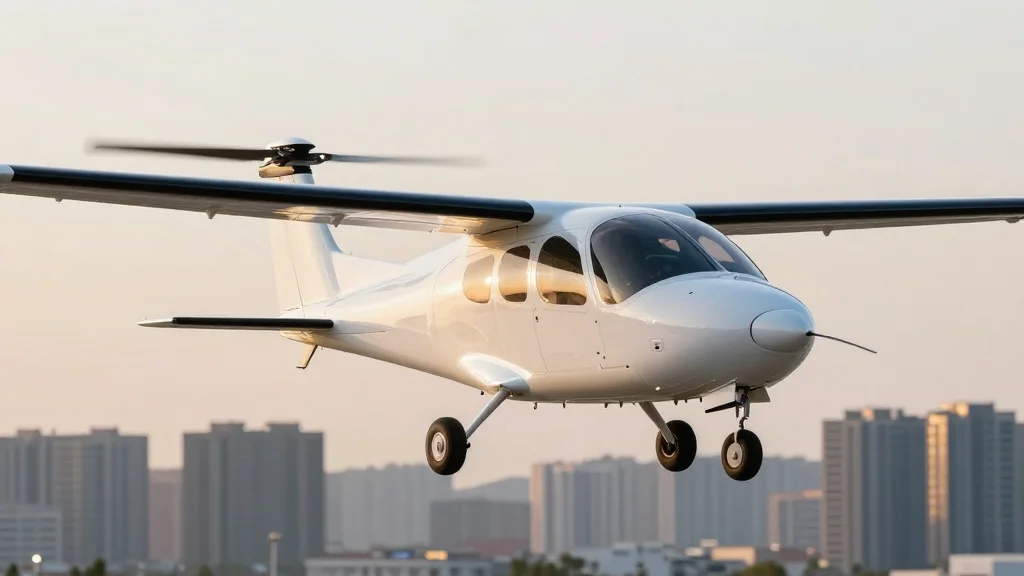
Joby Aviation Targets 2026 Commercial eVTOL Launch Amid $28.6B Market Outlook

Companies Mentioned
Why It Matters
Joby Aviation’s push toward commercial eVTOL service marks a pivotal moment for urban air mobility, a sector that could reshape transportation in megacities plagued by traffic congestion. If Joby successfully launches in 2026, it will provide a real‑world test case for integrating electric air‑taxis into existing mobility ecosystems, influencing regulatory frameworks, infrastructure investment, and public acceptance. The company’s partnerships with Uber and Delta also illustrate how legacy mobility players are betting on vertical integration, potentially accelerating the rollout of multimodal transport solutions. The projected $28.6 billion market size underscores the economic stakes: a successful rollout could unlock new revenue streams for airlines, technology firms, and city governments, while also driving demand for battery technology, air traffic management systems, and vertiport construction. Conversely, setbacks could dampen investor enthusiasm across the eVTOL space, delaying broader adoption and affecting related supply chains.
Key Takeaways
- •Joby completed an FAA‑conforming test flight in New York City in early April 2026.
- •Management targets the start of commercial eVTOL operations later in 2026.
- •Revenue is forecast at $111 million for 2026 and $222 million for the next fiscal year.
- •Market cap stands at $10.2 billion, about 46 times projected 2027 revenue.
- •eVTOL market could reach $28.6 billion by 2030, according to Grand View Research.
Pulse Analysis
Joby Aviation’s 2026 launch ambition is more than a corporate milestone; it is a bellwether for the entire urban air mobility ecosystem. The company’s ability to secure FAA certification quickly will likely set the regulatory tempo for peers, as agencies may adopt a unified framework once a leading player demonstrates compliance. This could reduce the time‑to‑market for competitors, but it also raises the bar for safety and operational standards.
From a financial perspective, Joby’s lofty valuation reflects a market that is pricing in future growth rather than current earnings. At 46 times next year’s projected revenue, the stock is vulnerable to any deviation from the launch schedule. A delayed certification or a high‑profile incident could trigger a sharp re‑rating, as investors recalibrate risk premiums for speculative aerospace ventures. Conversely, a smooth rollout could validate the premium and attract additional capital to the sector, spurring a wave of infrastructure investment in vertiports and battery supply chains.
Strategically, the Uber and Delta alliances illustrate a hybrid model where eVTOL firms partner with established mobility and airline brands to accelerate adoption. Uber’s app integration could lower the friction for consumers, while Delta’s network provides operational expertise and access to airport facilities. If these collaborations prove effective, they may become the template for future eVTOL rollouts, prompting other airlines and ride‑share platforms to seek similar partnerships. The competitive dynamics will thus shift from pure technology races to battles over ecosystem control and brand integration, shaping the next decade of aerospace innovation.
Joby Aviation Targets 2026 Commercial eVTOL Launch Amid $28.6B Market Outlook
Comments
Want to join the conversation?
Loading comments...