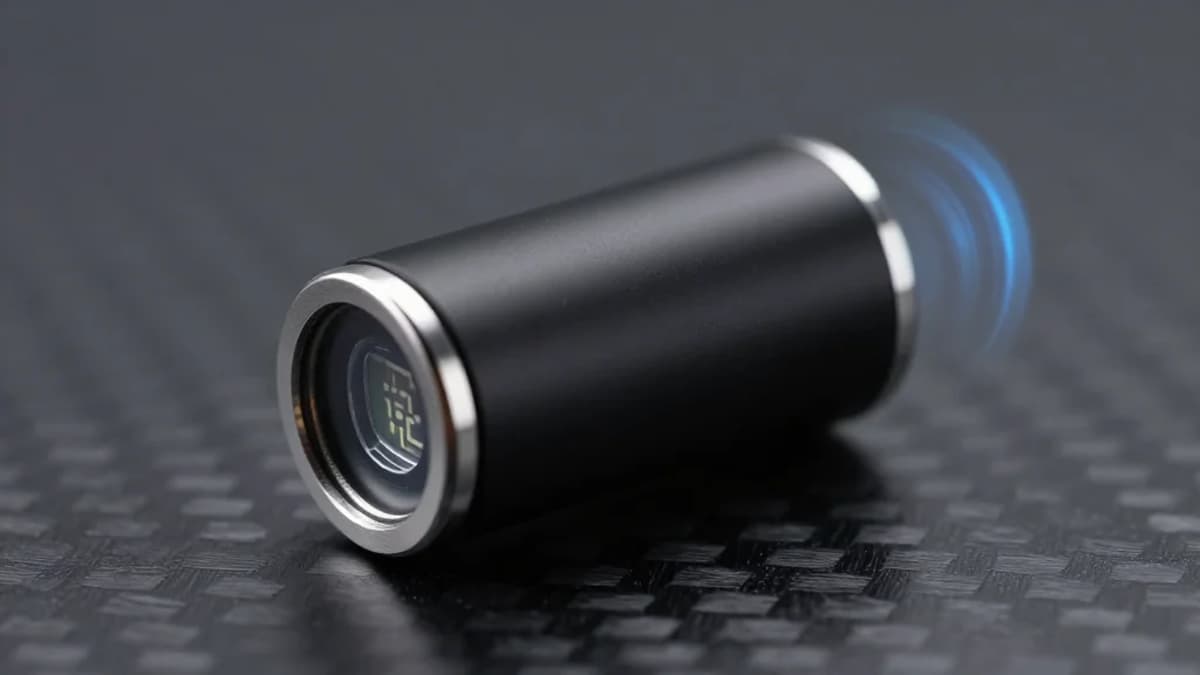
Kongsberg Discovery and Silicon Sensing Unveil Tactical-Grade North-Seeking MEMS Gyroscope
•March 3, 2026
0
Why It Matters
The breakthrough lowers cost, size and power barriers for high‑precision inertial navigation, expanding resilient capabilities across defense, marine surveying and offshore energy sectors.
Key Takeaways
- •MEMS gyroscope achieves navigation‑grade performance.
- •No GNSS or magnetometer required for north‑seeking.
- •SGH03 sensor offers low bias instability, ARW.
- •ITAR‑free solution suits defense and offshore markets.
- •Live demos at Oceanology International March 2026.
Pulse Analysis
The emergence of a navigation‑grade MEMS gyroscope marks a pivotal shift in inertial technology. Historically, achieving the precision of fiber‑optic or ring‑laser gyroscopes required bulky, power‑hungry hardware, limiting their use to high‑value platforms. By leveraging inductive silicon MEMS architecture, the SGH03 compresses that performance into a lightweight, low‑power form factor, addressing a long‑standing gap between tactical and strategic navigation solutions.
Technical merit underpins the commercial promise. The SGH03’s vibrating‑ring design delivers bias instability and angle random walk metrics previously exclusive to larger systems, while maintaining the ruggedness needed for high‑vibration underwater and aerial applications. Its solid‑state nature eliminates moving parts, reducing failure rates and simplifying integration with existing inertial measurement units such as Silicon Sensing’s DMU41. Moreover, the device’s ITAR‑free status removes export constraints, opening global markets for defense and energy customers seeking resilient, jam‑proof navigation.
Strategically, the partnership aligns with the rapid expansion of uncrewed systems across air, surface and subsea domains. Operators of drones, ROVs and AUVs demand precise, autonomous navigation that can survive GPS denial and magnetic interference. This MEMS gyroscope provides that capability at a fraction of the cost and size of legacy solutions, potentially accelerating adoption in autonomous maritime surveys, offshore wind farm inspections, and next‑generation combat platforms. The upcoming live demonstration at Oceanology International will likely catalyze integration discussions, positioning the SGH03 as a cornerstone of future resilient navigation architectures.
Kongsberg Discovery and Silicon Sensing Unveil Tactical-Grade North-Seeking MEMS Gyroscope
0
Comments
Want to join the conversation?
Loading comments...