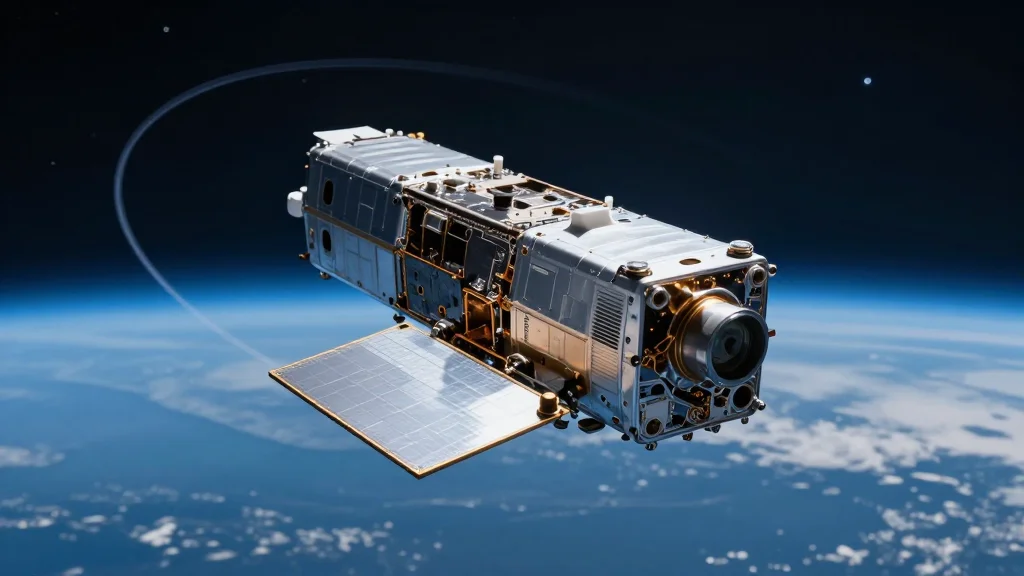
Lawmakers Seek to Allow CHIPS Funding for Space-Based Manufacturers
Companies Mentioned
Why It Matters
By incentivizing microgravity chipmaking, the bill could unlock a new supply chain frontier, reducing reliance on terrestrial silicon shortages and preserving U.S. strategic tech advantage over China.
Key Takeaways
- •Bill expands CHIPS tax credit to low‑Earth‑orbit manufacturing.
- •Aims to counter China’s space‑based chip production capabilities.
- •Private firms already testing in‑space semiconductor platforms.
- •ISS decommissioning heightens urgency for commercial space stations.
- •Space‑made chips could ease global silicon shortage.
Pulse Analysis
Microgravity environments offer unique crystal growth conditions that can produce higher‑purity semiconductor wafers than Earth‑bound factories. The near‑weightless setting eliminates convection currents, yielding fewer defects and more uniform dopant distribution, which translates into faster, more efficient chips. While the concept dates back to Skylab’s 1973 experiments, recent advances in autonomous plasma generation and miniaturized launch payloads have turned a scientific curiosity into a viable manufacturing pathway.
The Semiconductor Superiority Act reflects a strategic policy shift, recognizing space as the next manufacturing frontier. By explicitly extending Section 48D of the CHIPS Act to low‑Earth orbit, Congress removes regulatory ambiguity that has deterred investment. This move directly challenges China’s Tiangong‑based chipline, signaling that the United States will not cede the high‑performance semiconductor edge to a rival that already leverages orbital facilities. The bipartisan nature of the bill underscores broad consensus on the economic and national‑security stakes.
Industry players are already mobilizing. Aegis Aerospace’s partnership with United Semiconductors and Space Forge’s successful plasma‑generation test demonstrate a growing ecosystem of launch providers, materials scientists, and chip designers. If commercial space stations replace the ISS by the early 2030s, they could host continuous production lines, reducing lead times and insulating the supply chain from terrestrial silicon bottlenecks driven by AI‑intensive data centers. In the longer view, space‑fabricated chips may become the backbone of orbital AI compute platforms, further intertwining semiconductor innovation with the expanding space economy.
Lawmakers seek to allow CHIPS funding for space-based manufacturers
Comments
Want to join the conversation?
Loading comments...