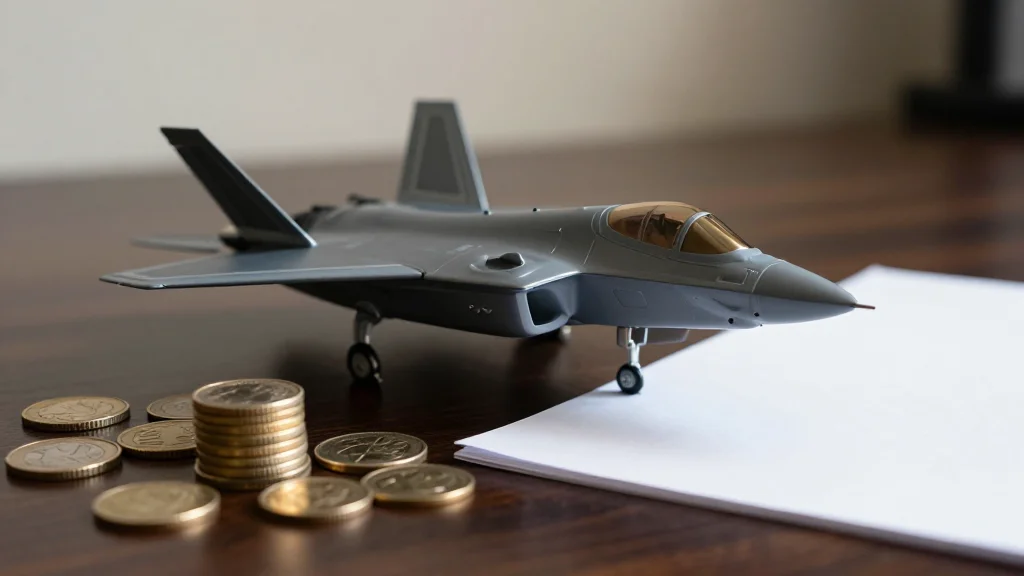
Lockheed Martin: The Defense Supercycle Is Here, But Not All Growth Will Flow To The Bottom Line
Companies Mentioned
Why It Matters
The surge in defense funding could accelerate Lockheed’s revenue growth, but operational headwinds mean investors must weigh upside against margin risk. Understanding these dynamics is crucial for stakeholders evaluating the aerospace and defense sector’s profitability outlook.
Key Takeaways
- •FY27 budget doubles R&P spend, boosting F‑35, PAC‑3/MSE, THAAD
- •Lockheed's backlog hits $186.4 B, $63 B due within 12 months
- •International sales now represent 31% of total revenue
- •Supply‑chain, tariffs, rare‑earth shortages pressure margins
- •DCF model shows 18% upside, fair value $625 per share
Pulse Analysis
The United States is entering a defense supercycle, with the FY27 budget projected to almost double research and procurement allocations. This unprecedented fiscal commitment reflects heightened geopolitical tensions and a strategic pivot toward modernizing air, missile and space capabilities. For defense contractors, the influx of funding translates into larger contract pipelines, especially for high‑technology platforms like the F‑35 joint strike fighter, the PAC‑3/MSE missile interceptor and the THAAD missile‑defense system. Analysts expect the surge to lift overall industry revenue growth rates well above historical averages, creating a fertile environment for firms that can secure long‑term sustainment contracts.
Lockheed Martin, the world’s largest defense contractor, is positioned to capture a sizable share of this spending wave. Its backlog has swelled to $186.4 billion, with $63 billion slated for recognition in the next twelve months, underscoring a robust order book that can smooth earnings volatility. The company’s international sales now account for 31 % of total revenue, reflecting successful export strategies for the F‑35 and other platforms. Yet, the firm faces operational headwinds: global supply‑chain bottlenecks, newly imposed tariffs and a rare‑earth shortage triggered by the Strait of Hormuz closure threaten to erode margins. These challenges require proactive sourcing and cost‑management initiatives to protect profitability.
From an investment perspective, a conservative discounted‑cash‑flow model places Lockheed’s intrinsic value at $625 per share, implying roughly an 18 % upside from current market levels. While the valuation appears attractive, investors must consider political risk, such as mid‑term election outcomes that could reshape defense appropriations, and fiscal concerns like rising federal debt. Moreover, the ongoing Golden Dome cost controversy adds a layer of reputational risk. Balancing the upside from a booming defense budget against these uncertainties will be key to assessing Lockheed’s long‑term upside potential.
Lockheed Martin: The Defense Supercycle Is Here, But Not All Growth Will Flow To The Bottom Line
Comments
Want to join the conversation?
Loading comments...