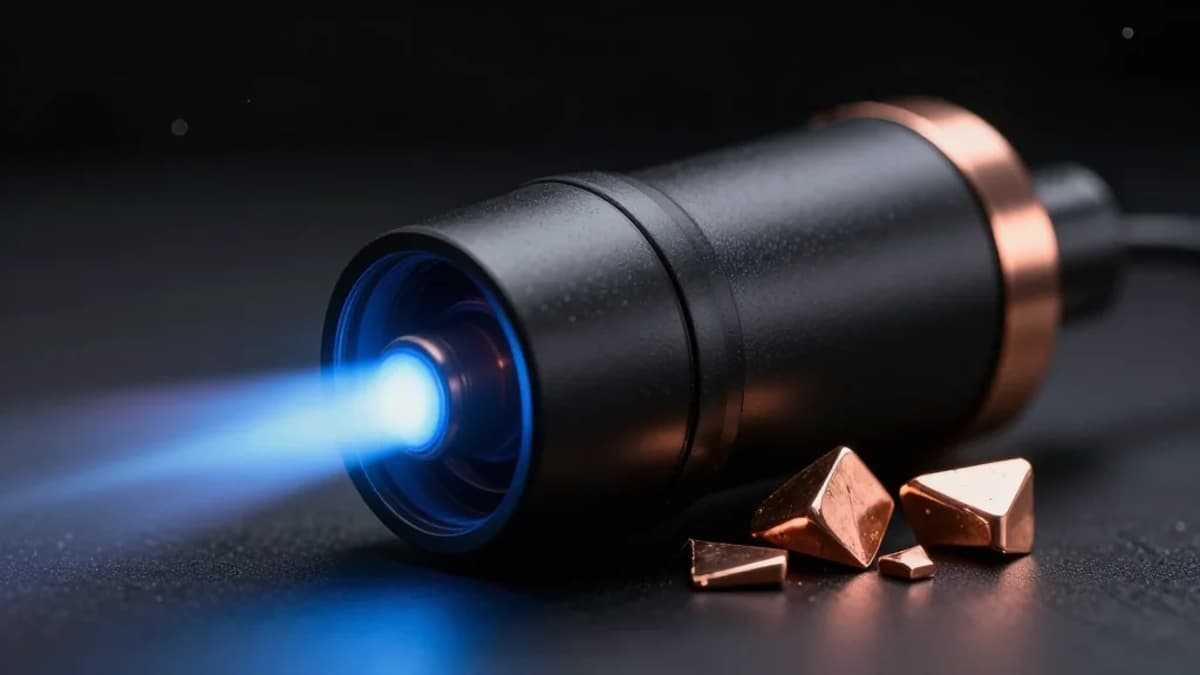
Magdrive’s Plasma Thruster Proves Its Mettle in First Orbital Test
•February 19, 2026
0
Companies Mentioned


Why It Matters
Higher thrust and refuelable metal propellant could keep satellites maneuverable as LEO becomes increasingly congested, opening a new market for on‑orbit servicing and debris recycling.
Key Takeaways
- •Rogue thruster generated plasma using copper/aluminum targets in orbit.
- •Thrust reaches tens of milli‑Newtons, surpassing traditional ion thrusters.
- •Supercapacitors store 10 kJ, discharge up to 200 W for pulses.
- •Design enables software‑throttleable thrust and in‑space metal refueling.
- •Future missions will test propellant handling and firmware updates.
Pulse Analysis
Electric propulsion has long been dominated by xenon‑based ion thrusters, which offer fine‑grained control but limited thrust and a finite propellant supply. Magdrive’s Rogue system flips that paradigm by vaporizing a tiny metal slug to generate plasma, leveraging a bank of off‑the‑shelf supercapacitors that accumulate energy over minutes and release it in micro‑seconds. This pulsed‑power approach yields thrust in the tens of milli‑Newtons range—an order of magnitude higher than typical electric thrusters—while consuming far less propellant per maneuver, positioning it as a strong candidate for high‑frequency collision avoidance in crowded low‑Earth orbit.
The orbital test aboard SpaceX’s Transporter‑14 rideshare proved the end‑to‑end chain: charge at variable watts, store 10 kilojoules, and discharge to produce repeatable plasma plumes. Engineers highlighted the software‑throttleable nature of the system, allowing operators to fine‑tune thrust without hardware changes. Overcoming the satellite power ceiling—often under a kilowatt—required clever energy management, but the successful demonstration validates the concept and sets a baseline for the next iteration, which will focus on propellant handling mechanisms and over‑the‑air firmware updates.
Beyond performance, the technology promises a transformative business model. By using abundant metal from defunct satellites, asteroid mining, or lunar regolith, a cartridge‑based refueling infrastructure could emerge, turning space debris into a resource. Service satellites equipped with Magdrive thrusters could replenish fuel on‑orbit, extending mission lifespans and enabling more complex proximity operations such as inspection, assembly, or de‑orbiting. As regulatory pressure mounts to mitigate orbital congestion, a reusable, high‑thrust electric thruster could become a cornerstone of sustainable satellite operations.
Magdrive’s plasma thruster proves its mettle in first orbital test
0
Comments
Want to join the conversation?
Loading comments...