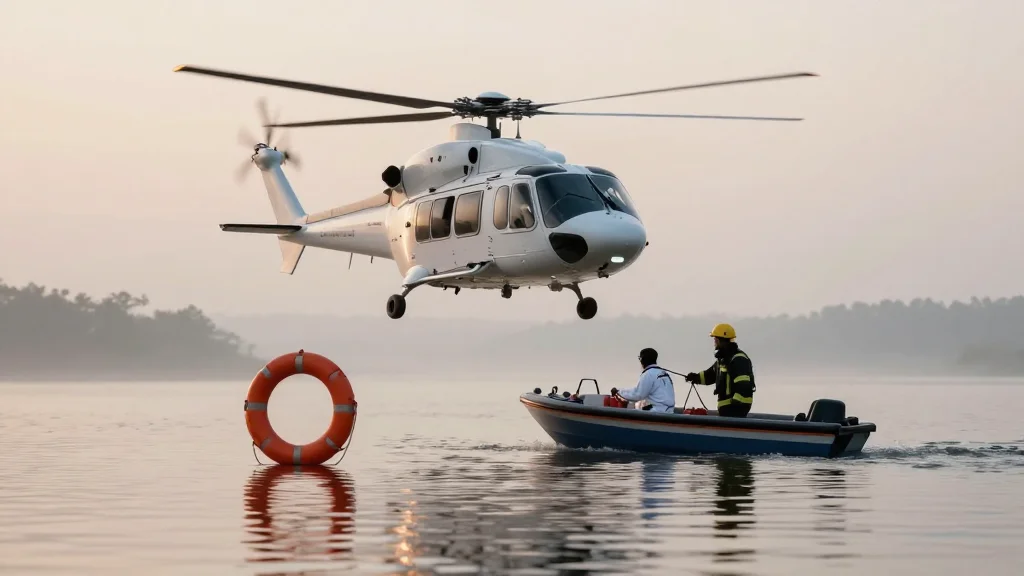
Massachusetts State Trooper Rescues Pilot After Cessna Crashes Into Quabbin Reservoir

Why It Matters
The rescue illustrates how coordinated, multi‑agency response can save lives in remote aviation accidents, a critical factor for the broader aerospace community that relies on rapid emergency services. It also brings attention to the safety protocols for small‑plane operations over bodies of water, a segment that has seen a rise in recreational flights post‑pandemic. The incident may prompt regulators and flight schools to revisit over‑water emergency training and equipment requirements, potentially influencing policy at both state and federal levels. Furthermore, the Quabbin Reservoir’s role as a vital water source for Boston adds a layer of public‑interest concern. Any prolonged contamination risk from aircraft fuel or debris could affect water quality, prompting environmental agencies to monitor the situation closely. The event therefore sits at the intersection of aviation safety, emergency management, and public‑utility protection.
Key Takeaways
- •Massachusetts State Police trooper rescued lone pilot from Quabbin Reservoir at ~7:40 p.m. Friday
- •Aircraft identified as a single‑engine Cessna; pilot was sole occupant
- •More than 10 emergency vehicles responded; multi‑agency effort included fire, police and state investigators
- •Pilot airlifted to UMass Memorial Medical Center after rescue; condition not disclosed
- •Plane remains fully submerged; recovery operations to begin Saturday
Pulse Analysis
The Quabbin Reservoir crash is a microcosm of the growing tension between increased general‑aviation traffic and the capacity of rural emergency services. Over the past decade, flight schools and private owners have expanded operations in New England, attracted by lower congestion and scenic routes. However, the region’s rugged terrain and numerous water bodies present unique hazards that many pilots may underestimate. The successful rescue demonstrates that well‑trained state troopers equipped with flotation gear can bridge the gap where specialized dive teams are delayed, but it also signals a need for more proactive risk mitigation.
Historically, small‑plane accidents over water have prompted regulatory tweaks, such as mandatory life‑vest carriage and enhanced pilot certification for over‑water flight. The Federal Aviation Administration (FAA) could use this incident to reinforce existing guidance or introduce new requirements for aircraft operating near large reservoirs. Moreover, the involvement of the National Transportation Safety Board signals that the crash will feed into national safety data, potentially influencing future safety advisories.
From a market perspective, the incident may affect insurers and aircraft manufacturers. Insurers often adjust premiums based on accident trends in specific locales; a high‑visibility crash near a critical water supply could lead to higher rates for flights operating in the area. Manufacturers of single‑engine Cessnas might see renewed scrutiny of aircraft performance in low‑altitude, over‑water scenarios, prompting design reviews or optional safety kits. Ultimately, the event underscores that while technology and training have advanced, the human element—quick decision‑making by first responders—remains a decisive factor in aviation safety outcomes.
Massachusetts State Trooper Rescues Pilot After Cessna Crashes Into Quabbin Reservoir
Comments
Want to join the conversation?
Loading comments...