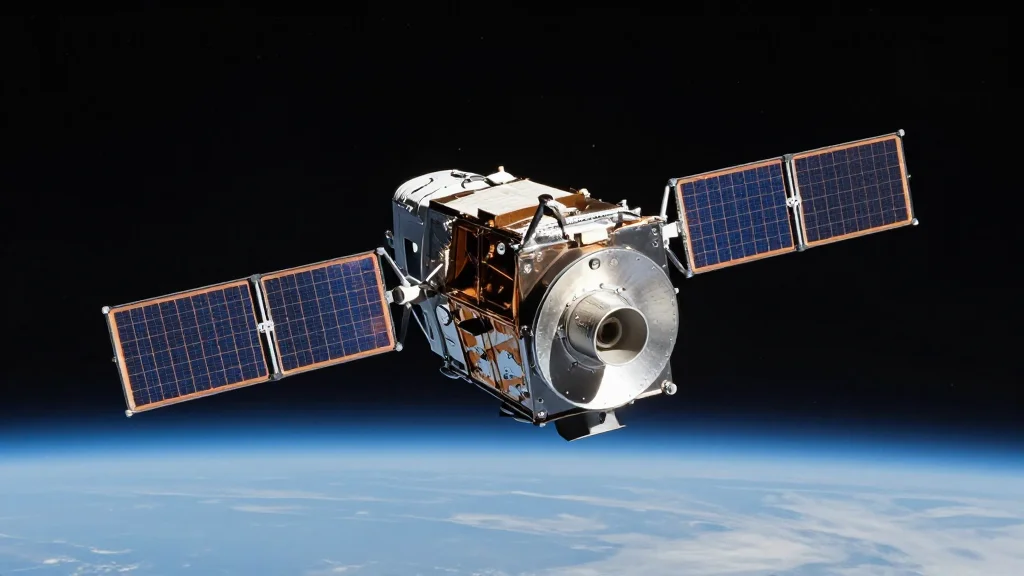
Meet Rassvet, Russia’s Answer to Starlink
Why It Matters
Rassvet gives Russia a sovereign satellite network, reducing reliance on foreign providers and enhancing military communications, which could reshape the global satellite‑internet market and geopolitical power balance.
Key Takeaways
- •First 16 Rassvet satellites launched from Plesetsk on 23 Mar 2026.
- •Russia targets 300–350 satellites by 2030 for nationwide coverage.
- •Funding includes $1.34 bn state grant and $4 bn planned private investment.
- •Dual‑use design aims at civilian broadband and military communications.
- •Production must reach 1–2 satellites weekly, a historic Russian challenge.
Pulse Analysis
The emergence of Rassvet reflects a broader trend of nations seeking independent satellite‑internet capabilities. While SpaceX’s Starlink has demonstrated the commercial viability of low‑Earth‑orbit constellations, Russia’s approach intertwines commercial broadband with explicit defense objectives. By leveraging the Plesetsk Cosmodrome and the Soyuz‑2.1B launcher, the project underscores Moscow’s intent to control both the physical infrastructure and the data flowing through it, a move that could inspire similar dual‑use initiatives in other geopolitically sensitive regions.
Technically, Rassvet’s design diverges from Starlink in several key ways. Its near‑polar 81.4° inclination and 800 km altitude prioritize coverage over Russia’s vast high‑latitude territories, from Crimea to Chukotka. However, the larger, heavier user terminals and the need to scale production to one or two satellites per week present formidable engineering hurdles. Achieving the planned 300‑350‑satellite fleet will require a manufacturing cadence that Russian space firms have never demonstrated, putting pressure on supply chains and potentially inflating costs.
Beyond the engineering challenge, Rassvet carries significant geopolitical weight. The project’s financing—$1.34 billion from the Ministry of Communications and a projected $4 billion private infusion—signals state commitment to digital sovereignty. In the context of the Ukraine conflict, where Starlink proved vital for Ukrainian forces, a domestically controlled network could shield Russian military communications from external disruption. Moreover, the constellation may serve as a platform for state‑run surveillance and internet control tools, reinforcing Moscow’s broader strategy of information dominance. As Rassvet matures, it could reshape the competitive landscape of satellite broadband and alter the calculus of cyber‑warfare in the years ahead.
Meet Rassvet, Russia’s Answer to Starlink
Comments
Want to join the conversation?
Loading comments...