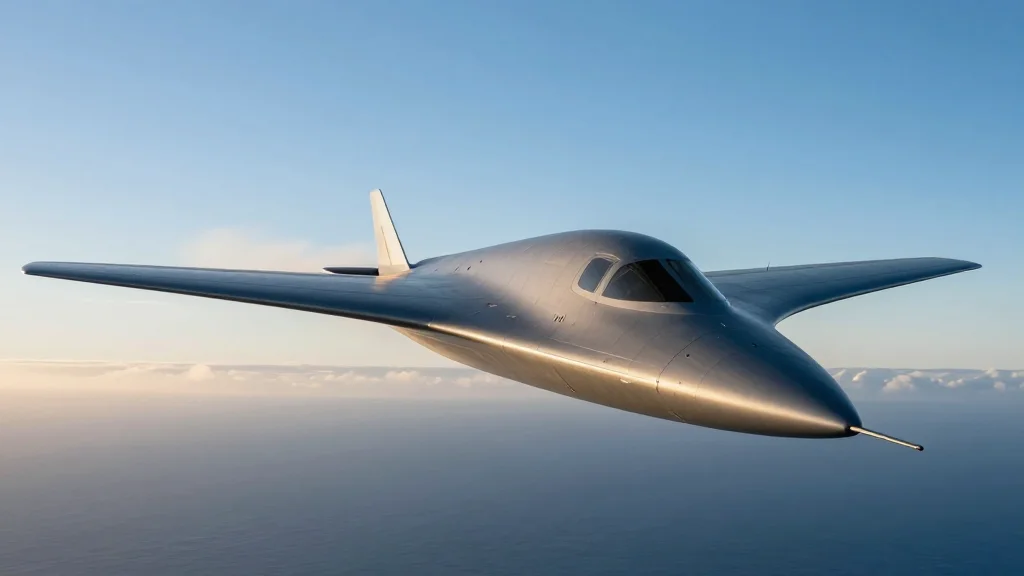
NASA Accelerates X-59 Flight Campaign Ahead of First Supersonic Test
Why It Matters
Demonstrating a low‑boom signature could satisfy noise regulations, paving the way for a new generation of passenger supersonic jets and opening a lucrative market segment.
Key Takeaways
- •X-59 logged 19.6 flight hours across 16 test flights.
- •Eight test flights completed in April, speeding up schedule.
- •First Mach 1 supersonic flight targeted within weeks.
- •Low‑boom data will inform future commercial supersonic regulations.
Pulse Analysis
NASA’s X‑59 Quiet‑Boom Supersonic Demonstrator is entering a critical phase as the agency pushes the test schedule toward its first Mach 1 flight. Built by Lockheed Martin’s Skunk Works, the sleek, needle‑nose aircraft has already logged nearly 20 hours across 16 sorties, with a notable surge of eight flights in April. This accelerated cadence reflects NASA’s confidence that the airframe and its innovative engine‑nozzle design are ready to capture the acoustic data needed to prove that a supersonic boom can be dramatically softened.
The rapid testing program serves two strategic purposes. First, it gathers high‑fidelity pressure‑signature measurements across a range of speeds and altitudes, essential for refining computational models of sonic booms. Second, it validates the aircraft’s flight‑control systems under near‑supersonic conditions, reducing risk before a full‑speed run. By compressing the timeline, NASA aims to deliver actionable results to the Federal Aviation Administration and international regulators before the end of the year, potentially influencing forthcoming noise‑standard revisions.
If the X‑59 succeeds, the aerospace industry could see a regulatory pathway for commercial supersonic travel that has been blocked by community‑noise concerns for decades. Airlines and manufacturers are watching closely, as a certified low‑boom aircraft would unlock premium, ultra‑fast routes between major hubs, reshaping long‑haul market dynamics. Moreover, the data could spur investment in next‑generation propulsion and airframe concepts, accelerating the broader revival of supersonic aviation. The X‑59’s progress therefore represents not just a technical milestone but a potential catalyst for a new era of high‑speed, environmentally conscious air travel.
NASA Accelerates X-59 Flight Campaign Ahead of First Supersonic Test
Comments
Want to join the conversation?
Loading comments...