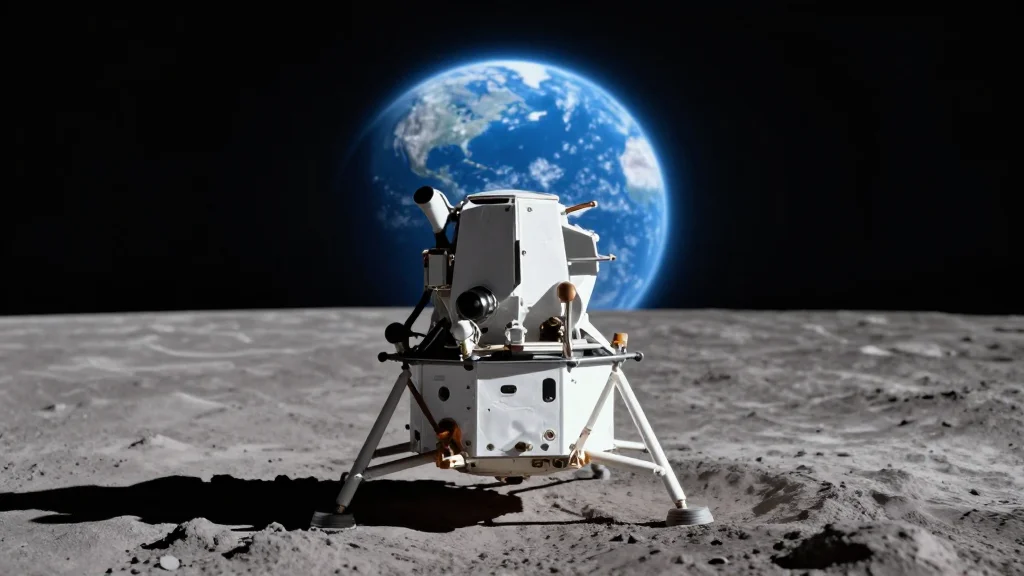
NASA Charts Post‑Artemis II Lunar Roadmap, Paving Way for Artemis III Test and 2028 Moon Landing

Companies Mentioned

Why It Matters
NASA’s post‑Artemis II roadmap signals a decisive shift from single‑event missions to a sustained lunar presence. By integrating commercial lander competition, expanding CLPS contracts, and reviving historic symbols, the agency is building a lunar ecosystem that can support scientific research, resource extraction and future deep‑space missions. The plan also intensifies geopolitical competition, as the United States seeks to maintain leadership against emerging players like China and to encourage allied participation, notably from India’s ISRO, in the emerging lunar economy. The roadmap’s success will determine whether the Artemis program can transition from a series of high‑profile milestones to a continuous, economically viable operation. A successful Artemis III test and a 2028 crewed landing would validate the market‑driven model, attract further private investment, and cement the United States’ strategic foothold on the Moon for the next decade.
Key Takeaways
- •NASA’s Artemis III will be a low‑Earth‑orbit test of landing hardware in 2027, preceding a crewed Moon landing in Artemis IV (2028).
- •SpaceX’s $2.89 billion Starship HLS contract and Blue Origin’s Blue Moon lander are now in direct competition for the Artemis III slot.
- •Intuitive Machines secured a $180.4 million CLPS contract to deliver seven payloads to the lunar South Pole, expanding its Nova‑D lander fleet.
- •NASA revived Apollo‑era recovery caps for Artemis II crew, linking heritage to modern missions.
- •Bremont’s Supernova Chronograph will ride Astrolab’s FLIP rover to the Moon, highlighting new commercial‑science partnerships.
Pulse Analysis
NASA’s post‑Artemis II roadmap reflects a broader industry trend: the convergence of government ambition with private‑sector agility. By turning the Artemis III lander selection into a competitive procurement, the agency is applying market pressure to accelerate technology maturation while spreading risk across multiple providers. This mirrors the early days of the commercial aviation industry, where rival manufacturers spurred rapid advances in safety and performance.
Historically, lunar programs have been dominated by a single contractor—NASA’s own Apollo era relied on a handful of prime integrators. The current multi‑vendor approach, however, introduces both opportunities and challenges. On the upside, competition can drive down costs and foster innovation, as seen in the divergent propulsion architectures of SpaceX’s methane‑oxygen Starship and Blue Origin’s hydrogen‑oxygen Blue Moon. On the downside, parallel development streams risk schedule slips if integration issues arise, especially when the Orion capsule must dock with a lander that has not yet flown in deep space.
The infusion of commercial payload contracts, exemplified by Intuitive Machines’ $180 million CLPS award, is equally transformative. It creates a revenue stream that can sustain lunar lander operations beyond the government’s budget cycles, encouraging a nascent lunar supply chain. Moreover, the cultural partnerships—recovery caps, commemorative watches—serve a soft‑power function, keeping public enthusiasm high and justifying continued congressional funding. If NASA can shepherd these disparate elements into a coherent, on‑time schedule, the Artemis program could become the template for future deep‑space endeavors, from Mars transit to asteroid mining.
NASA Charts Post‑Artemis II Lunar Roadmap, Paving Way for Artemis III Test and 2028 Moon Landing
Comments
Want to join the conversation?
Loading comments...