NASA Readies the X-59 for Its First Supersonic Flight, SpaceX's Starship Grounded and More Science Stories
Companies Mentioned


Why It Matters
The X‑59 tests could unlock commercial supersonic travel by proving low‑noise flight, while the Starship grounding highlights regulatory scrutiny that can delay key launch capabilities for both NASA’s lunar ambitions and SpaceX’s deep‑space plans.
Key Takeaways
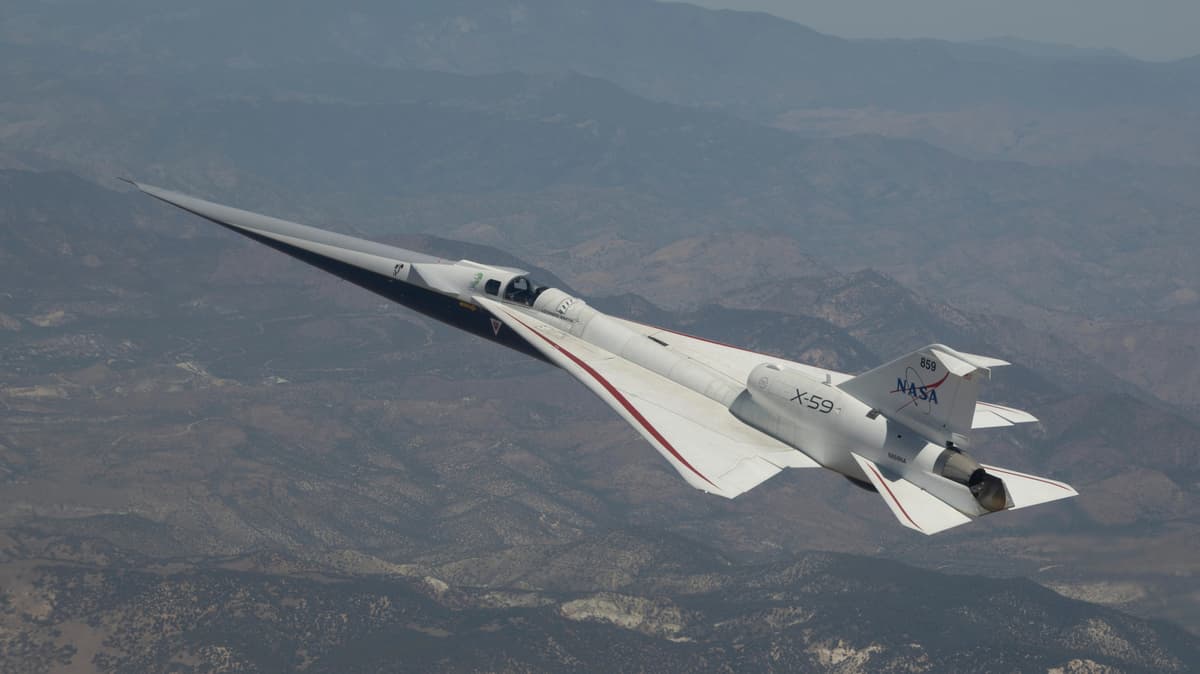
- •X‑59 aims for Mach 1.6, first supersonic flight early June.
- •NASA will use chase plane to mask X‑59’s sonic signature.
- •FAA grounded Starship pending investigation of Super Heavy boost‑back failure.
- •Starship’s mishap caused hard splashdown but no public injuries.
- •Blue Origin’s New Glenn exploded during hot‑fire test after recent clearance.
Pulse Analysis
NASA’s X‑59 Quiet Supersonic Technology (QueSST) aircraft represents a pivotal step toward commercial supersonic travel that complies with stringent noise regulations. By achieving speeds up to 1,218 mph (Mach 1.6) while generating a barely perceptible “soft thump,” the program aims to demonstrate that sonic booms can be mitigated, a prerequisite for future over‑land supersonic routes. The upcoming test flights, staged at progressively higher altitudes, will provide critical data for the FAA’s upcoming noise‑impact rules, potentially reshaping the economics of high‑speed passenger aviation.
SpaceX’s Starship V3 test highlighted both the vehicle’s rapid progress and the fragility of its launch operations. A partial boost‑back burn and subsequent hard splashdown of the Super Heavy booster triggered an FAA‑mandated grounding, underscoring the agency’s role in safeguarding public safety amid increasingly ambitious private‑sector missions. The pause could shift SpaceX’s timeline for lunar lander deliveries and Mars‑bound payloads, as the company must address the booster’s engine‑ignition anomaly before receiving clearance to resume flights.
These developments occur against a backdrop of heightened competition and regulatory oversight in the space sector. While Blue Origin’s New Glenn suffered a launch‑pad explosion shortly after being cleared, the incident reinforces the challenges of scaling reusable launch systems. Collectively, the X‑59 milestones and Starship grounding illustrate how aerospace innovation now hinges on coordinated progress between industry pioneers and government regulators, influencing investment decisions, mission schedules, and the broader trajectory toward a sustainable, high‑tempo space economy.
NASA readies the X-59 for its first supersonic flight, SpaceX's Starship grounded and more science stories
Comments
Want to join the conversation?
Loading comments...