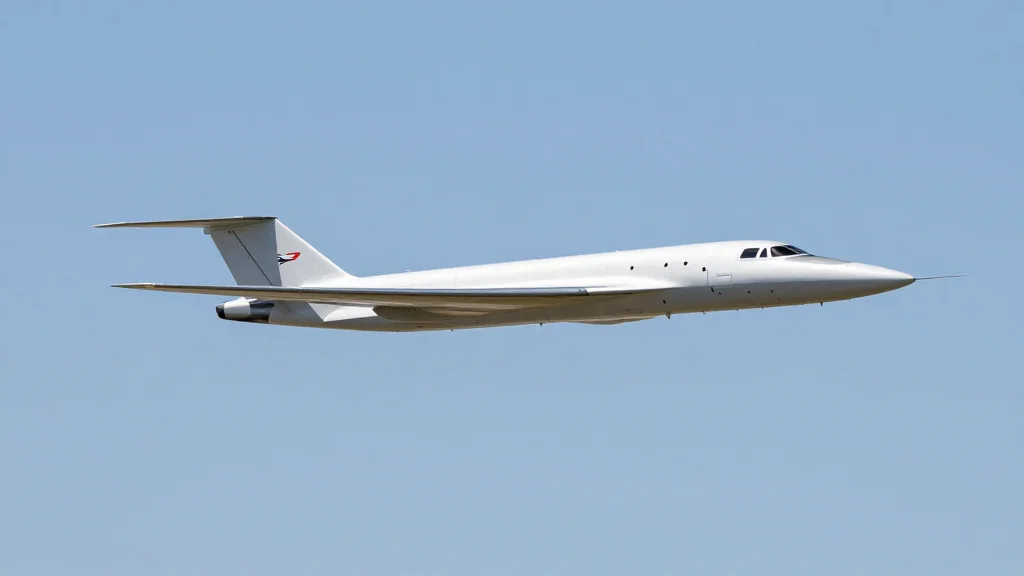
NASA Readies X‑59 for First Supersonic Test, Aiming to Silence the Boom

Companies Mentioned

Why It Matters
The X‑59’s upcoming supersonic test addresses the core obstacle that has kept civilian supersonic travel grounded for decades: the disruptive sonic boom. By proving that shock‑wave shaping can reduce ground‑level noise to a barely perceptible thump, NASA could unlock a regulatory pathway for airlines to re‑introduce faster-than‑sound routes over land, dramatically cutting travel times on high‑value corridors. Moreover, the data collected will inform aircraft designers about aerodynamic trade‑offs, potentially spurring a new generation of low‑boom airliners that meet both speed and community‑noise standards. Beyond commercial implications, the program advances scientific understanding of high‑speed aerodynamics and atmospheric acoustics. Successful demonstration would validate computational models and design techniques that could be applied to defense, space‑re‑entry, and hypersonic research, reinforcing the United States’ leadership in high‑speed flight technology.
Key Takeaways
- •NASA plans X‑59’s first supersonic flight in early June, targeting Mach 1.4 at 55,000 ft.
- •The aircraft will reach speeds over 630 mph (1,013 km/h) before the mission‑conditions run at 925 mph (1,488 km/h).
- •Lockheed Martin built the 99.7‑ft X‑59, featuring a needle nose and top‑mounted engine to reduce sonic boom intensity.
- •A chase plane will accompany the test, masking the X‑59’s quieter “thump” during data collection.
- •NASA intends to overfly U.S. communities later in 2026 to gather public feedback on low‑boom performance.
Pulse Analysis
NASA’s X‑59 program represents a strategic inflection point for the aerospace sector, where engineering innovation meets regulatory reform. Historically, the 1973 ban on over‑land supersonic travel in the United States has forced commercial operators to confine Mach‑1+ flights to oceanic routes, limiting the economic case for supersonic jets. By delivering empirical evidence that a redesigned airframe can attenuate the sonic boom to a tolerable thump, NASA is effectively providing the data needed for the FAA to reconsider its stance. This could catalyze a wave of private‑sector investment, similar to the surge that followed the successful test flights of the Boeing 787 and Airbus A350, where demonstrable performance gains unlocked new market segments.
From a competitive perspective, the X‑59’s progress puts the United States ahead of rival programs such as the European “Quiet Supersonic” initiatives and Japan’s low‑boom concepts, which have yet to achieve comparable flight‑test milestones. Lockheed Martin’s involvement also signals that legacy defense contractors are positioning themselves for a post‑boom commercial market, leveraging existing supply chains and expertise in high‑performance aerodynamics. However, the program’s reliance on a chase plane to mask acoustic signatures underscores the technical challenge of isolating the X‑59’s thump in real‑world conditions—a hurdle that could delay regulatory acceptance if the data is inconclusive.
Looking forward, the X‑59’s success will likely trigger a cascade of design studies and prototype projects from both established OEMs and emerging startups. Airlines could begin to model business cases for premium, point‑to‑point routes—think New York to London in under three hours—while investors may pour capital into low‑boom technologies, including advanced materials and active flow control. Yet, the path to commercial deployment remains contingent on public perception; even a modest increase in perceived noise could reignite community opposition. NASA’s upcoming community over‑flight campaign will therefore be as much a sociopolitical test as an engineering one, shaping the commercial viability of quiet supersonic travel for years to come.
NASA readies X‑59 for first supersonic test, aiming to silence the boom
Comments
Want to join the conversation?
Loading comments...