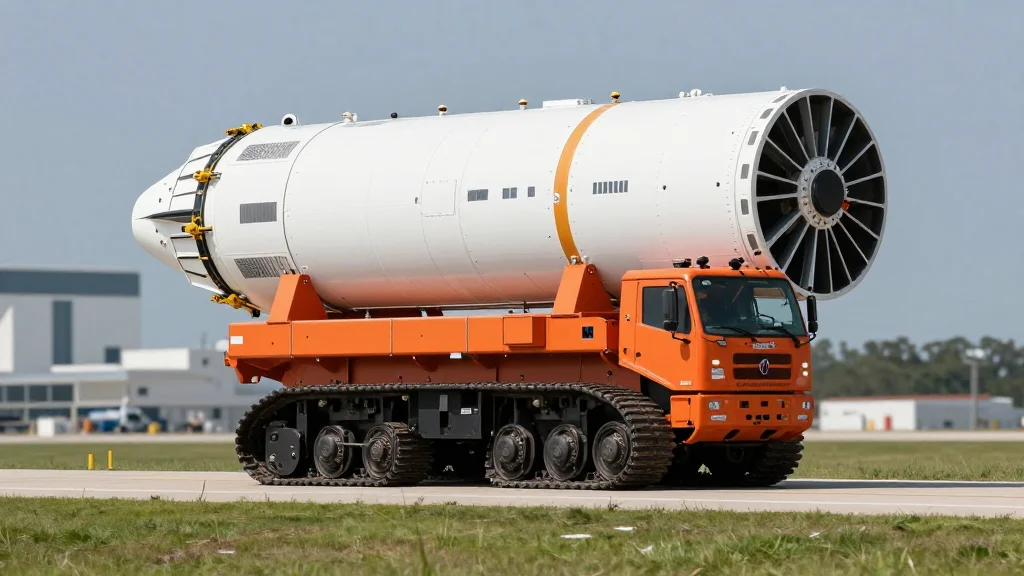
NASA Shifts Mobile Launcher 1 to VAB Ahead of Artemis III

Companies Mentioned
Why It Matters
The relocation of Mobile Launcher 1 is a tangible indicator that NASA is moving from test flights to operational lunar missions. By refurbishing and re‑using existing launch infrastructure, the agency reduces costs and shortens the timeline for Artemis III, which is critical for maintaining U.S. leadership in deep‑space exploration. The move also frees Launch Pad 39B for commercial partners, supporting a growing private launch market and diversifying revenue streams for the Kennedy Space Center. Successful integration of the SLS and Orion in the VAB will validate the agency’s ability to sustain a cadence of lunar missions, a prerequisite for the broader Artemis program that envisions a sustainable presence on the Moon and a stepping stone to Mars. Any delays or technical setbacks in this phase could ripple through the entire schedule, affecting international partners and commercial stakeholders who have aligned their roadmaps with NASA’s lunar timetable.
Key Takeaways
- •Mobile Launcher 1 rolled from Pad 39B to the VAB on April 16, 2026
- •The 4‑mile move used crawler‑transporter 2 and began at 8:11 a.m. EDT
- •Repairs will target flame‑hole panels, elevators, pneumatic panels, and umbilicals
- •Artemis III launch is targeted for 2027, with stacking to start later in 2026
- •Pad 39B remains available for commercial launches, supporting SpaceX and ULA
Pulse Analysis
NASA’s decision to relocate Mobile Launcher 1 rather than construct a new launch platform reflects a pragmatic shift toward asset reutilization, a trend gaining traction across the aerospace sector. By leveraging the existing VAB infrastructure, NASA can compress the Artemis III schedule while containing the program’s ballooning budget, which has faced scrutiny from Congress. This approach mirrors commercial launch providers’ emphasis on rapid turnaround and cost efficiency, suggesting a convergence of government and private‑sector operational philosophies.
Historically, each Artemis mission has introduced incremental upgrades to ground support equipment, but the Artemis III preparations mark the first time the agency is explicitly repurposing a mobile launcher after a crewed flight. The successful refurbishment of flame‑hole panels and umbilicals will serve as a proof point for the durability of legacy hardware under modern mission demands. If NASA can demonstrate that the SLS can be stacked, tested, and launched with minimal new construction, it strengthens the case for future lunar and Mars missions that will rely on a sustainable launch architecture.
Looking ahead, the timing of the mobile launcher’s move aligns with a broader industry push to increase launch cadence at Kennedy Space Center. Commercial operators are eyeing Pad 39B for high‑frequency missions, and NASA’s willingness to keep the pad open signals a collaborative ecosystem where government and private entities share critical infrastructure. This symbiosis could accelerate the development of next‑generation launch vehicles, reduce per‑launch costs, and ultimately expand the United States’ capability to conduct deep‑space exploration and commercial activities beyond low Earth orbit.
NASA Shifts Mobile Launcher 1 to VAB Ahead of Artemis III
Comments
Want to join the conversation?
Loading comments...