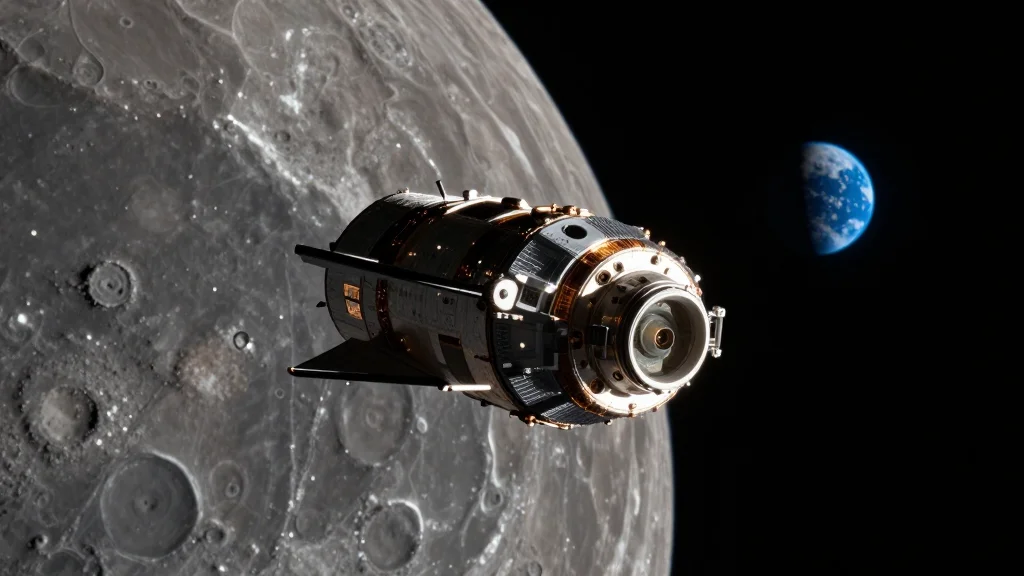
NASA’s Artemis II Mission Is About to Pass Behind the Moon
Why It Matters
Artemis II validates critical life‑support and navigation systems needed for future crewed lunar landings, reinforcing NASA’s deep‑space strategy and commercial partnerships.
Key Takeaways
- •Artemis II entered lunar sphere of influence Monday
- •Crew tested Orion suits for emergency depressurization
- •Six‑hour lunar flyby will capture 35 target sites
- •Mission set to break Apollo 13 distance record
- •First human view of far side and solar eclipse
Pulse Analysis
The Artemis II flight marks NASA’s return to crewed deep‑space travel after half a century, positioning the United States to re‑establish a sustainable presence on the Moon. Launched on November 16, 2024, the Orion capsule carries four astronauts on a 10‑day circumlunar trajectory that will culminate in a historic flyby of the lunar far side. Unlike the Apollo missions, which landed, Artemis II is designed as a testbed for systems that will support future landings, including the Gateway outpost and the Artemis III crewed landing scheduled for 2026. The mission therefore serves as the critical bridge between past achievements and the next generation of lunar exploration.
During day five the crew performed a series of operational checks that underscore Orion’s readiness for longer missions. The Orion crew survival system—bright orange pressure suits—was donned, pressurized, and evaluated for six‑day life‑support capability, a prerequisite for any depressurization scenario. A precise trajectory‑correction burn fine‑tuned the spacecraft’s path into the Moon’s sphere of influence, where it will pass within 4,070 miles of the surface. Over the ensuing six‑hour observation window the astronauts will photograph roughly 35 pre‑selected sites, monitor micrometeoroid impacts, and witness a solar eclipse, while the vehicle is slated to eclipse Apollo 13’s 1970 record by traveling beyond 252,000 miles from Earth.
The commercial dimension of Artemis II is equally consequential. NASA’s partnership model leverages contracts with industry leaders such as Lockheed Martin, SpaceX, and Blue Origin to deliver hardware, launch services, and deep‑space communications, accelerating the development pipeline for lunar infrastructure. Successful execution validates the cost‑share approach that underpins the broader Artemis architecture, encouraging private investment in lunar mining, habitat construction, and tourism. Moreover, the mission’s high‑visibility media moments—live Earth views, astronaut interviews, and the eclipse—reinforce public support, a key factor in securing future appropriations and sustaining the United States’ strategic advantage in the emerging cislunar economy.
NASA’s Artemis II mission is about to pass behind the moon
Comments
Want to join the conversation?
Loading comments...