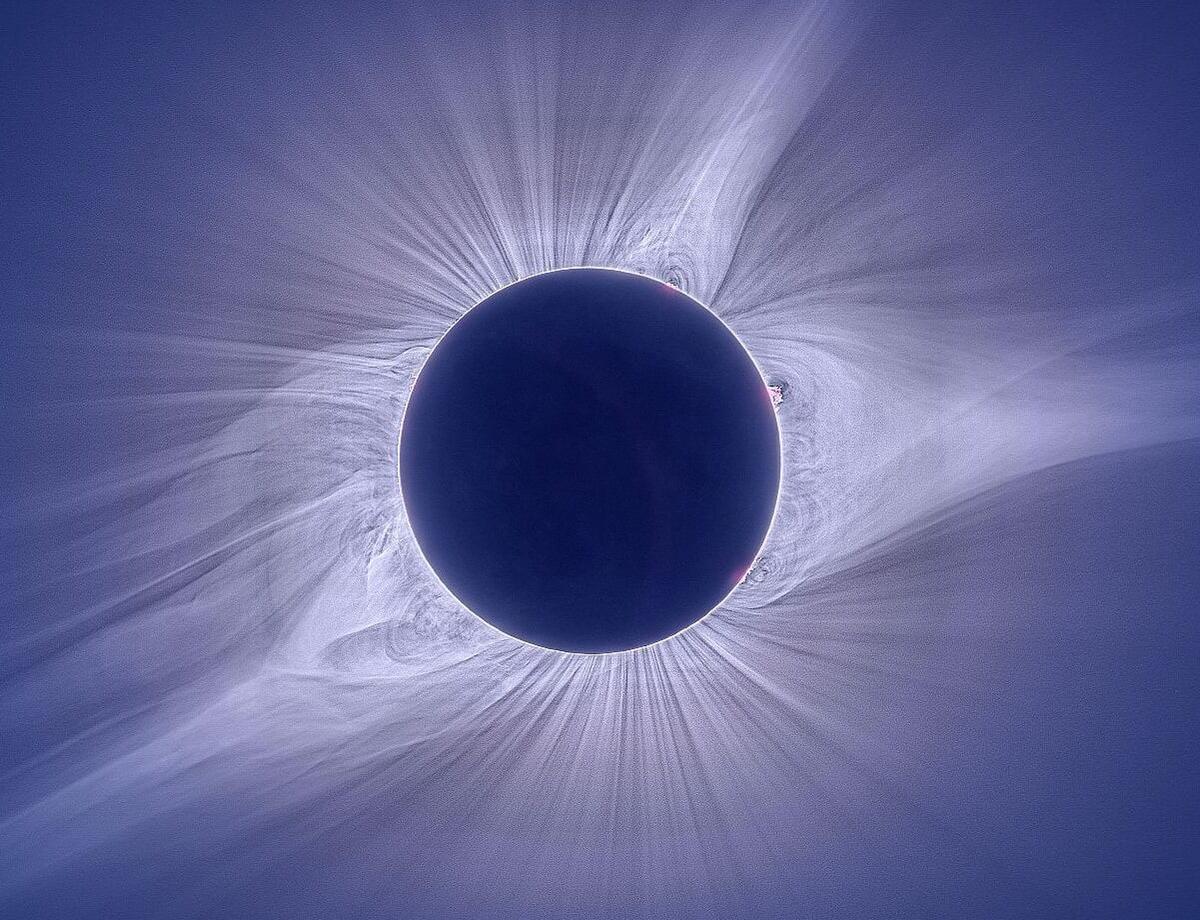
NASA’s Eclipse Megamovie Project Releases Full Data on 2024 Solar Eclipse
•March 4, 2026
0
Why It Matters
The unprecedented, high‑resolution coronal record will accelerate solar‑physics research and improve space‑weather forecasting, while highlighting the power of citizen‑science collaborations in large‑scale astronomy.
Key Takeaways
- •52,469 photos from 143 observatories released
- •First white‑light eclipse dataset spanning 1.5 hours
- •Enables global study of coronal mass ejections
- •Data offered in raw, calibrated, and FITS formats
- •Volunteer network demonstrates power of citizen science
Pulse Analysis
The April 8 2024 total solar eclipse offered a rare window into the Sun’s outer atmosphere, and NASA’s Eclipse Megamovie project turned that fleeting moment into a lasting scientific resource. By mobilizing a network of 143 volunteer observatories across the United States, the initiative captured more than 52,000 images, assembling the first white‑light eclipse dataset that chronicles over an hour and a half of coronal dynamics. This citizen‑science effort not only democratized data collection but also set a new benchmark for collaborative astronomical observations.
For solar physicists, the released archive is a treasure trove. The high‑cadence, multi‑site imagery enables precise tracking of coronal mass ejections, solar plumes, and other transient phenomena that drive space‑weather events affecting satellites, power grids, and communications. By providing calibrated and FITS‑standard versions of the images, the dataset integrates seamlessly with existing analysis pipelines, allowing researchers worldwide to validate models, refine forecasts, and deepen understanding of the Sun‑Earth connection.
Beyond research, the Megamovie data exemplify open‑science principles. The three-tiered format—raw, calibrated, and FITS—ensures accessibility for educators, amateur astronomers, and data scientists seeking to explore solar imagery. This public‑first approach encourages STEM engagement, showcases the impact of volunteer contributions, and lays groundwork for future eclipse missions that may rely on similar distributed observation networks. As solar activity cycles continue, the Megamovie archive will serve as a reference point, informing both scientific inquiry and public appreciation of our star’s behavior.
NASA’s Eclipse Megamovie Project Releases Full Data on 2024 Solar Eclipse
0
Comments
Want to join the conversation?
Loading comments...