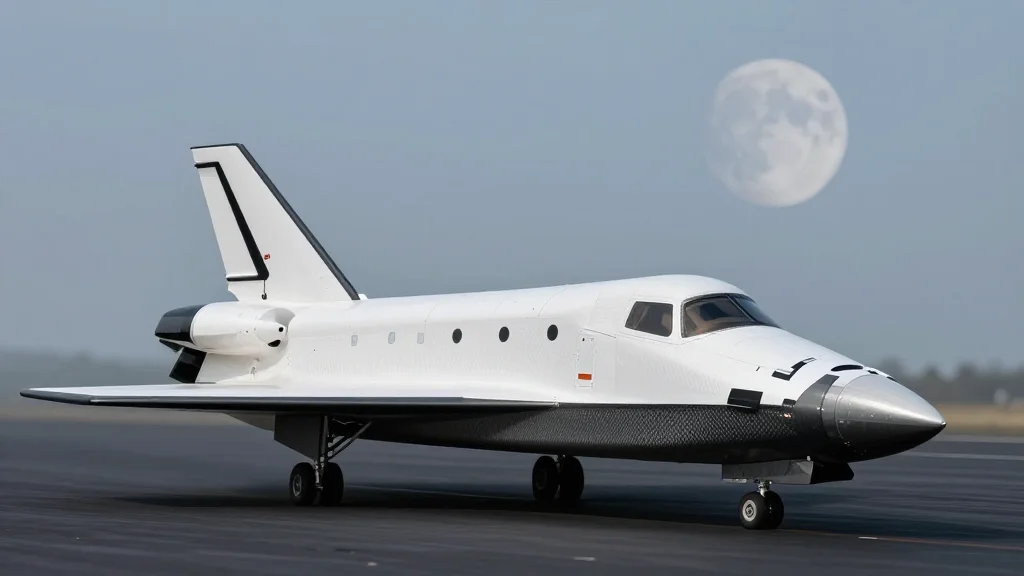
NASA’s Moon Plans Skip Dream Chaser, Leaving Spaceplane’s Future in Doubt

Companies Mentioned

Why It Matters
The omission of Dream Chaser from NASA’s lunar roadmap underscores a broader industry trend: agencies are prioritizing propulsion‑centric solutions over aerodynamic re‑entry vehicles for deep‑space missions. For commercial space firms, the loss of a major government customer removes a critical validation point and could deter private investors seeking a clear path to revenue. Moreover, the shift highlights the growing dominance of reusable launchers, which are reshaping the economics of low‑Earth‑orbit logistics and may marginalize niche platforms that cannot compete on price or launch frequency. If Dream Chaser cannot secure an alternative market—whether in national‑security missions, scientific payload delivery, or a revived ISS partnership—the technology and the substantial private capital behind it risk becoming stranded assets. The outcome will influence how future spaceplane concepts are funded and whether the industry continues to pursue runway‑landing vehicles as a viable commercial model.
Key Takeaways
- •NASA’s Ignition briefing omitted Dream Chaser, signaling no role in lunar return
- •Dream Chaser’s cargo module was designed for up to six tons and seven ISS resupply flights, now canceled
- •Demonstration flight targeted for later this year remains unconfirmed
- •Reusable rockets have eroded Dream Chaser’s economic case
- •Sierra Space may pivot to defense applications if NASA support does not materialize
Pulse Analysis
Dream Chaser’s sidelining reflects a decisive moment for the commercial spaceplane niche. Historically, runway‑landing vehicles promised rapid turnaround and gentle payload recovery, but the economics have shifted dramatically. Reusable launchers now deliver payloads to orbit at roughly half the cost of a dedicated spaceplane mission, and they do so with a proven flight record. This cost advantage, combined with NASA’s explicit focus on lunar landers, creates a double‑edged pressure on Dream Chaser: without a government anchor, private investors must justify the higher development risk.
Sierra Space’s pivot toward national‑security missions could provide a lifeline, but that market is highly regulated and may not generate the volume needed to amortize the vehicle’s development costs. The company’s ability to retrofit the spaceplane for defense payloads will hinge on securing contracts from the Department of Defense, a process that can take years and is subject to shifting political priorities. In the meantime, the anticipated demonstration flight serves as a critical proof point; a successful flight could keep the program afloat by showcasing unique capabilities such as runway landings for delicate experiments.
Looking ahead, the industry may see a consolidation of spaceplane concepts into hybrid models that combine vertical launch with horizontal recovery, akin to the emerging “space tug” designs. Dream Chaser’s fate will likely influence investor sentiment toward such hybrid approaches, either reinforcing skepticism or encouraging a renewed focus on niche applications where aerodynamic recovery offers a clear advantage. The next quarter will be pivotal: a successful flight could rekindle interest, while a cancellation would likely signal the end of the commercial spaceplane era as envisioned in the early 2000s.
NASA’s Moon Plans Skip Dream Chaser, Leaving Spaceplane’s Future in Doubt
Comments
Want to join the conversation?
Loading comments...