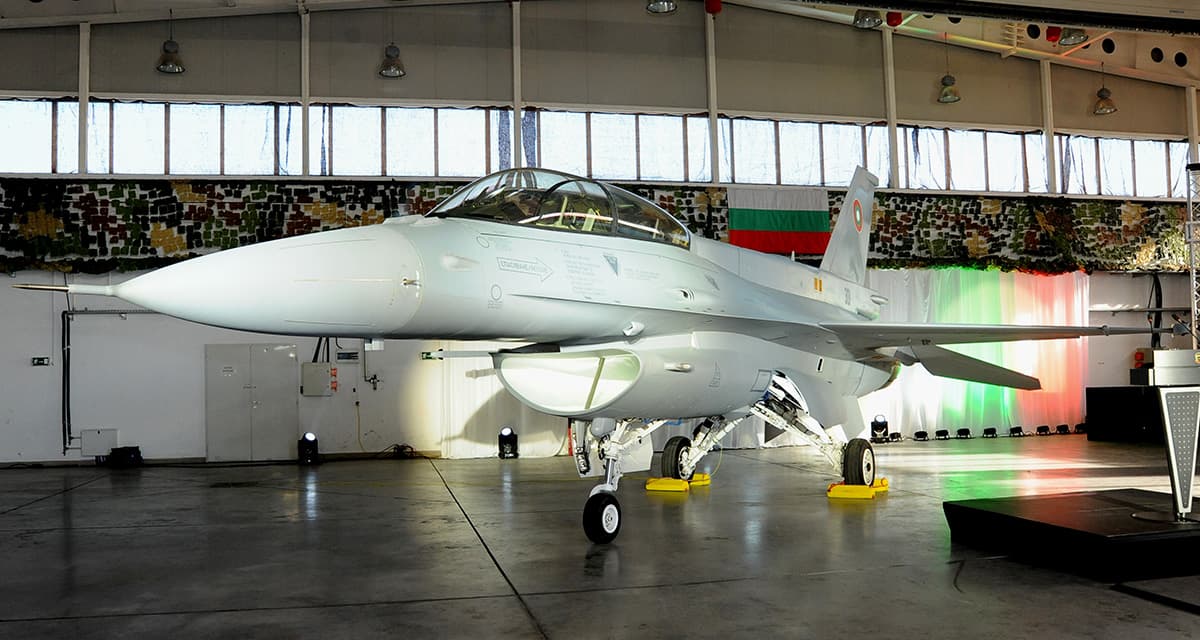
NATO Planners Deploy to Bulgaria to Sharpen Eastern Defence
•February 10, 2026
0
Key Takeaways
- •NATO deploys joint planning team to Bulgaria.
- •Focus on command‑and‑control, planning, information sharing.
- •Enhances Bulgaria’s role in Eastern Sentry air defense.
- •Part of seven missions strengthening eastern flank.
- •Boosts alliance readiness against airspace incursions.
Summary
NATO has deployed a Joint Planning Team to Sofia to fine‑tune Bulgaria’s contribution to the Eastern Sentry mission, which bolsters situational awareness and defensive posture on the Alliance’s eastern flank. The team, drawn from Allied Air Command, Joint Force Command Naples and CAOC Torrejón, will work with the Bulgarian Air Force on command‑and‑control, operational planning and information‑sharing. The effort aims to increase readiness and responsiveness to potential airspace incursions. This deployment is one of seven similar missions since Eastern Sentry’s activation, reinforcing integrated air and missile defence across the region.
Pulse Analysis
NATO’s Eastern Sentry initiative, launched in 2023, aims to tighten surveillance and response capabilities along the Alliance’s eastern border. Bulgaria, bordering the Black Sea and Romania, sits at a critical junction where air and missile threats could penetrate deeper into Europe. By stationing a Joint Planning Team in Sofia, NATO signals a proactive shift from static monitoring to dynamic, integrated defense. The move also reflects growing concerns over increased Russian air activity and the need for rapid, coordinated reactions to protect NATO airspace.
The Sofia team blends expertise from Allied Air Command, Joint Force Command Naples, and the Combined Air Operations Centre in Torrejón. Their mandate centers on harmonising command‑and‑control structures, refining operational planning cycles, and streamlining information‑sharing protocols between NATO headquarters and the Bulgarian Air Force. Such integration reduces latency in decision‑making and enables joint air patrols, early‑warning radar fusion, and coordinated missile‑defence engagements. By embedding planners on the ground, NATO ensures that national contributions are calibrated to Alliance standards, bolstering overall mission effectiveness.
Enhanced readiness on the eastern flank carries strategic weight for the broader Alliance. Faster C2 and shared situational awareness deter potential aggressors by demonstrating that any incursion would meet an immediate, coordinated response. The deployment also creates opportunities for defense contractors to supply interoperable systems, from data links to surface‑to‑air missiles, aligning with NATO’s push for standardized equipment. Looking ahead, similar joint teams are slated for Romania and the Baltic states, cementing a layered air‑defence network that underpins European security. This integrated posture reinforces NATO’s credibility and collective defense guarantee.
Comments
Want to join the conversation?