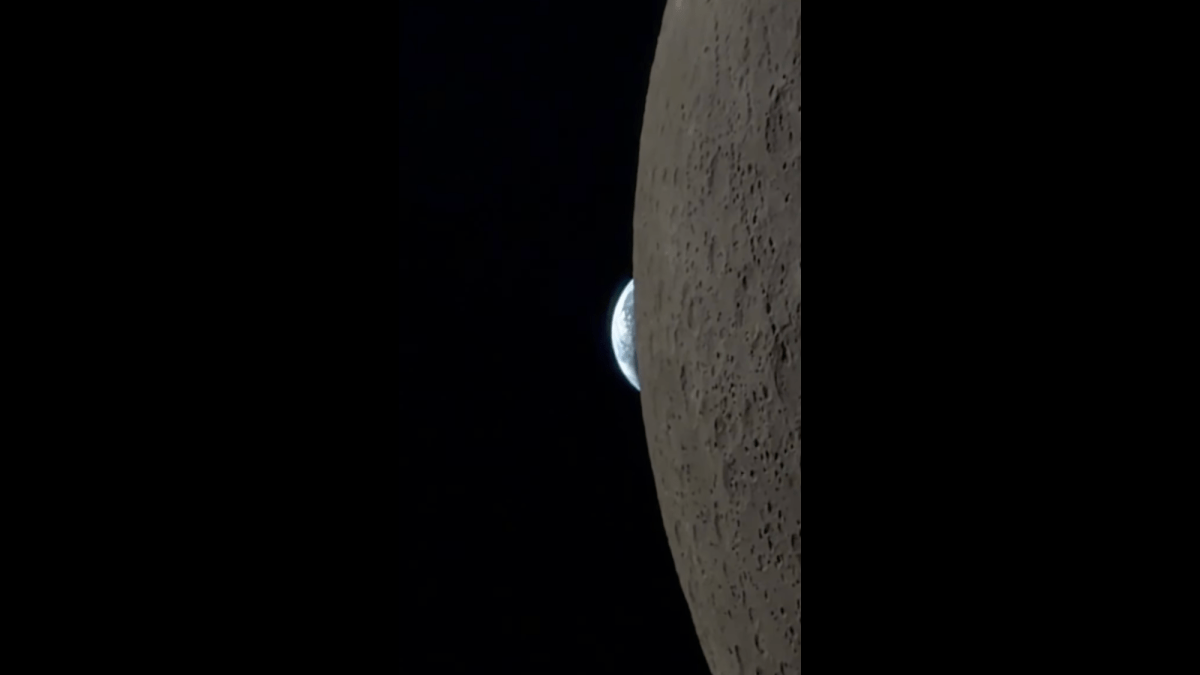
New Artemis II Astronaut iPhone Video Reveals New Earthset View
Why It Matters
The vivid iPhone footage boosts public enthusiasm while the scientific measurements advance safety planning for upcoming lunar bases, reinforcing momentum for NASA’s Artemis program.
Key Takeaways
- •Wiseman captured uncut Earthset video on iPhone 17 Pro
- •Artemis II set record: 4,111 miles beyond Apollo 13 distance
- •Crew observed first lunar solar eclipse using NASA‑made glasses
- •Mission studied lunar corona and meteoroid impacts for future bases
- •Artemis III launch slated for 2027, building on II’s data
Pulse Analysis
The Artemis II crew’s decision to film Earthset with a consumer‑grade iPhone 17 Pro underscores a shift toward leveraging familiar technology for space outreach. By sharing a high‑definition, unedited view of Earth disappearing behind the Moon, NASA taps into the viral potential of social media, turning a routine orbital maneuver into a global visual event. This approach not only humanizes the astronauts but also expands the audience for future deep‑space missions, reinforcing the program’s public‑private partnership narrative.
Beyond the spectacle, the mission delivered valuable science. During the hour‑long lunar flyby, the crew recorded the Sun’s corona as it grazed the Moon’s limb, a rare perspective that helps refine models of solar radiation exposure for surface habitats. Simultaneously, they monitored meteoroid impacts, gathering data on strike frequency and energy that will inform shielding requirements for the Artemis III landing architecture. These observations bridge the gap between orbital reconnaissance and the practical engineering challenges of establishing a sustainable lunar outpost.
Strategically, Artemis II’s achievements—most notably surpassing Apollo 13’s distance record by over 4,000 miles—demonstrate the Orion spacecraft’s deep‑space capabilities, bolstering confidence in the forthcoming Artemis III mission slated for 2027. The successful use of NASA‑produced eclipse glasses marks the first protected solar observation from lunar orbit, a milestone for crew safety protocols. As NASA integrates commercial launch services and prepares for lunar surface operations, the data and public engagement generated by Artemis II provide a critical foundation for the next phase of human exploration.
New Artemis II astronaut iPhone video reveals new Earthset view
Comments
Want to join the conversation?
Loading comments...