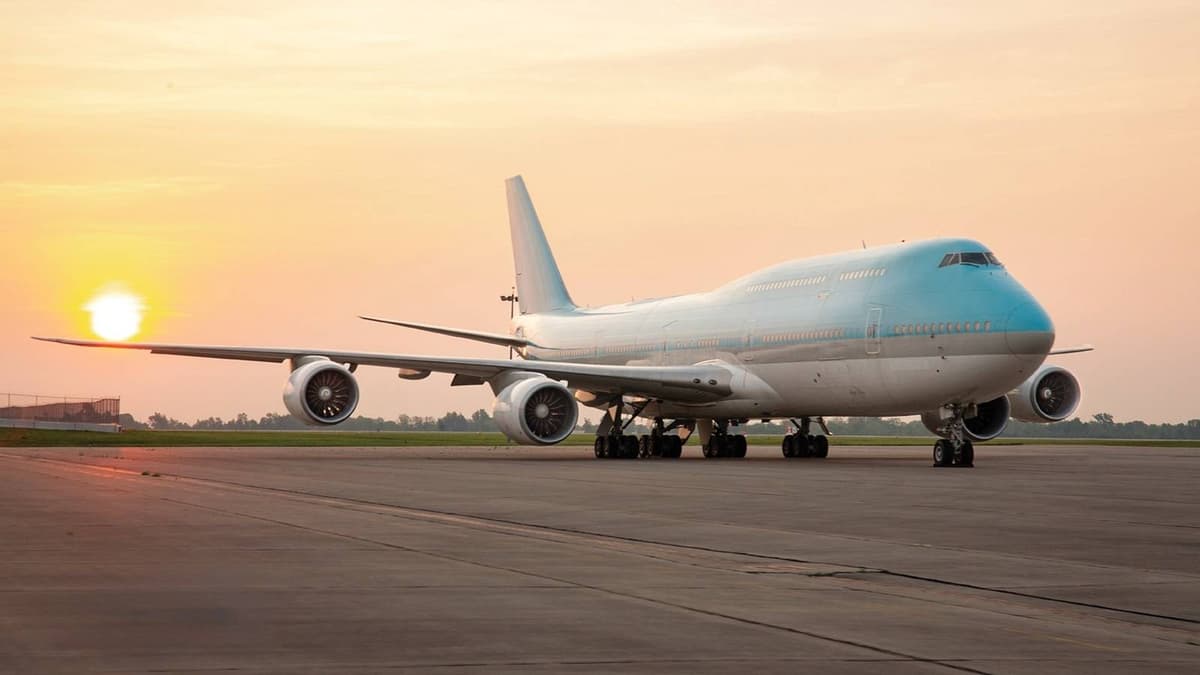
New Doomsday: Ex-Passenger Boeing 747-8 Continues Test Flights Ahead Of Air Force Delivery
Why It Matters
The program modernizes the nation’s airborne command‑and‑control capability, ensuring a resilient communications platform for presidential and defense leadership. Timely delivery also validates SNC’s rapid‑conversion model, influencing future defense aerospace contracts.
Key Takeaways
- •SNC received first of five 747‑8s six weeks after contract award.
- •Test flights from Dayton and Wichita exceed six hours, covering East Coast.
- •Converted 747‑8 will replace aging E‑4B “doomsday” fleet by 2036.
- •New hangars expand SNC’s SAOC conversion capacity.
- •Risk‑reduction testing aims to meet on‑time delivery for Air Force.
Pulse Analysis
The United States is investing heavily in a next‑generation airborne command hub to supersede the Cold‑War‑era E‑4B Nightwatch fleet. Known as the Survivable Airborne Operations Center, the SAOC is designed to function as a mobile Pentagon, providing hardened communications and command capabilities during national emergencies or nuclear contingencies. By modernizing the platform, the Air Force aims to sustain uninterrupted strategic control, a cornerstone of deterrence doctrine, while integrating advanced cyber‑resilient systems that far exceed the legacy aircraft’s capacity.
Central to the SAOC effort is the conversion of a Boeing 747‑8, originally delivered to Korean Air in 2015 and now operated by Sierra Nevada Corporation. SNC received the first of five airframes just six weeks after winning the contract, and has already begun extensive risk‑reduction flight testing from Dayton International Airport and Wichita. The test program, active since February, includes multi‑hour flights that simulate operational loads and verify the aircraft’s new communications suite. Concurrently, SNC has expanded its infrastructure, opening a second hangar and breaking ground on two additional bays to accommodate the extensive retrofit work required for the command‑and‑control mission.
The successful rollout of the SAOC has broader implications for the defense aerospace market. Demonstrating rapid conversion capabilities positions SNC as a preferred partner for future high‑value, time‑critical platforms, potentially opening doors to similar projects for other branches of the military. Moreover, the shift to a larger, more capable airframe signals a strategic pivot toward longer endurance and greater payload flexibility, aligning with the Department of Defense’s emphasis on survivable, network‑centric operations. As the program stays on schedule for a 2036 operational date, it reinforces the United States’ commitment to maintaining a credible, survivable command infrastructure in an increasingly contested global environment.
New Doomsday: Ex-Passenger Boeing 747-8 Continues Test Flights Ahead Of Air Force Delivery
Comments
Want to join the conversation?
Loading comments...