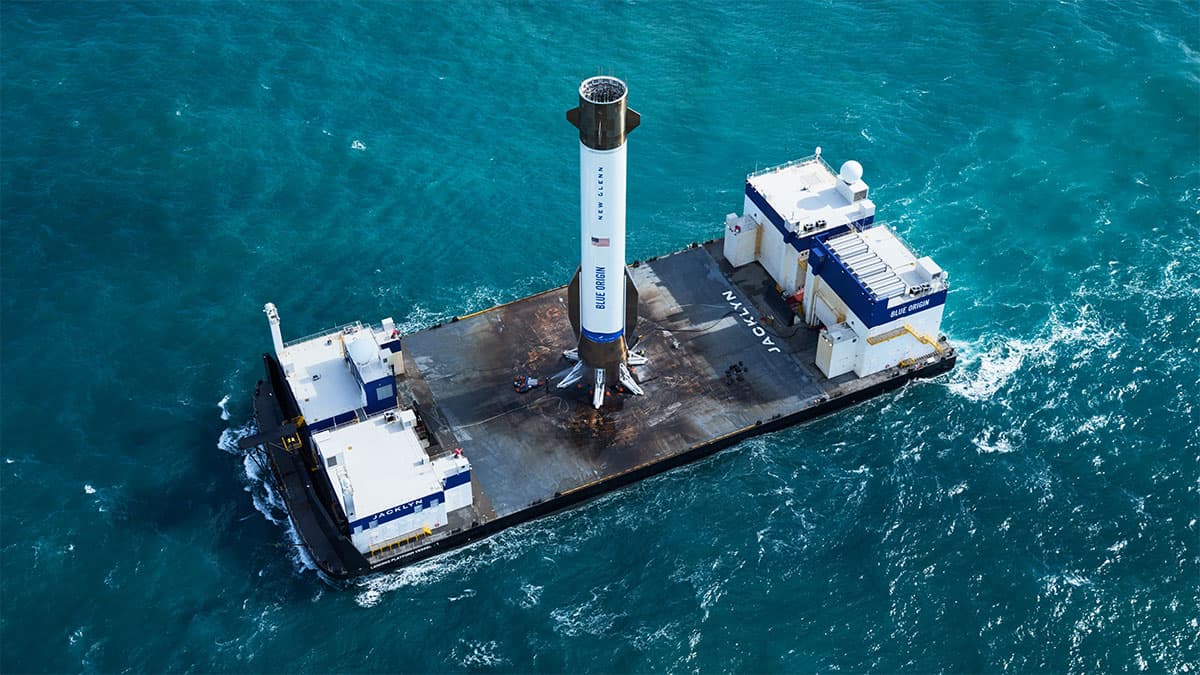
New Glenn Grounded as BE-3U Thrust Issue Comes Into Focus
Companies Mentioned

Why It Matters
The delay stalls Blue Origin’s entry into the high‑capacity launch segment and jeopardizes AST SpaceMobile’s satellite‑deployment schedule, underscoring reliability challenges for reusable heavy‑lift rockets.
Key Takeaways
- •BE-3U engine delivered insufficient thrust on New Glenn’s second burn.
- •Blue Origin grounded New Glenn to investigate the thrust deficiency.
- •AST SpaceMobile’s BlueBird 7 satellite missed its intended orbit.
- •Delay could push back New Glenn’s first commercial launch to 2027.
Pulse Analysis
Blue Origin’s New Glenn was designed to compete with SpaceX’s Starship by offering a fully reusable, heavy‑lift capability. The vehicle’s upper stage relies on two BE‑3U engines, each derived from the company’s proven BE‑3 sea‑level engine but optimized for vacuum operation. Preliminary telemetry from the April 20 launch showed that one engine under‑performed during the second burn, delivering less thrust than required to place the AST SpaceMobile BlueBird 7 payload into its target orbit. This thrust deficiency not only caused the satellite to miss its orbital slot but also triggered an automatic safety protocol that halted further flight attempts until the anomaly is resolved.
The grounding of New Glenn has immediate commercial ramifications. AST SpaceMobile, which plans to create a network of low‑Earth‑orbit satellites to provide broadband connectivity, now faces a delay in expanding its constellation, potentially affecting partnership timelines with telecom operators. For Blue Origin, the setback postpones the inaugural commercial flight that was slated for later this year, allowing rivals such as SpaceX and United Launch Alliance to capture additional market share in the burgeoning demand for large‑payload launches. Investors will be watching the root‑cause investigation closely, as any systemic issue with the BE‑3U could ripple through future missions, including NASA’s lunar gateway contracts.
In the broader context, the incident highlights the technical risk inherent in scaling reusable launch systems. While reusability promises lower launch costs, each engine cycle introduces wear patterns that must be meticulously managed. Blue Origin’s response—conducting a thorough failure analysis, updating engine health‑monitoring software, and potentially redesigning thrust‑vector control—will be a litmus test for its engineering resilience. Successful remediation could reinforce confidence in New Glenn’s reliability and accelerate its entry into a market that increasingly values rapid, cost‑effective access to space.
New Glenn Grounded as BE-3U Thrust Issue Comes Into Focus
Comments
Want to join the conversation?
Loading comments...